
I have now arrived in Europe and am resting a bit after the hard work and my emotional state.
Despite the huge environmental difference—changing from a quasi-desertic, wild world to the wilderness and business of a big city—being here reassures me. I now know all the codes again, I know how to behave, how to be part of this metropolitan world. I am used to this environment. I speak the language, and I can go wherever I want almost without assistance (except from my phone, unfortunately). I can again enjoy coffee with milk and treat myself when I feel like it. I can choose my own food and go back to my natural diet. It just quiets my mind.
EHRA volunteering experience
Now, back to EHRA and the experience.
Between the two cycles, we had a weekend in Swakopmund before being introduced to the new group and starting the second cycle again.
With some volunteers, we decided to make the most of it. First, a 15-minute walk from the center, by the beach, enjoying wildlife with flamingos and amazing sand dunes and patterns.
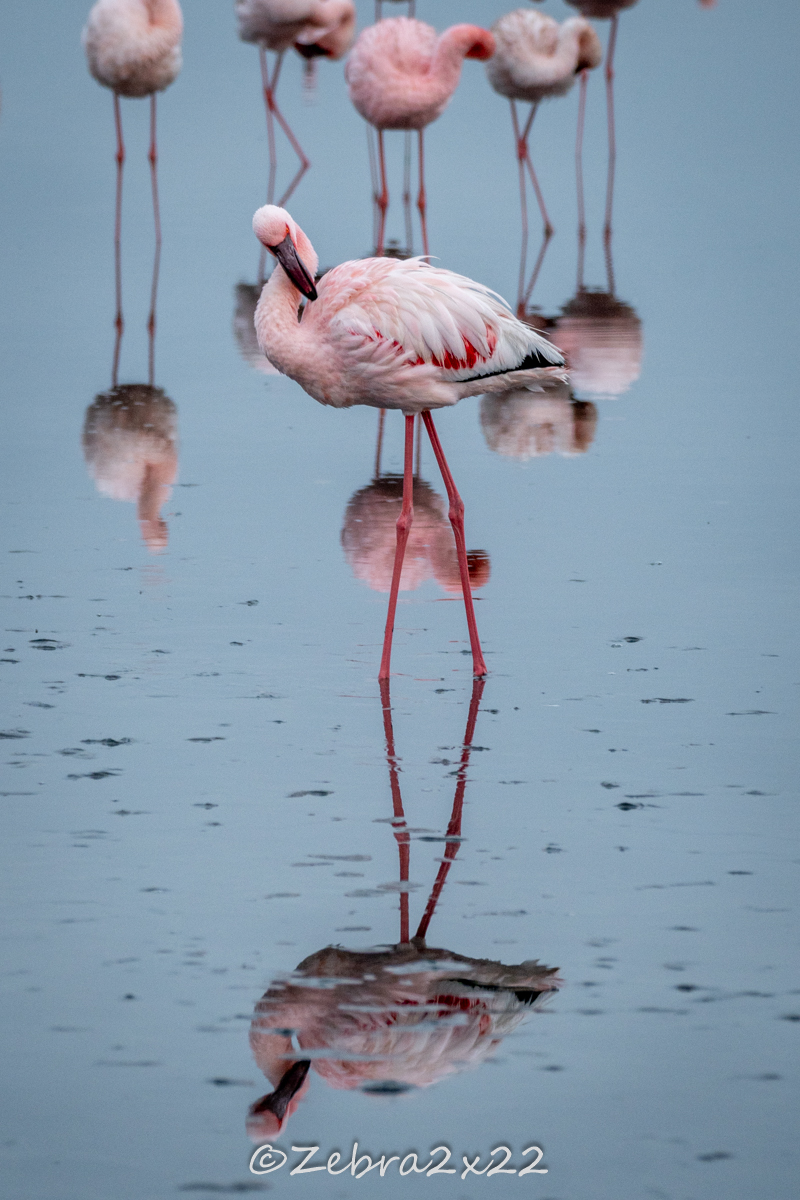


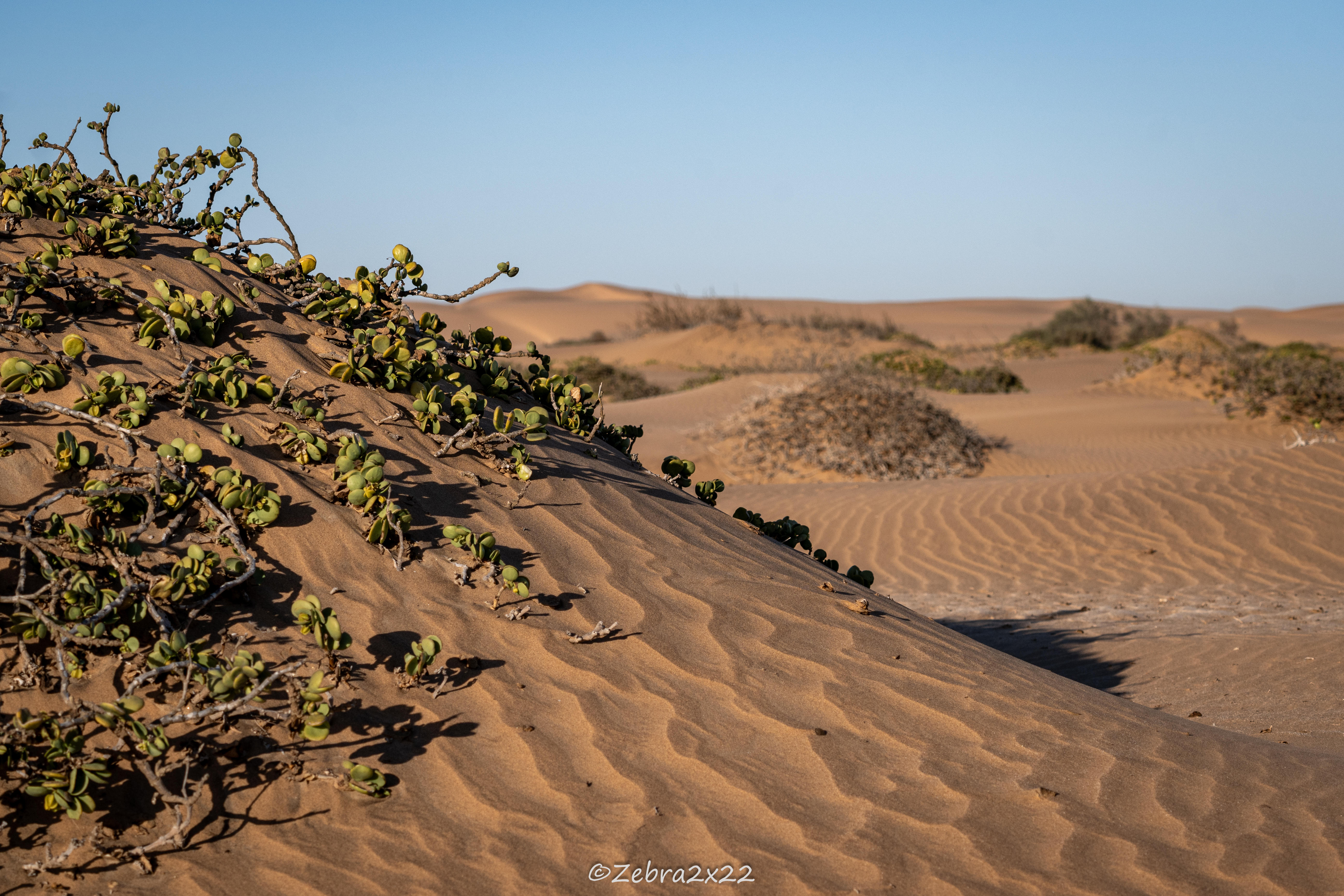

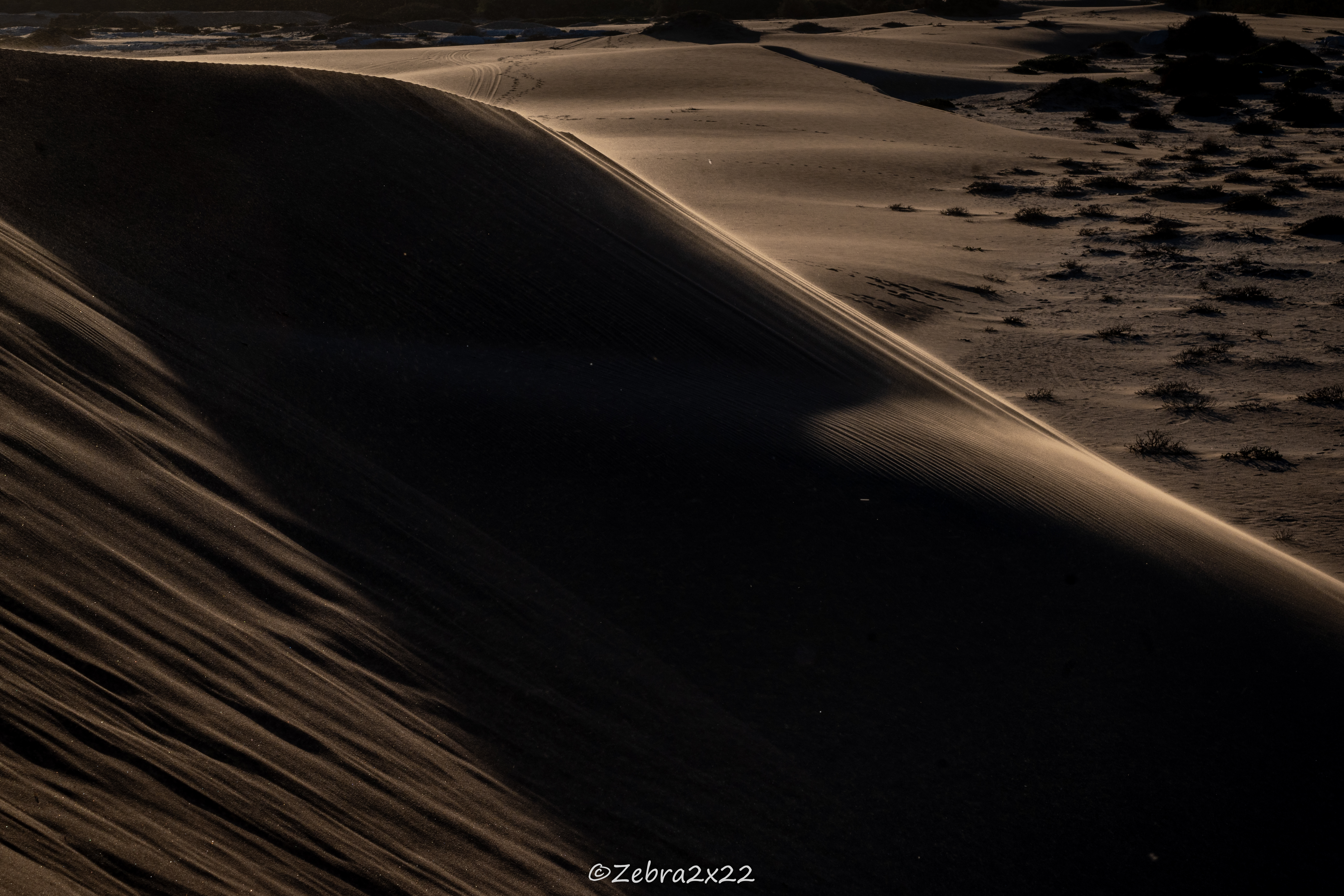


The next day, we decided to rent a vehicle to have a bit of freedom, establish our own rhythm, and wander around as we wished.
We drove on the left side of the road—another first for me. The car was automatic, so we didn’t have the challenge of reversing the side of the gears and using the left hand, which made it easier. The only challenge was the turn signals; every time I turned left, I activated the windscreen wipers as the controls are inverted. There was no way to be discreet about the mistake. We laughed a lot.
CAPE CROSS, the fur seal colony
We headed to Cape Cross to observe the fur seal colony. They have more than 100,000 animals, possibly more than 400,000. The smell is strong, the area is busy, and the noise is intense. They communicate a lot using different calls to find their offspring, and there are many male displays and fights with other males to establish their territory and dominance. They fish, rest on the rocks, on the sand, and in the waves, enjoying shade or sun depending on their mood.
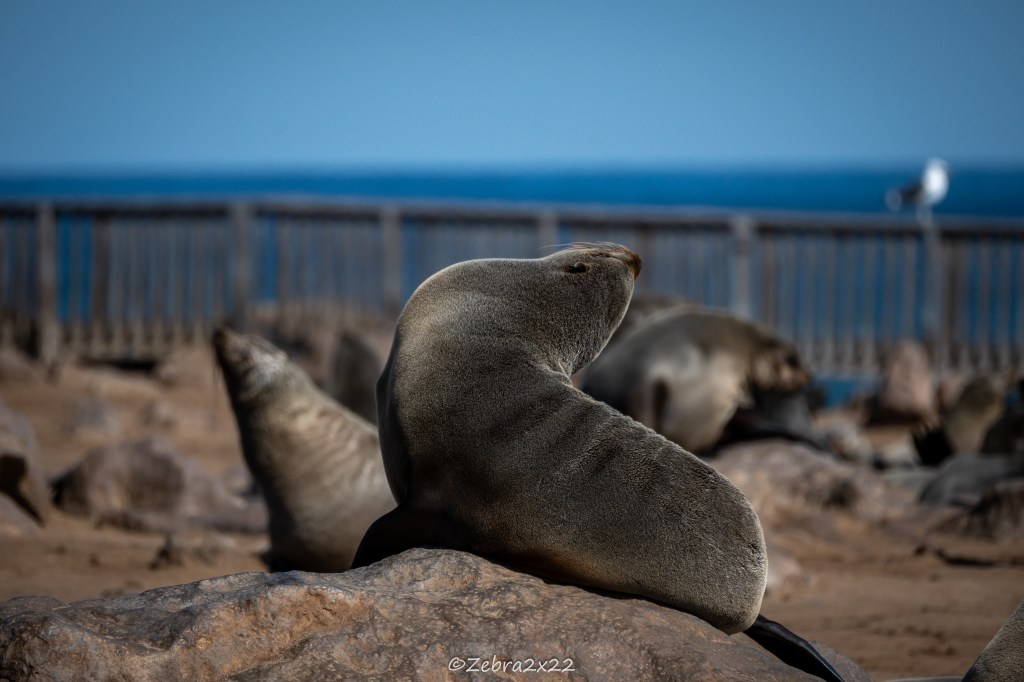

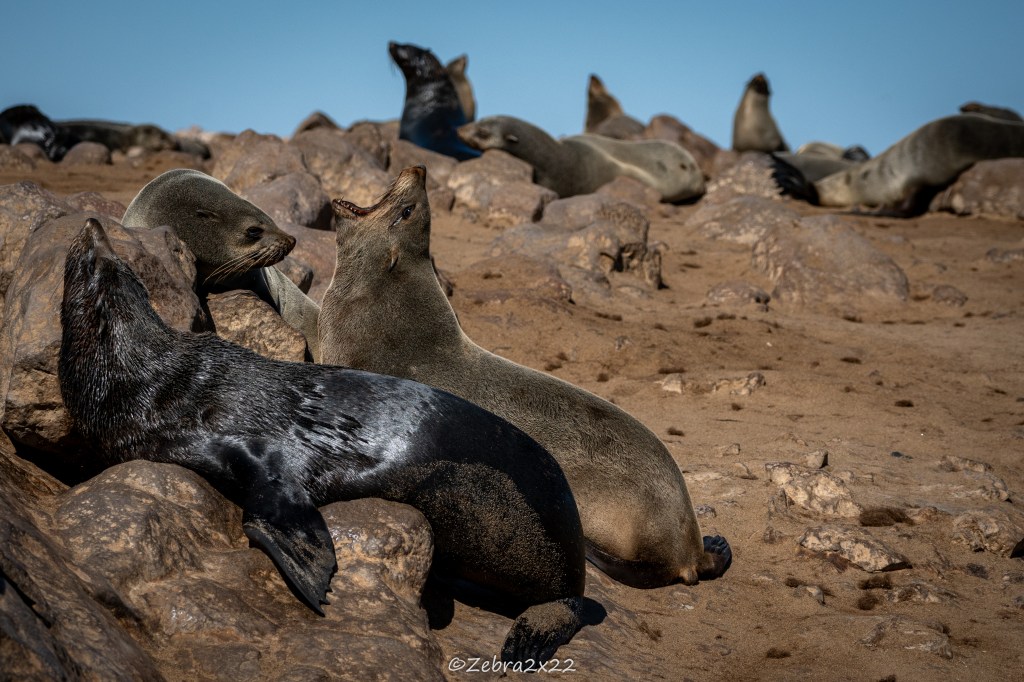

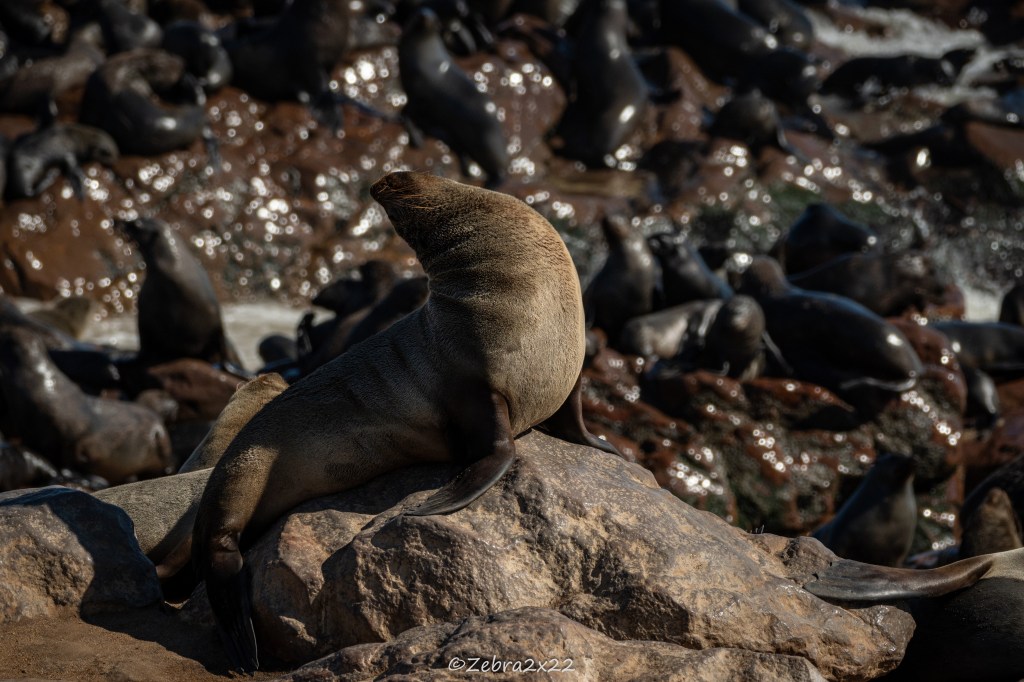
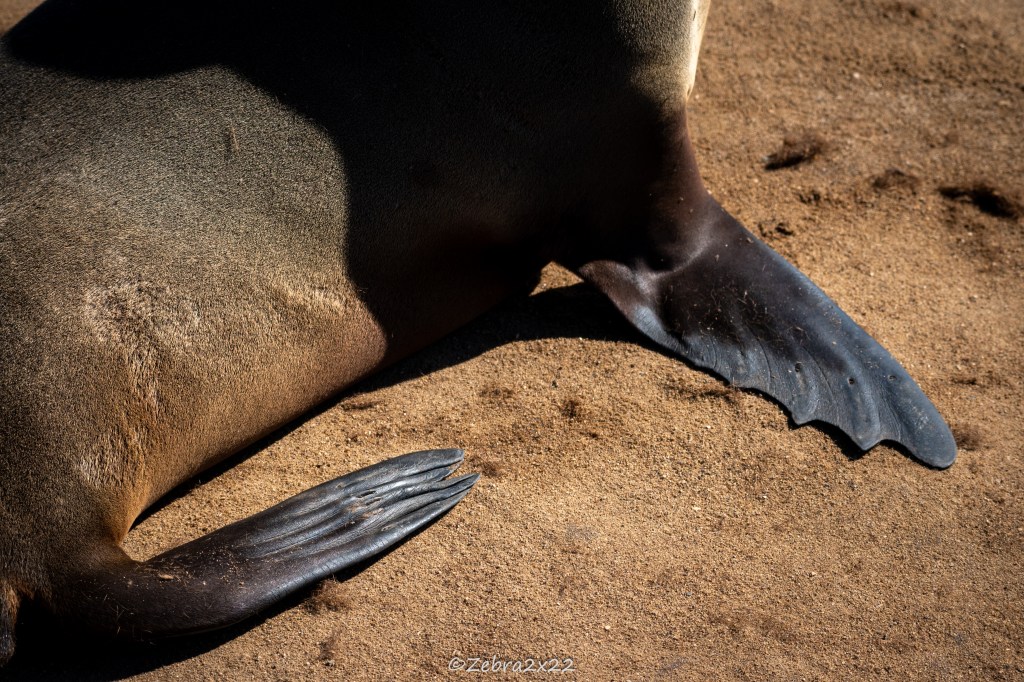

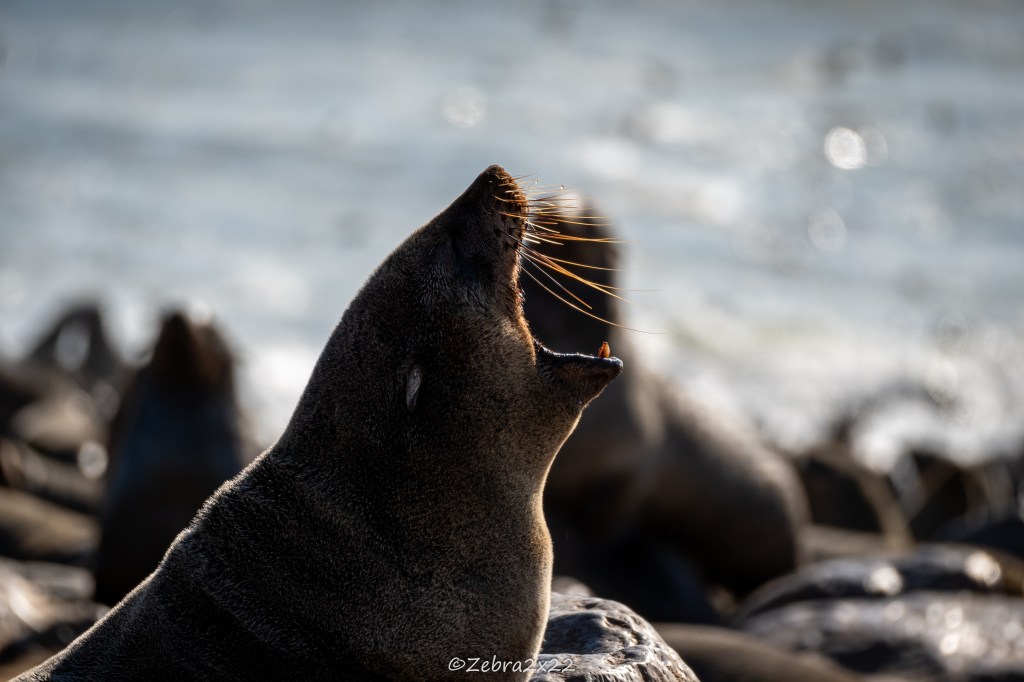

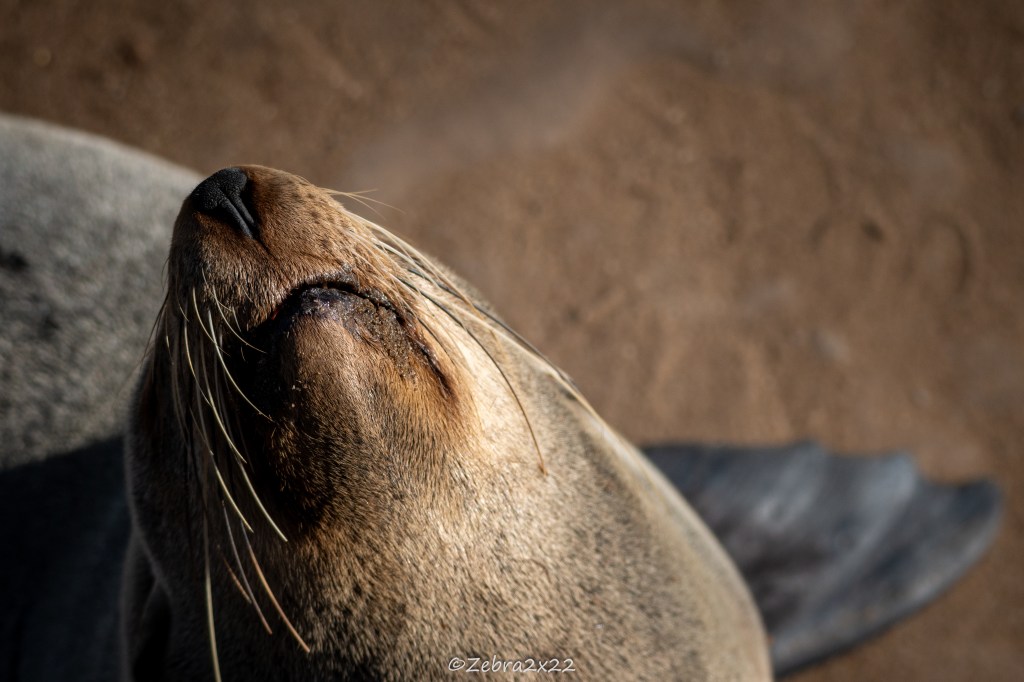
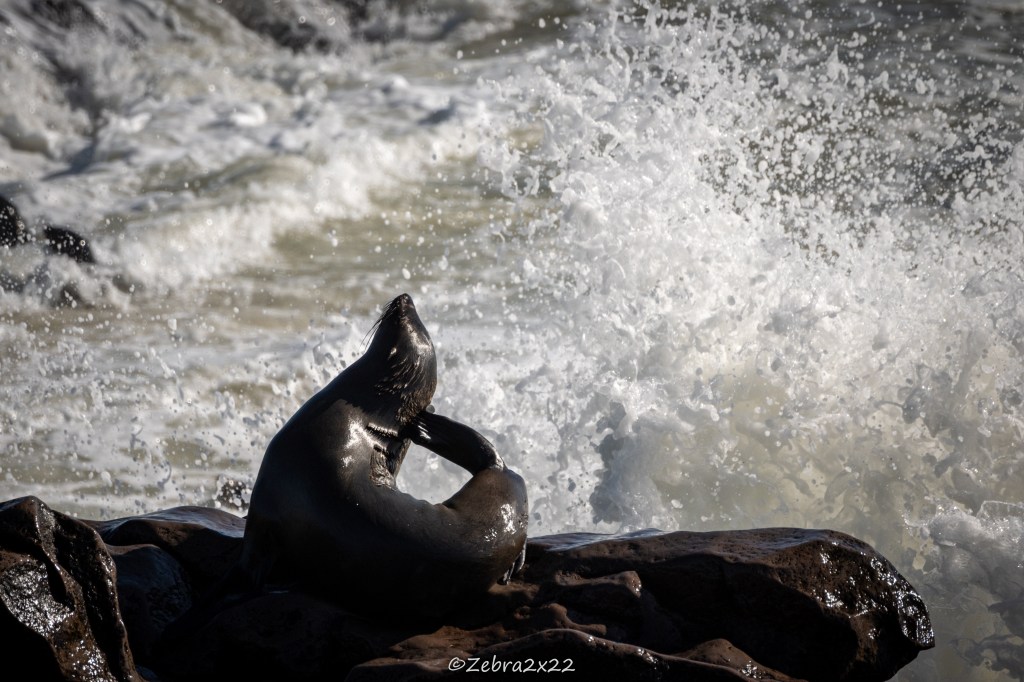
We spent hours observing them, watching their interactions, pups feeding, and also seeing pups and seals in poor condition, if not dead. The experience was sometimes punctuated by interactions with foolish tourists without any supervision. It’s a very busy area.
When we headed back, their behavior raised a lot of questions for us. We tried to find answers on the internet without any success. What we found, on the contrary, was very overwhelming and upsetting. Despite this being a nature reserve, the government authorizes the killing of 60,000 pups and 8,000 males each year. The killings are carried out in very barbaric conditions, using baseball bats and golf clubs.
There was no real explanation of why it is done. Is it culling? What are the consequences of letting them live? Does this colony eat too much fish—equivalent to the human consumption of South Africa and Namibia in one year? Have we changed the predator behavior? Is it to provide the local population with some revenue from fur sales or access to food? More questions than answers I am afraid and a very uncomfortable moment; unfortunately another food for thought for my future orientation.
Swakopmund
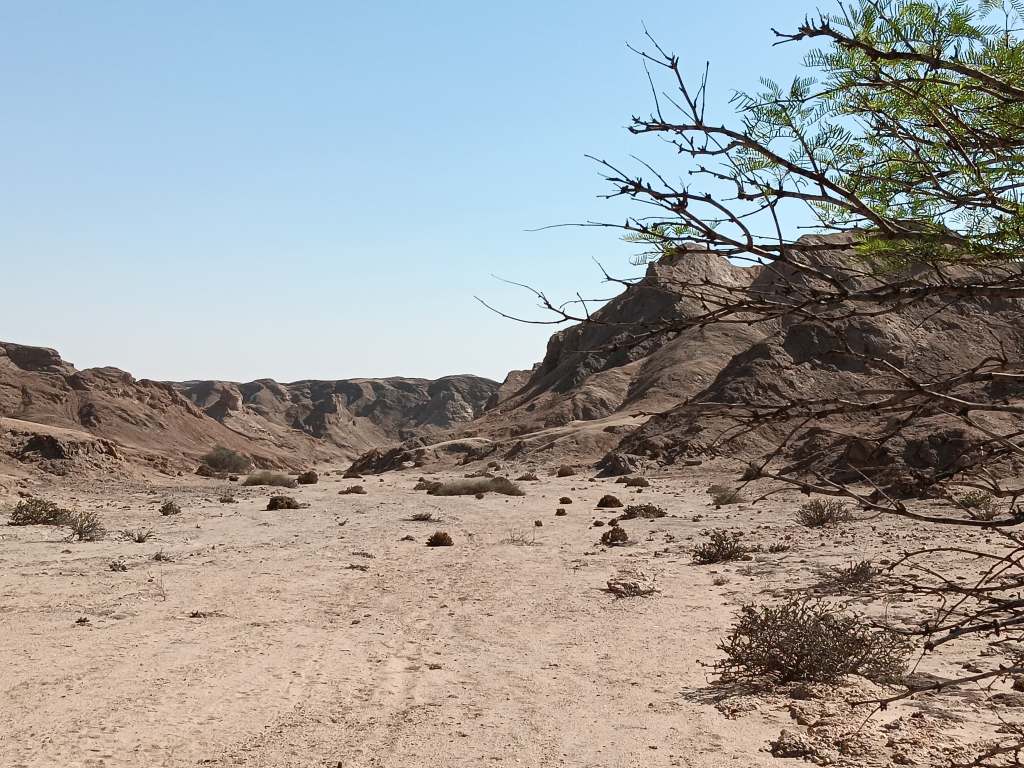
Swakopmund is a really nice area to spend some time. Sunday was dedicated to discovering the Moon Landscape area before meeting the second cycle group. A landscape that soothes my mind.


EHRA experience, second cycle
The new group was small; we were only five volunteers. There was a different distribution of people, coming from South Africa, France, and Germany. A common point with the previous group was that there was also a person deeply contemplating their future and job prospects.
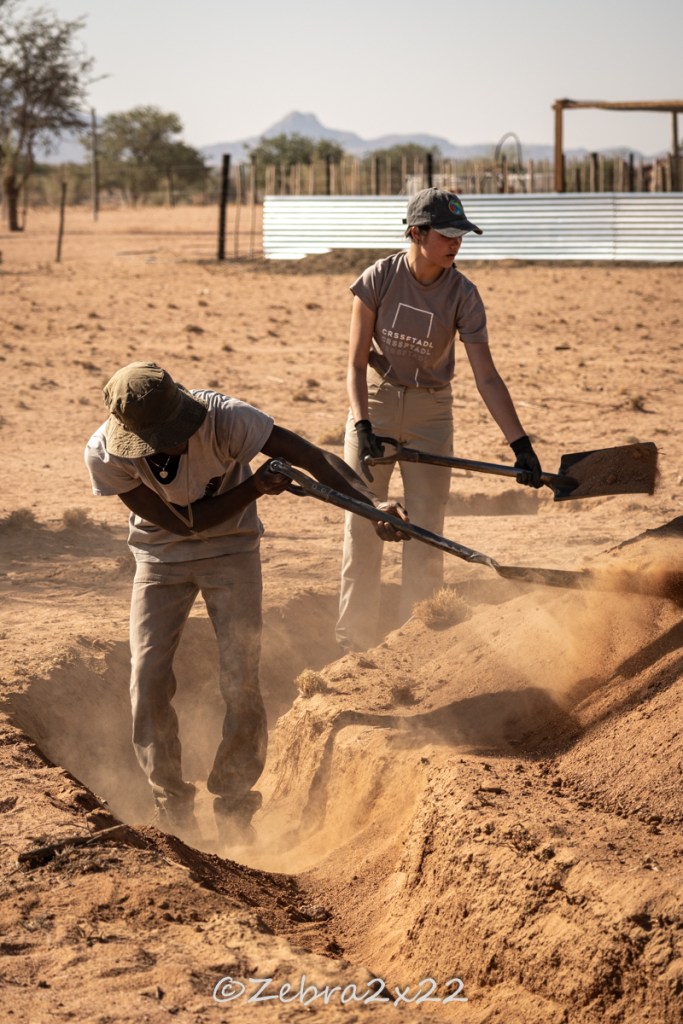
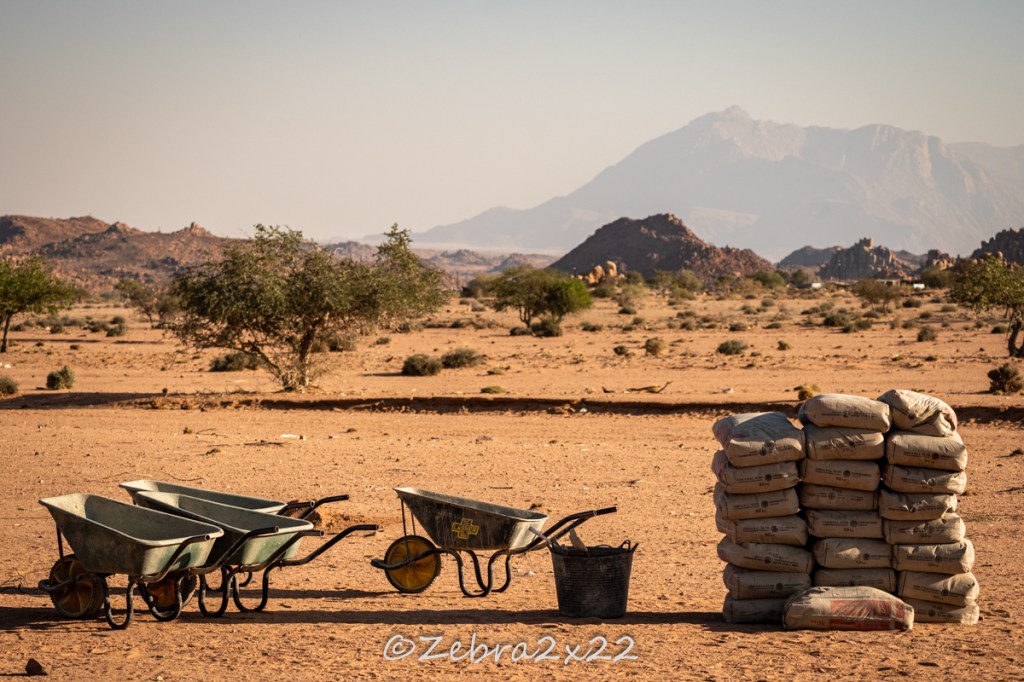
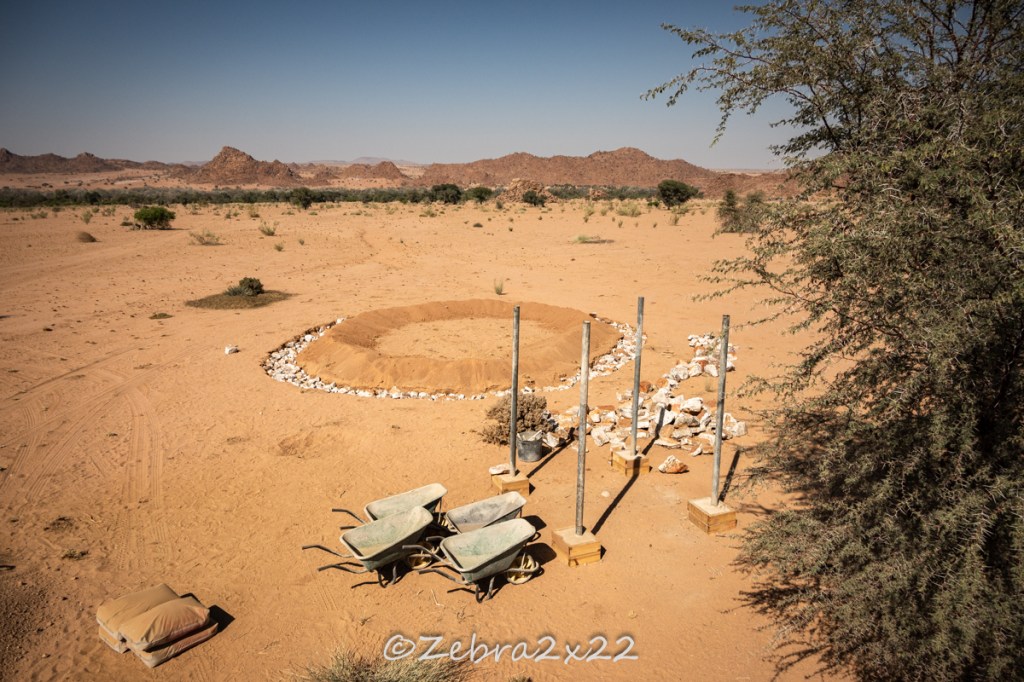
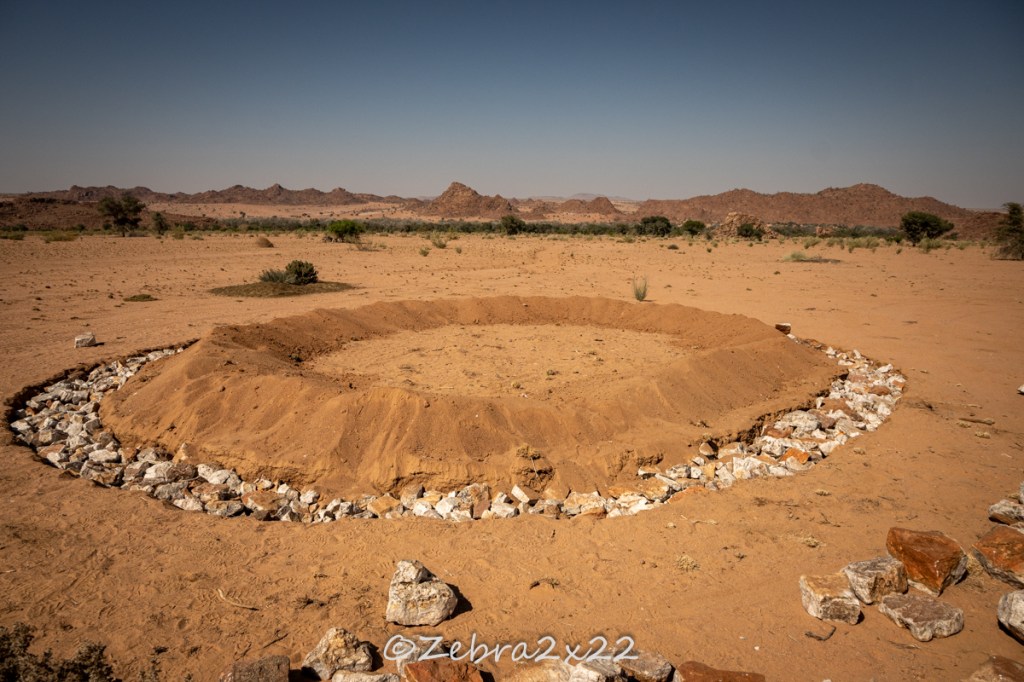
During this second cycle, we started with a new wall. We had to dig the foundations with shovels, and the rock runs were harder as we went for bigger rocks than those in the previous cycle.
This time, I did much more cement mixing, sand and rock runs, than building activities. I was happy to see that my body was coping better with the heat and physical work, building up muscle. I was better equipped with my work gloves, and having previous experience helped with the condition of my hands. They were less dry this time as I used Vaseline to hydrate them, and, lesson learned, I didn’t touch the biting cement with my bare hands.
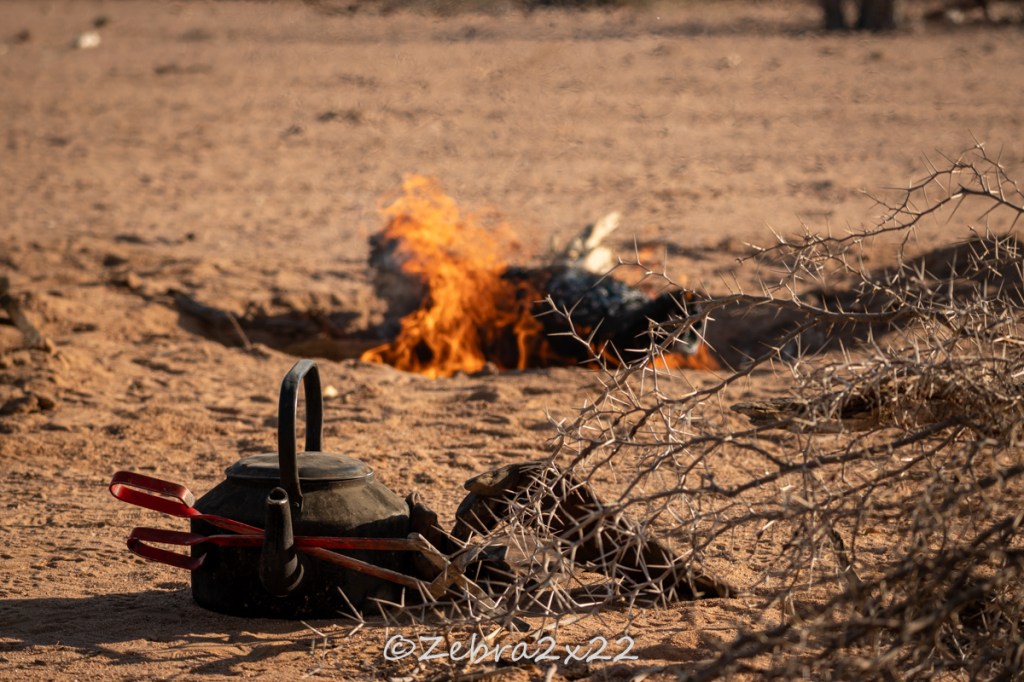
The routine was the same: days from 6 AM to 9 PM, duty team rotation, bonfire, sleeping outside under the stars, and a great level of cooperation within the group. We had the help of several local people throughout the week, and they shared our meals. I noticed that I was always busy helping others and the group, contributing as much as I could despite the duty team rotation.

For me, the highlights of this week were:
- the continuous sensation of contributing to a greater good
- the feeling of being in the right place
- the full moon and a very different sky
- the mild weather
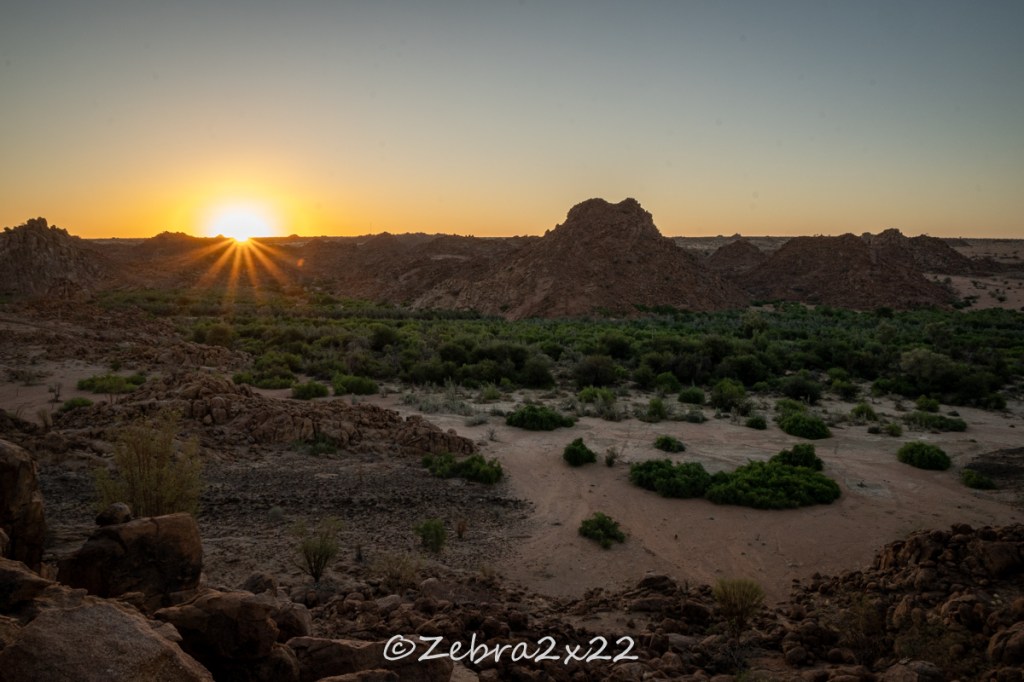
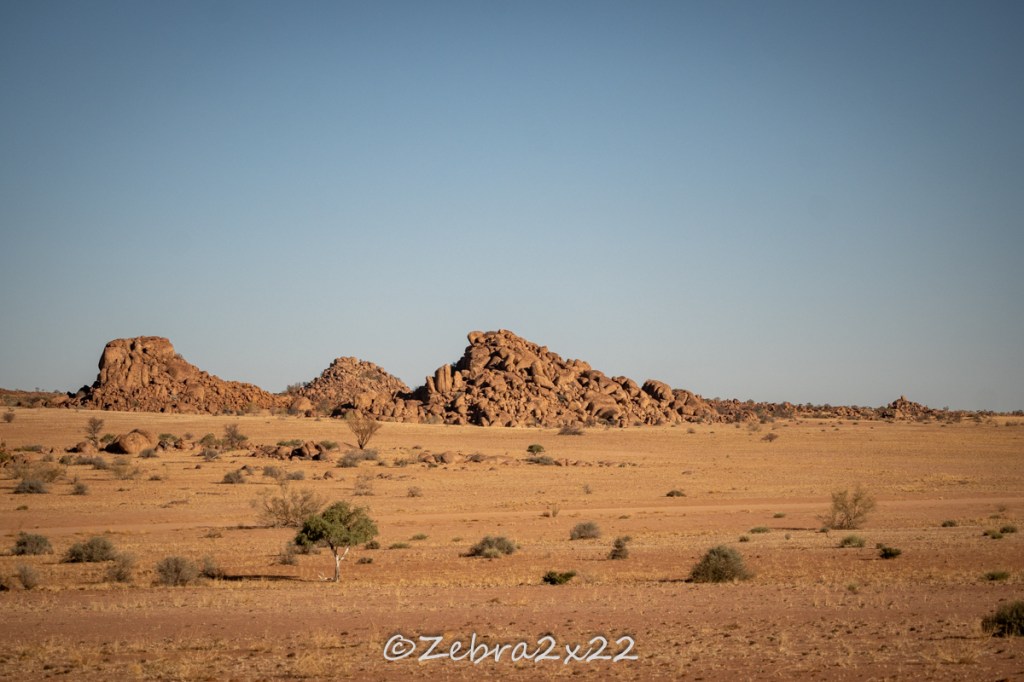
- the same great desertic landscapes
- my ability to better cope with the physical work and adapt to new situations
- the advice I received from the guides for my future training and access to books
- the blessing of sleeping outdoors
We headed back to the base camp before patrol week. We had the great surprise of being there at the same time as the EHRA board, and we got to meet their members, including the founder.
I really enjoyed this moment. I heard a lot of past stories, testimonies, and memories from all of them, all very interesting. They were a testimony to the past and the experiences one can have in close proximity to wildlife:
- elephants crossing a kids’ camp during the night
- different experiences with lions or leopards on the edge of the camps
- how Vortreek, the bull that started it all, touched one of the guides’ faces at night with his trunk
- bushwalks and experiences with elephants and bulls in particular, dos and don’ts for a field guide
- buffalo encounters
- life stories, including how some of the members joined the organization
These interesting stories were all opportunities to learn behaviors to adopt or avoid as a human to be better equipped in case of wild encounters. A mixture of calm, assertiveness, standing your ground, using firearms, and the ability to identify wildlife at night by the color and shape of its eyes.
I was also really interested in the discussions I had with the founder, and his concerns regarding the elephant population. He observed that despite the organization’s efforts, their population continues to decrease: due to climate change, government policies regarding the issuance of hunting permits, the necessity of keeping old bulls alive to protect the herd, and the behaviors of guides and tourists.
This highlighted for me the importance of these actions and the EHRA organization, as they clearly slow down the decrease in the elephant population. However, I can understand the frustration and complexity of this situation.
Patrol week
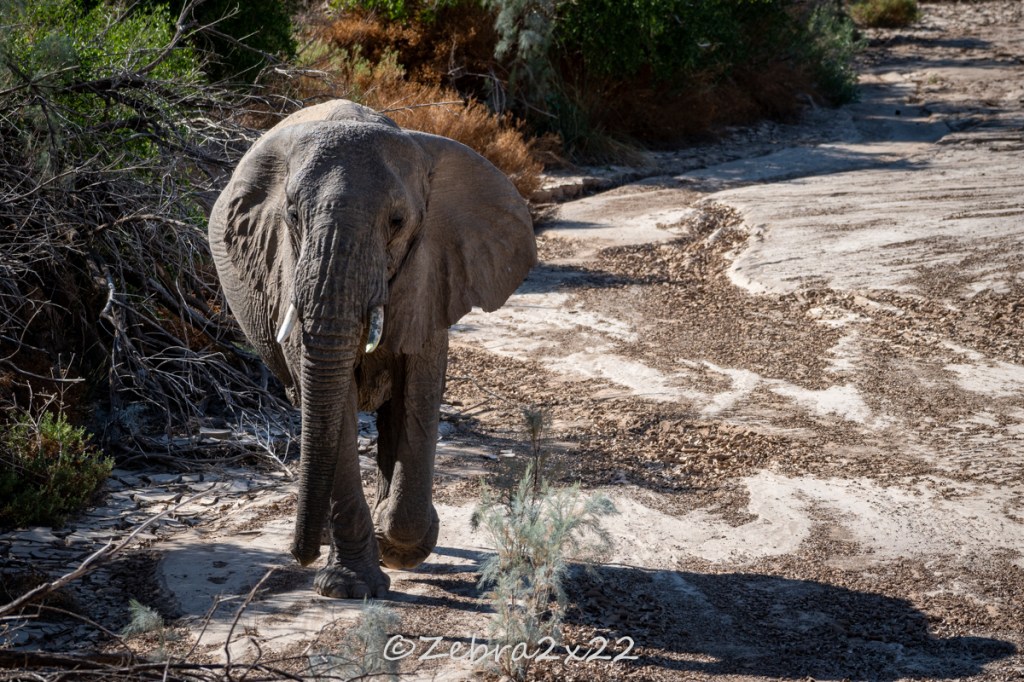
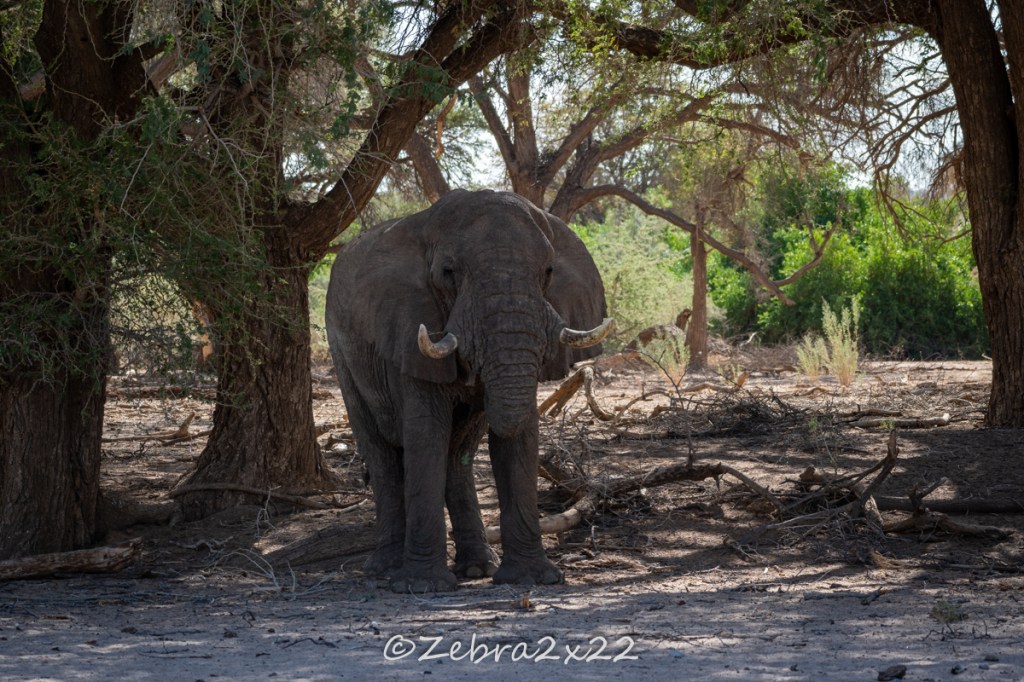
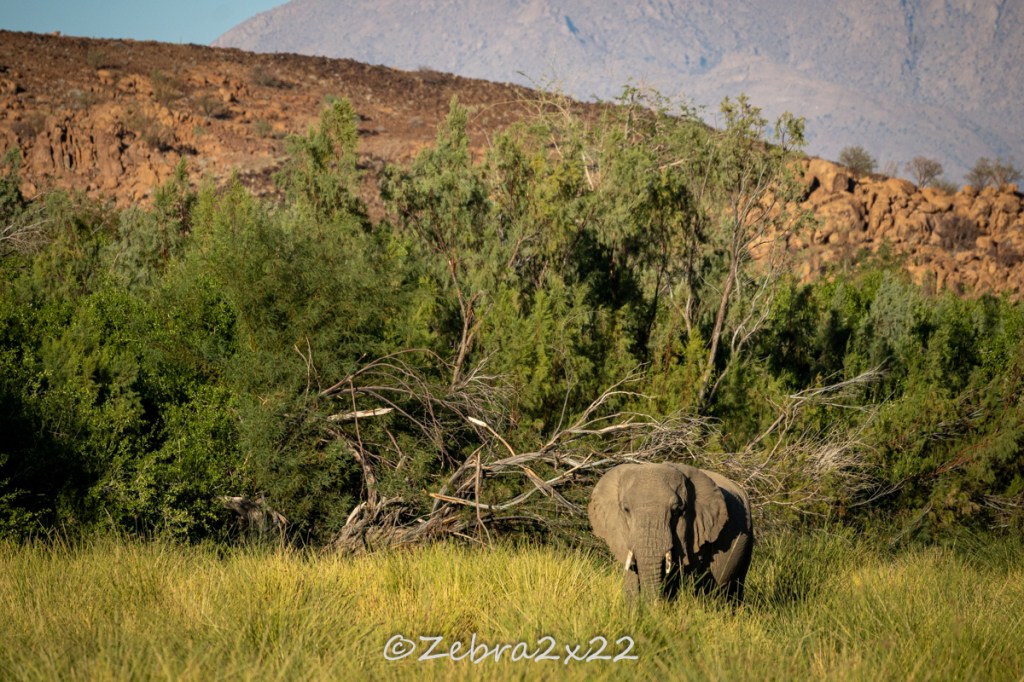
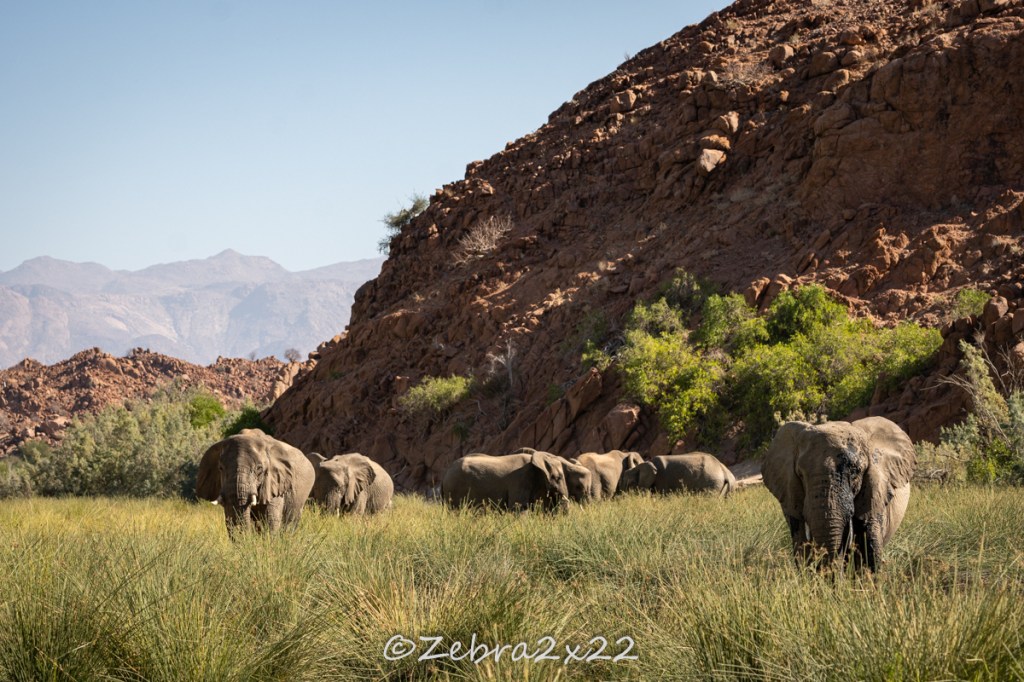
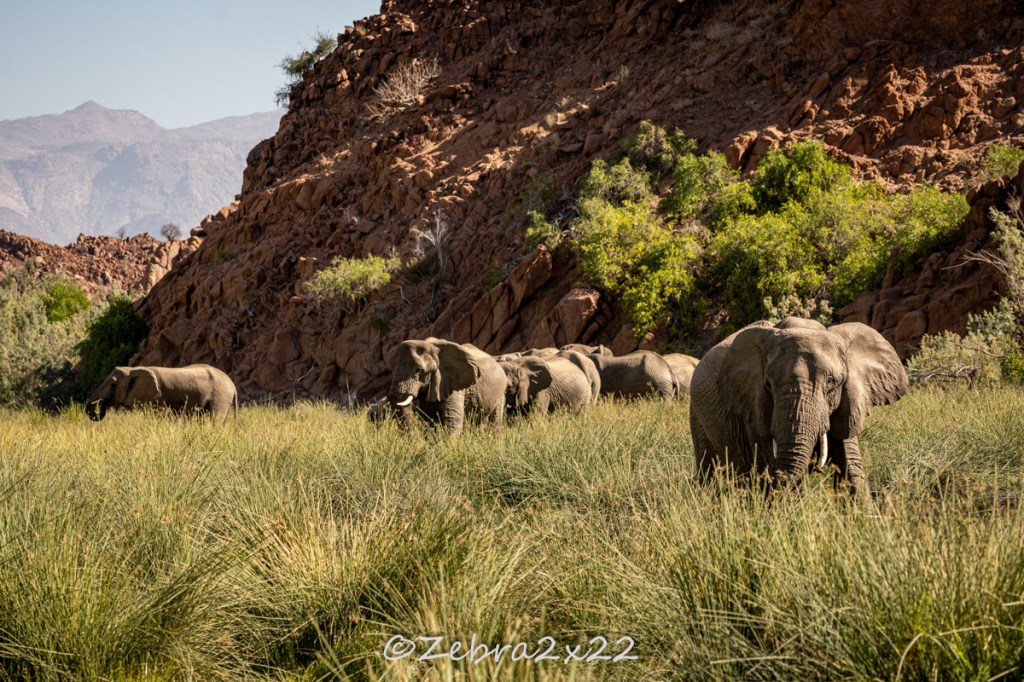
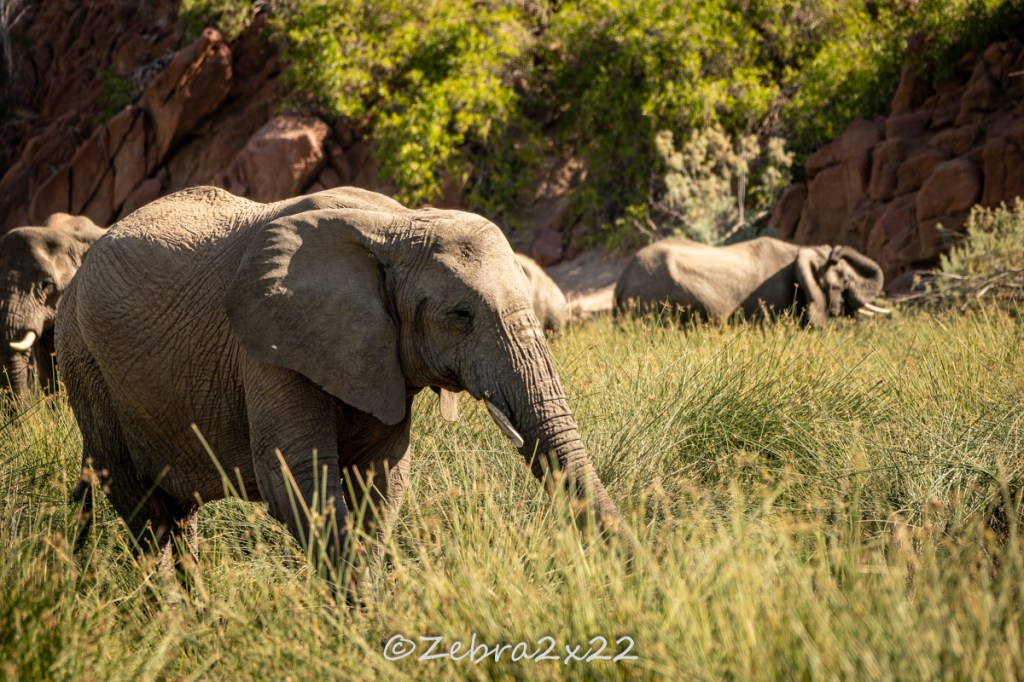
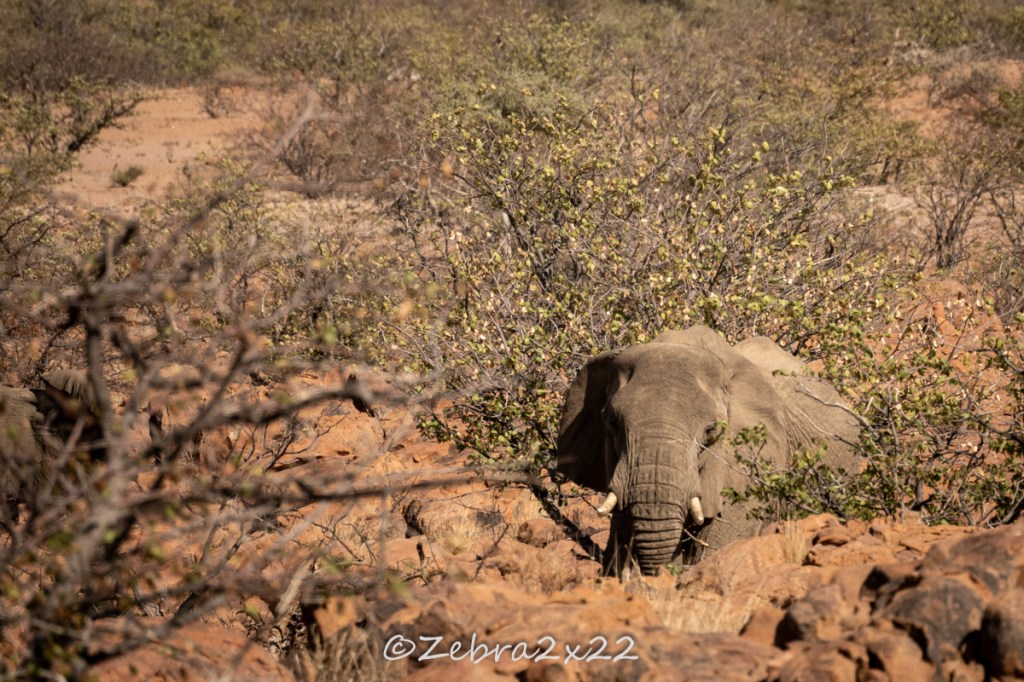
Patrol week this time was very different. We stayed in the Ugab River area and had access to the Ugab herd—the same ones as before, much accustomed to interactions with cars. We also witnessed different human-elephant conflicts, such as bulls destroying inhabitants’ gardens.
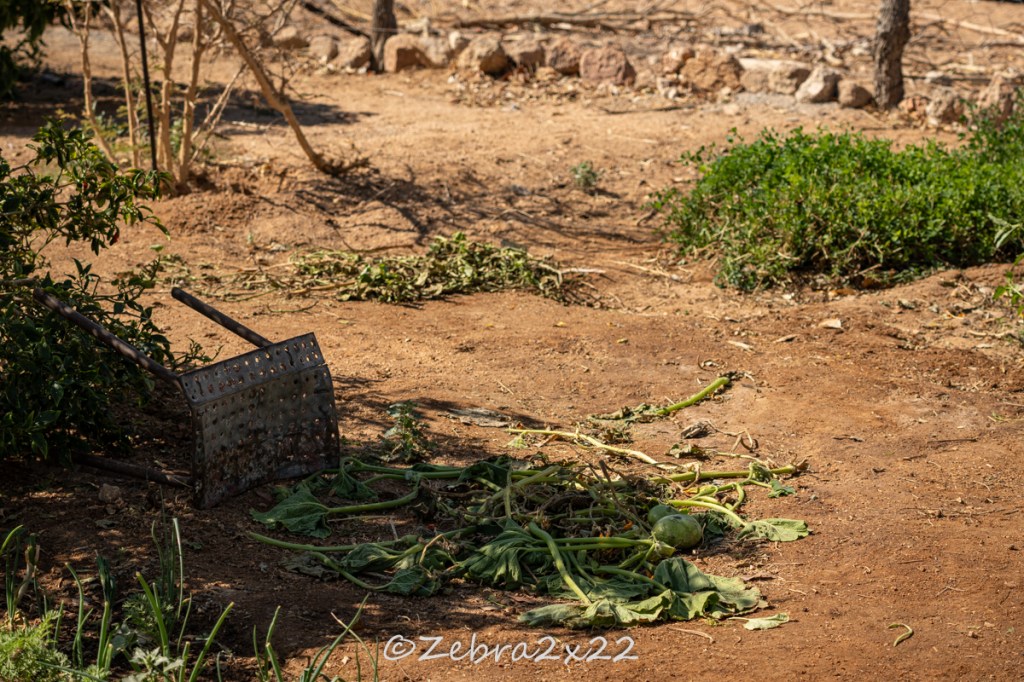
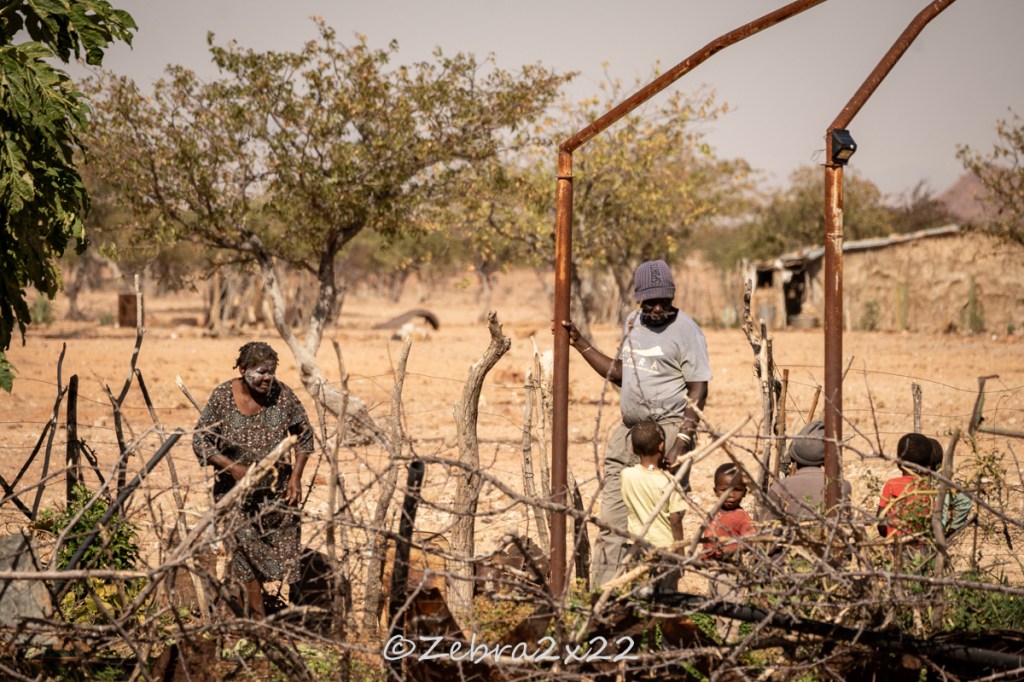
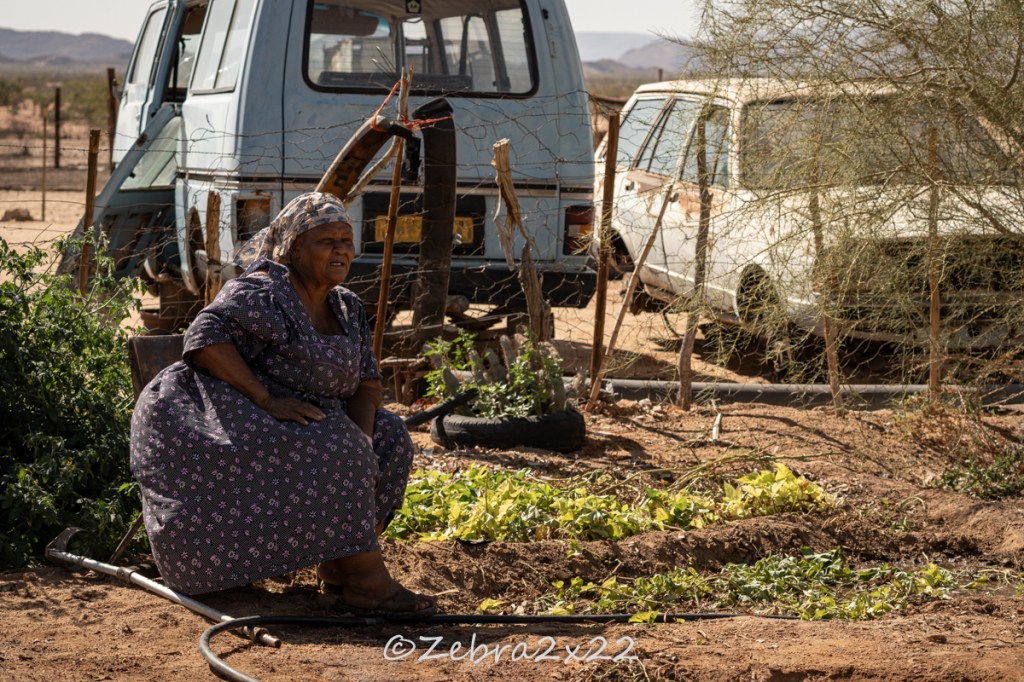
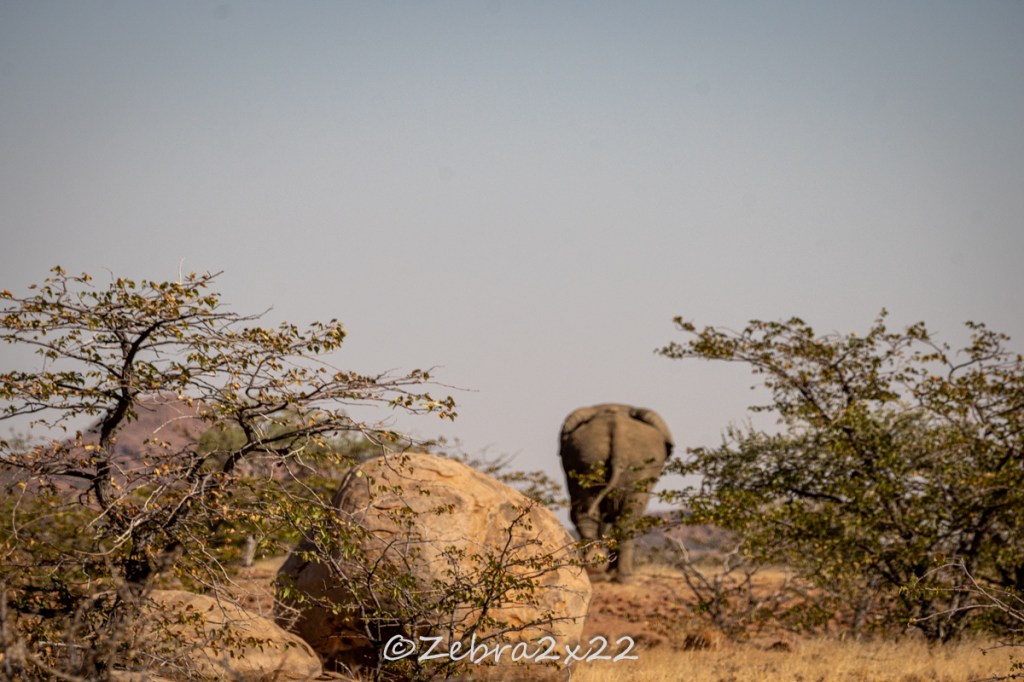
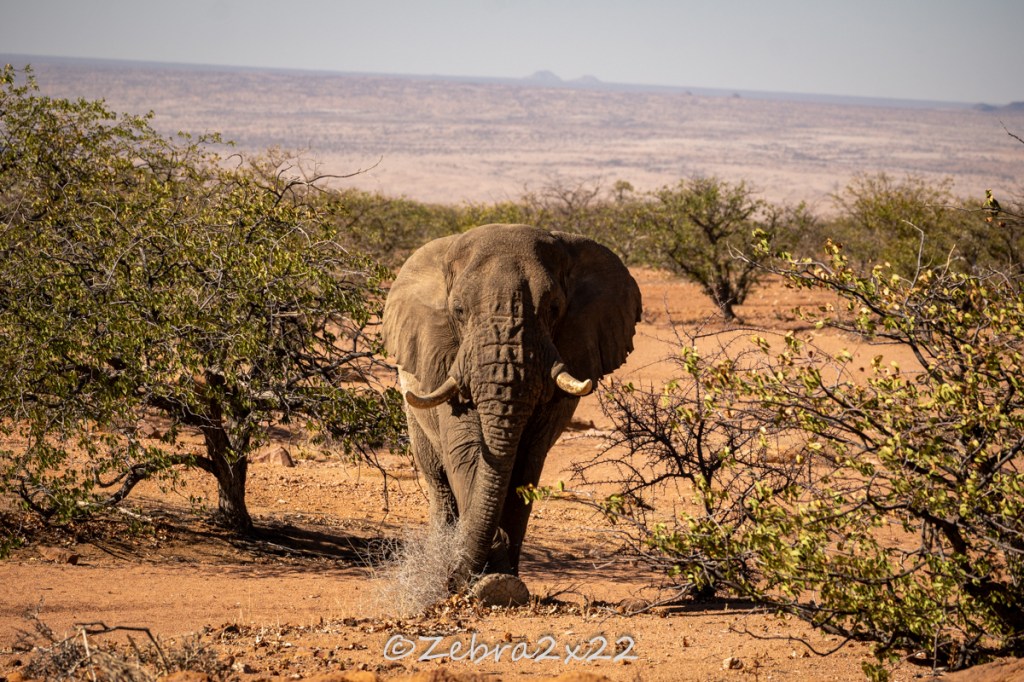
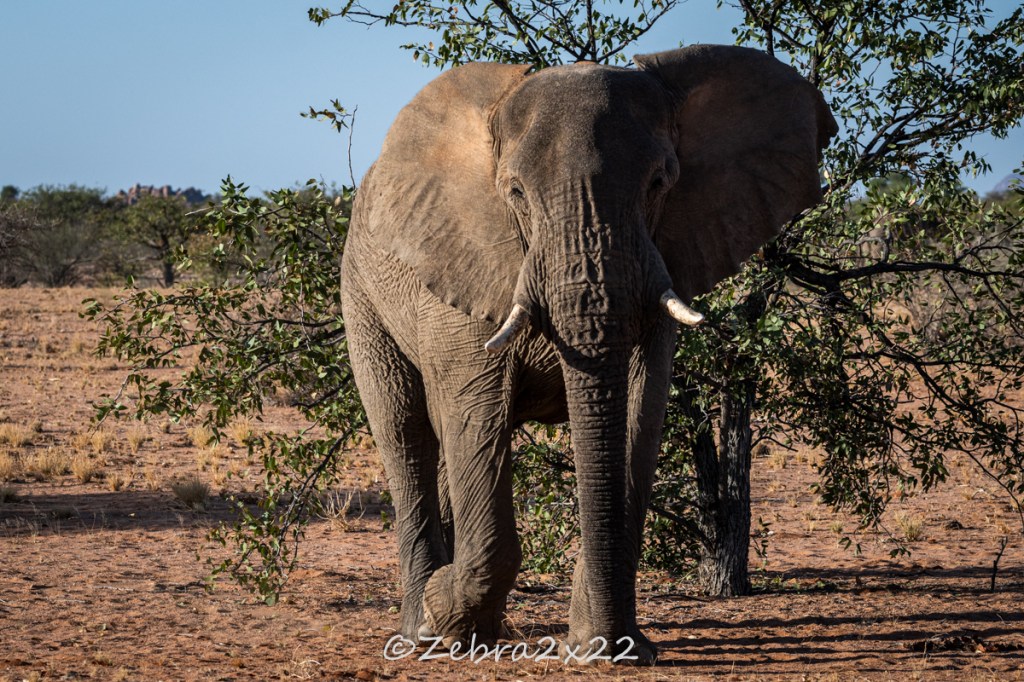
We helped resolve this conflict by chasing the bull away from the area and directing it elsewhere while checking on its general condition.
Bulls were destroying pipes, fences, and trees in the village.
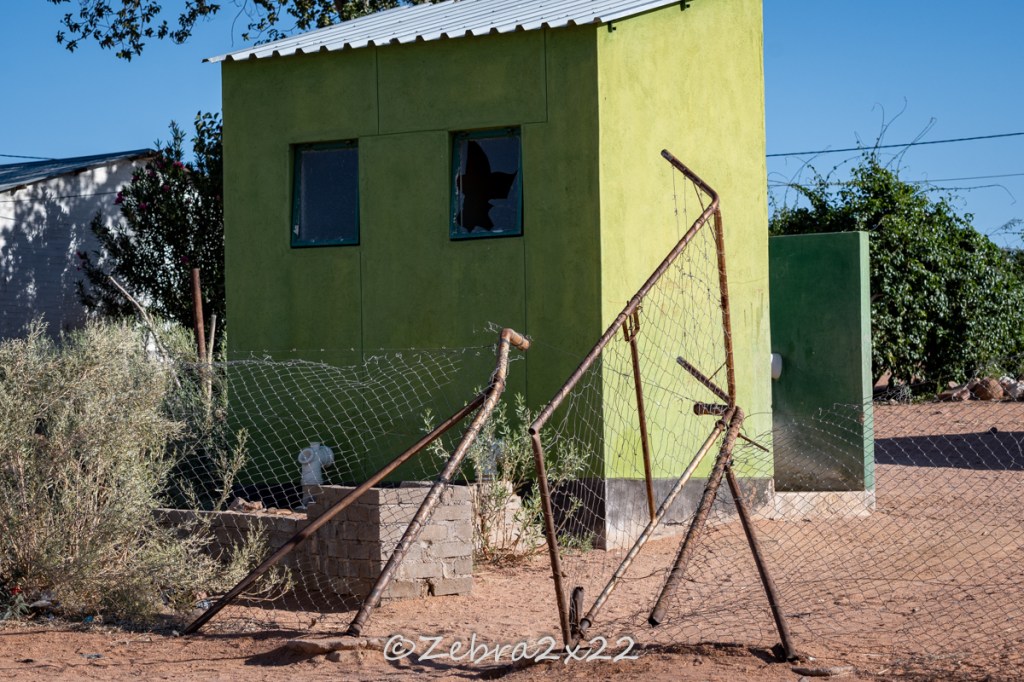
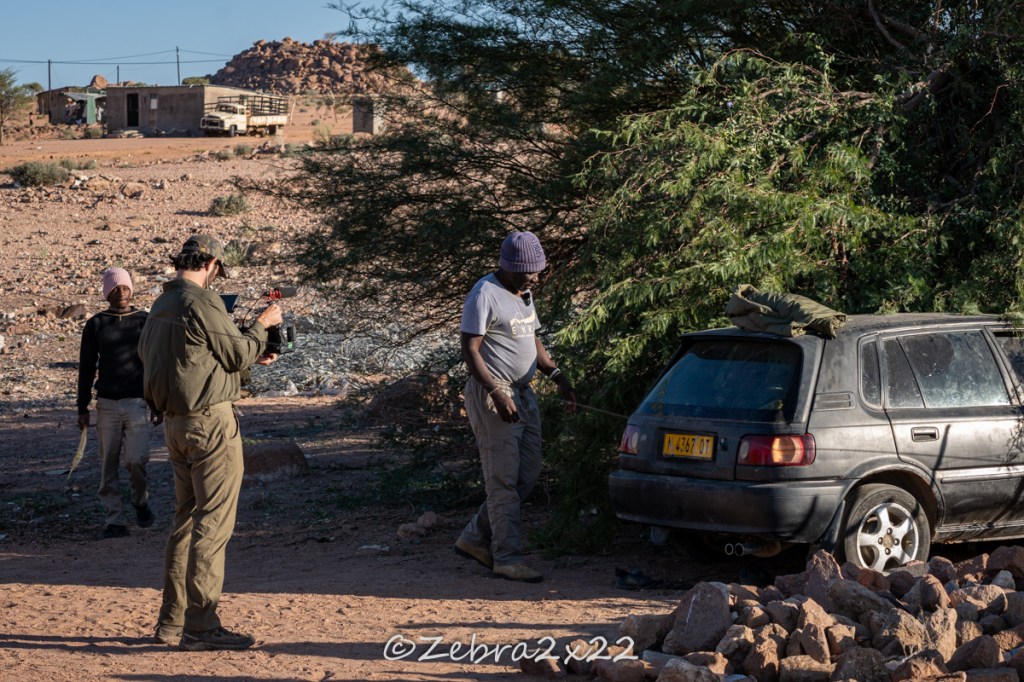


This happened during the night. When we arrived, a car had been smashed by branches from trees destroyed by the elephant. Water was running in the shower, and several fences were destroyed, including those at the school. EHRA guides took this opportunity to discuss the situation with the inhabitants, sharing some general rules that could help them overcome these problems, such as digging the water pipes underground to a depth of 30 cm. They plan to return and check on it during the next patrol week. We helped by moving the car away from the thorn tree, slightly repairing the fence, and stopping the running water.
Finding the right balance between helping people and intruding on their personal lives is difficult. Where do you draw the line?
Later on, we discovered another tree destroyed by the elephant next to the school in the same village. We also engaged with the locals. In theory, there is a water dam far from the village where the elephants can drink, preventing them from coming into the village and causing another human-elephant conflict (HEC).
We found out through discussion that the water pipes feeding the dam had been stolen three times, preventing the dam from being as effective as it should be. EHRA has already replaced the pipes twice. How many times should this happen? While we understand that the local population may struggle and this might explain such behavior, we also believe that education and local awareness are necessary to prevent actions that penalize the inhabitants and endanger the elephants. Another complex riddle to solve. What should be the next course of action: involving the village chief, providing continuous education, stopping the replacement of the pipes, or warning of the consequences if they get stolen again?
During this patrol week, we tracked elephants extensively, using fresh tracks and clues along the way, such as green leaves and broken branches. It was very interesting and also complex, especially when the tracks crossed other herd tracks or older tracks. It was easy to lose the original target.
We were taught how to recognize fresh tracks, how many elephants were present, the direction they were heading, the size of the elephant from its track, their pace, and more. We came across various animal tracks: baboons, ostriches, guinea fowl, springbok, kudu, and leopard—something I will need to learn more about going forward.
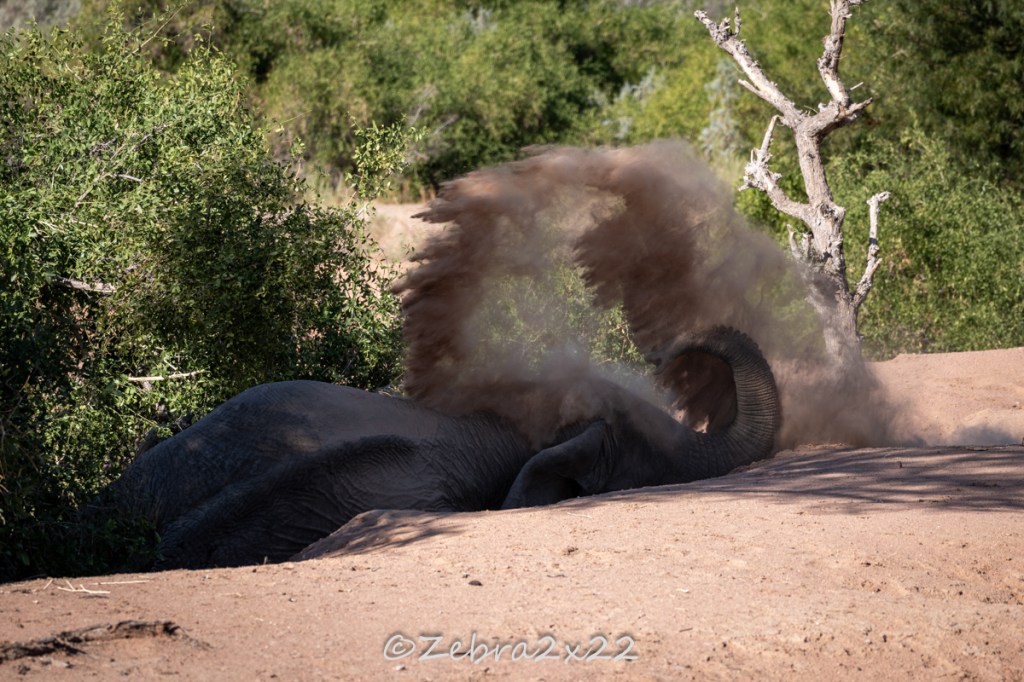
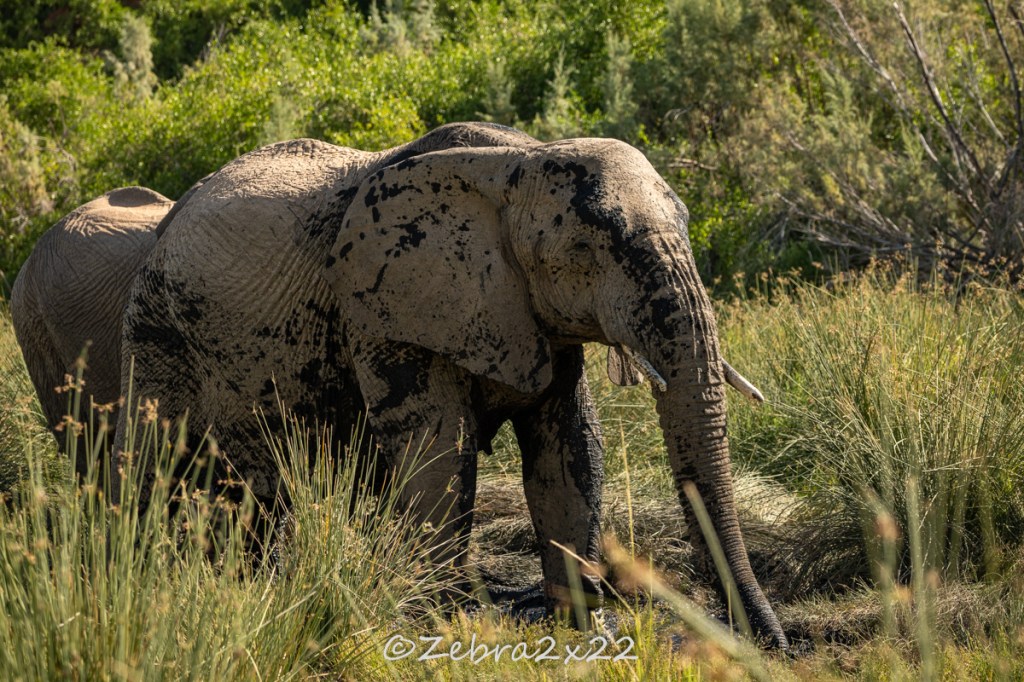
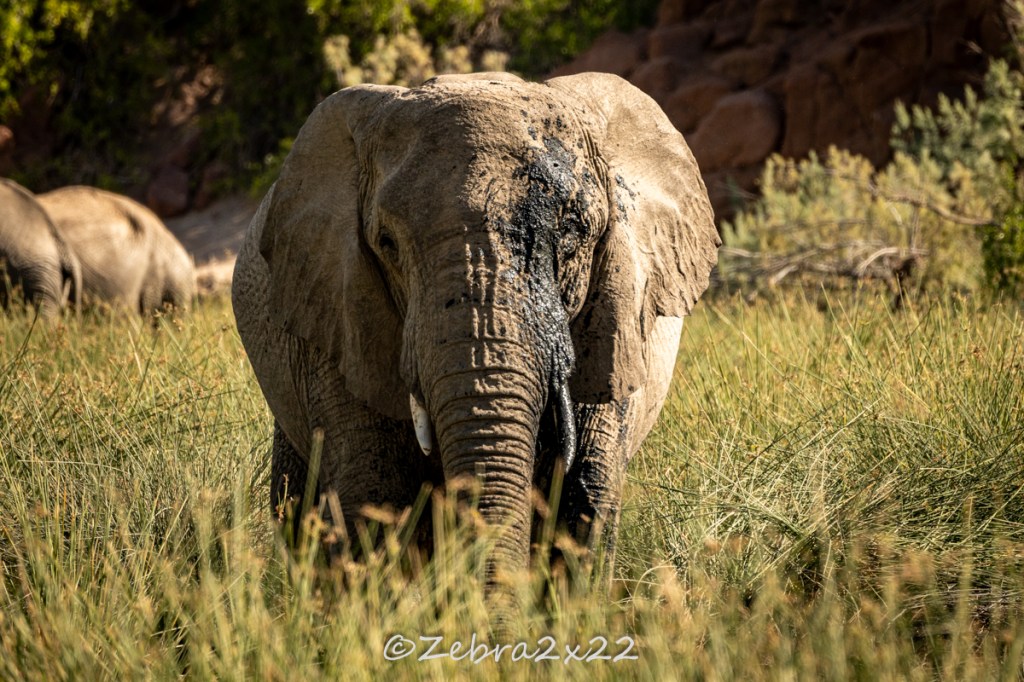
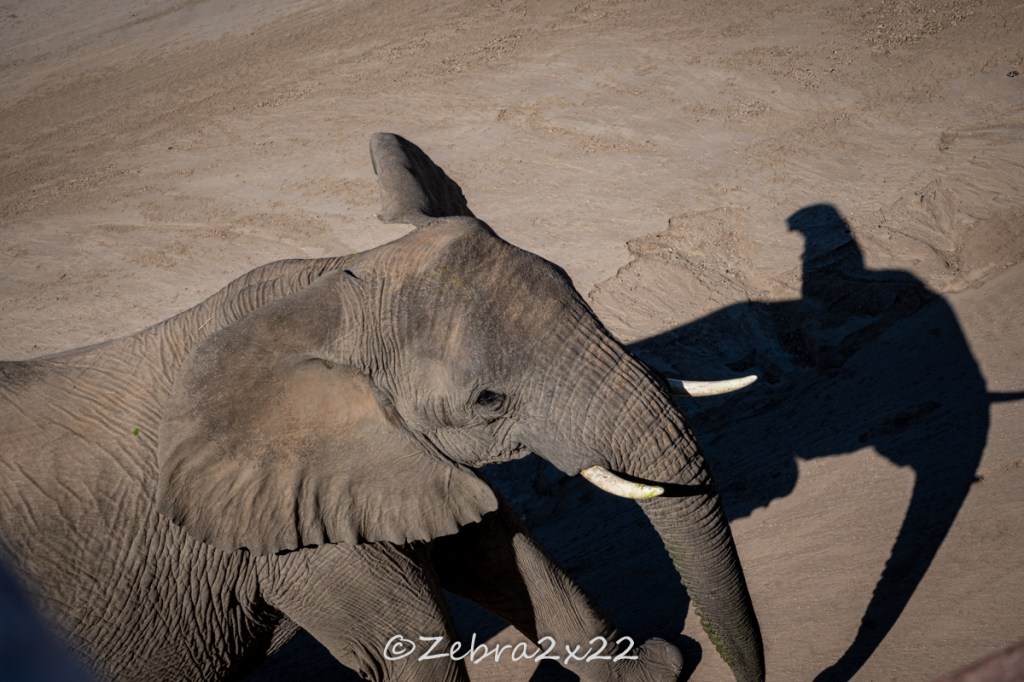
We witnessed various interesting elephant behaviors: mud baths, digging water holes, nap times, feeding on roots, bark, and trees, young bulls playing, trumpeting, and more.
We also conducted an investigation with the Prosopis tree, which belongs to an alien invasive species that grows in the riverbed, consumes a lot of water, and slowly takes over local species. We had to find out if this tree is used by the local population and how. We talked to the elder people on the matter, as they have the knowledge.
We were welcomed by A., the village chief, with a very inclusive song about black and white skins, which we all wear, and how it does not matter. That’s how I understood it. We all participated in the energizing song, which was a nice way to introduce our discussion. The tree is only used as a snack for humans, cattle, and elephants when the seeds are available, and not for anything else like furniture (the reason being that the tree provides food and is therefore not used for anything else). Elephants like the stash contained in the bark but do not feed on the leaves. Overall, it’s just a snack. I thought having this answer would be enough to decide whether the removal of this alien species should be called off. But clearly, it’s not sufficient. Should they let the tree destroy all the other trees for snacks only? That’s a question still under consideration, and a survey is currently in progress in several villages.
This encounter was special. A. used to work and teach at the school; she has a way of telling great stories and capturing everyone’s attention. No wonder she was appointed village chief.
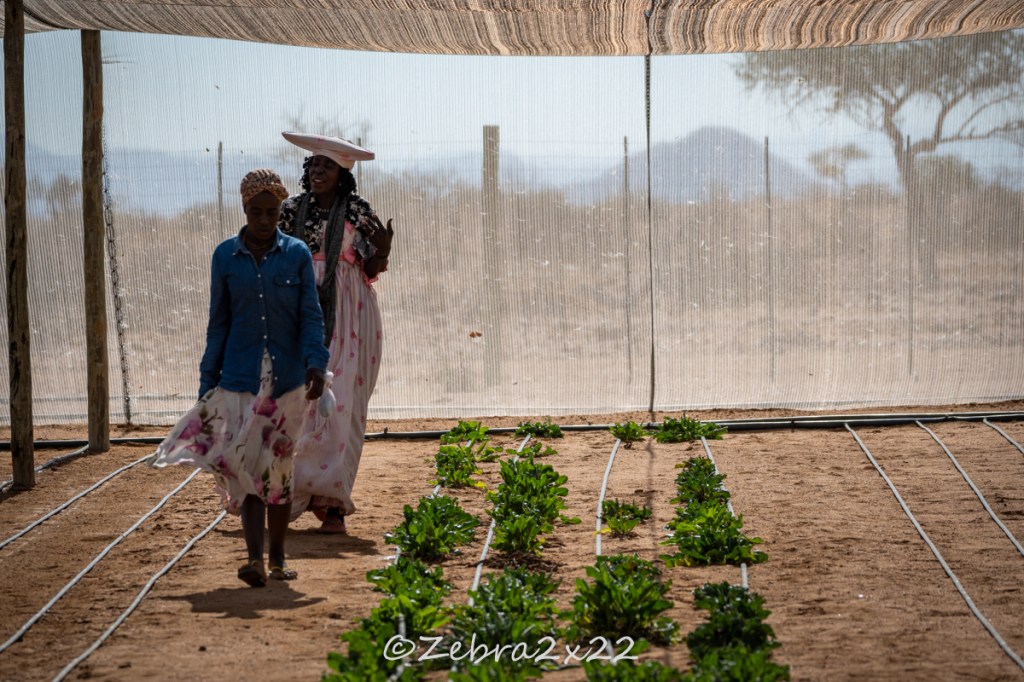
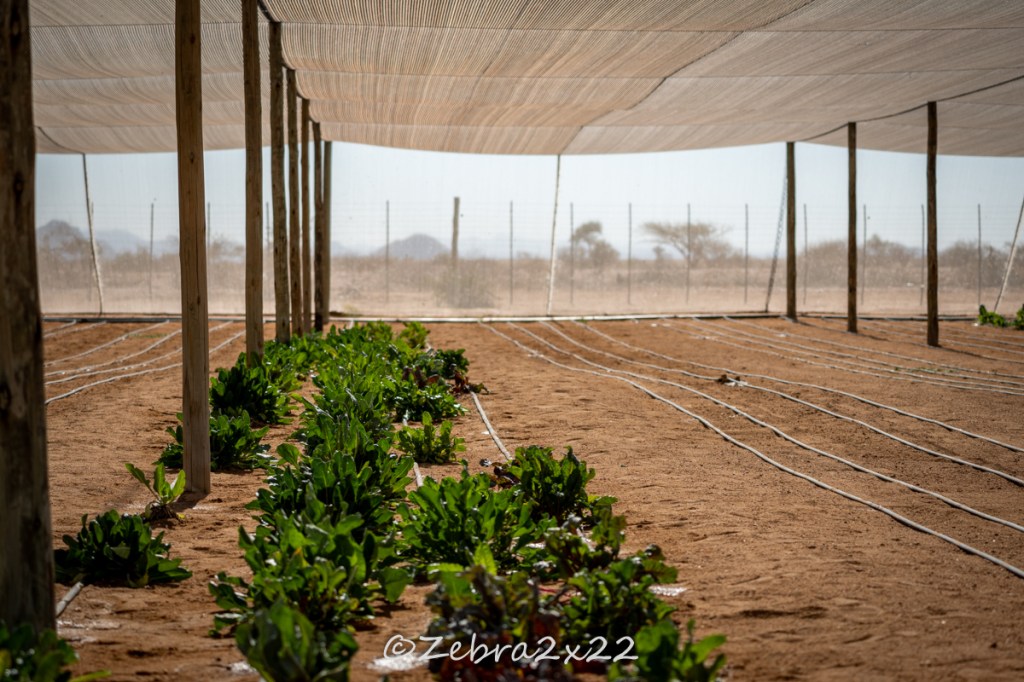
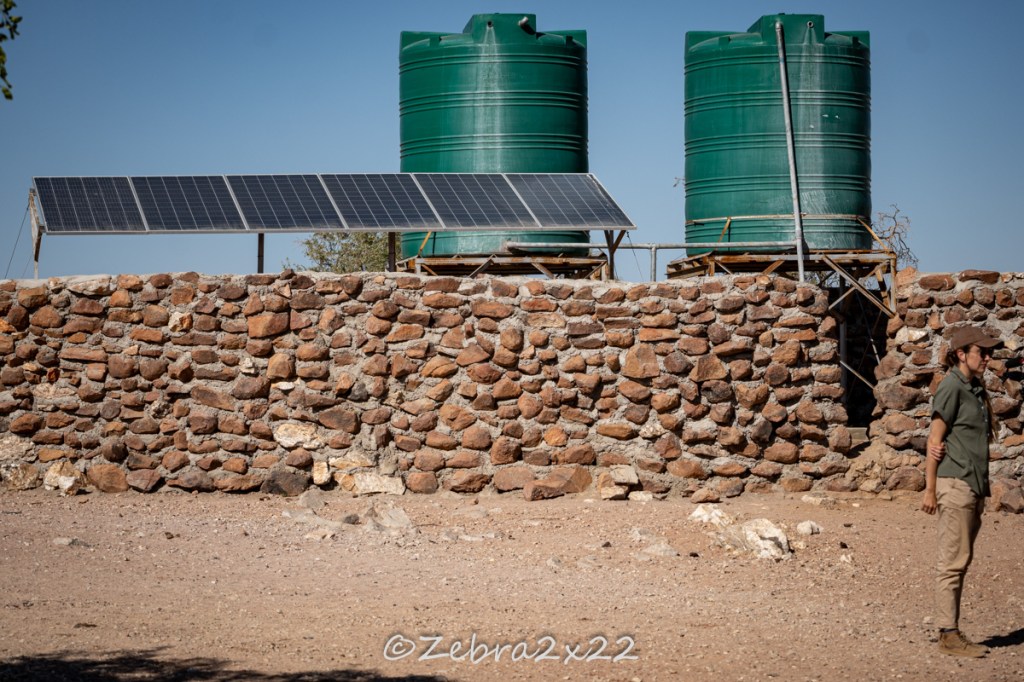
We also visited some community gardens to see their setup and gather feedback on EHRA and the image they have with the locals. We came across some water issues, as it’s a scarce resource. Cattle and shepherds are coming to use the water in the community garden despite the proximity of the borehole, whose wall was constructed by EHRA. The community asked for help setting up their solar panel. They have all the materials, but they need EHRA’s know-how to help them with the installation. This should help solve the water constraint.


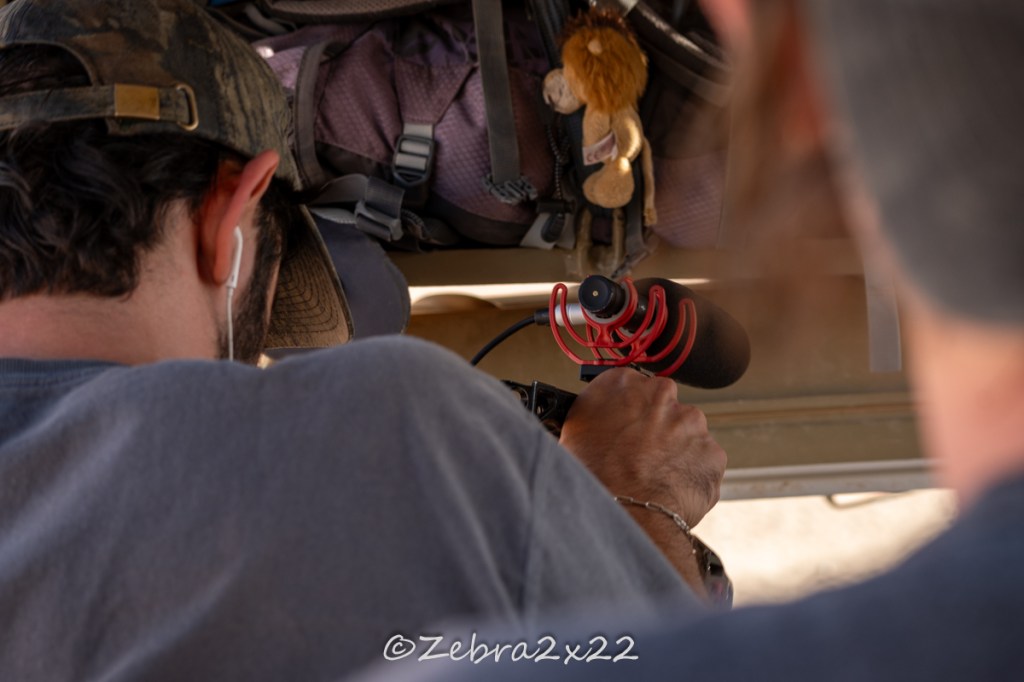
This week was also very special as we were filmed by a crew documenting the reality of conservation in Africa. The crew raised funding via crowdfunding (GoFundMe), which is quite popular in the U.S. They plan to create a series of documentaries on conservation and have already filmed various organizations and their local actions, like relocating lions and snare and ranger activities. I’m very interested in seeing the results, but it will take some time—editing the movies, finding a buyer (maybe Netflix), etc.
Here is their project if you’re interested: @guardians.of.conservation (Instagram)
My impressions
I really think I am heading in the right direction. I’ve been so happy during these weeks—my mood lifted by the landscapes, the overall experience, sleeping outdoors, getting a glimpse of the conservation issues, and learning about new species. I clearly have a special connection with the elephants, which I’ve learned to know and love. They are so crucial for the region and have a significant impact on the local fauna and vegetation. They fascinate me—truly. I would like to find a way to get closer to these issues and contribute at my level. I really feel that I’m starting to understand my decision back in September last year. There’s still a bumpy road ahead, but the journey is very interesting, and I’m looking forward to it.
















 Zebra2x22
Leave a comment