Three weeks have already passed since my arrival in South Africa.
Everything has gone very well. I was so worried about crossing the border and not getting a 3-month tourist visa. I had imagined countless scenarios in my head, none of which, of course, came to pass. My hands were shaking, something I hadn’t anticipated, but I kept it to myself. All I had to do was place my fingers on a machine, face a camera, answer one question about my address in South Africa, and that was it. I was granted a 3-month tourist visa instantly, with no difficulties whatsoever.
I’m sorry I wrote so much about the student visa ordeal. I tried to get it until the very end and became obsessed with it for a long time. I was really desperate to secure it for better studying conditions. In hindsight, I admit: it was much ado about nothing. This visa story, however, gave me the opportunity to see friends and family, reconnect with former colleagues in Madrid, plan a nice break in October, and complete my full training as the academy found a solution and was able to reschedule my program to fit my constraints.
So, here I am right now, in Dinokeng Reserve, near Mongena Game Lodge, studying for my FGASA Level 1.
The studying conditions are perfect for me—the best I’ve ever had. Our camp is based in the Dinokeng Reserve, with no fences. We’re outside, meaning that any animal (including the Big Five) can cross the camp at any time, day or night. In fact, a lion crossed the camp one night; we saw the spoor the next day (on one of the rare nights I got up to use the bathroom). We’ve seen plenty of animals: elephants on the other side of the river, hippos, a crocodile, and even some otters in the river. At night, we can hear the lions growling, the distinct sounds of jackals, and sometimes hyenas. Occasionally, we even set up a table outside to study by the river.
I’m sharing a tent with another student, sleeping in a sleeping bag enhanced with a hot water bottle and two blankets due to the very chilly nights. Hot showers are available if you’re one of the first to get there. Our diet mostly consists of carbs, prepared by the camp cooks.

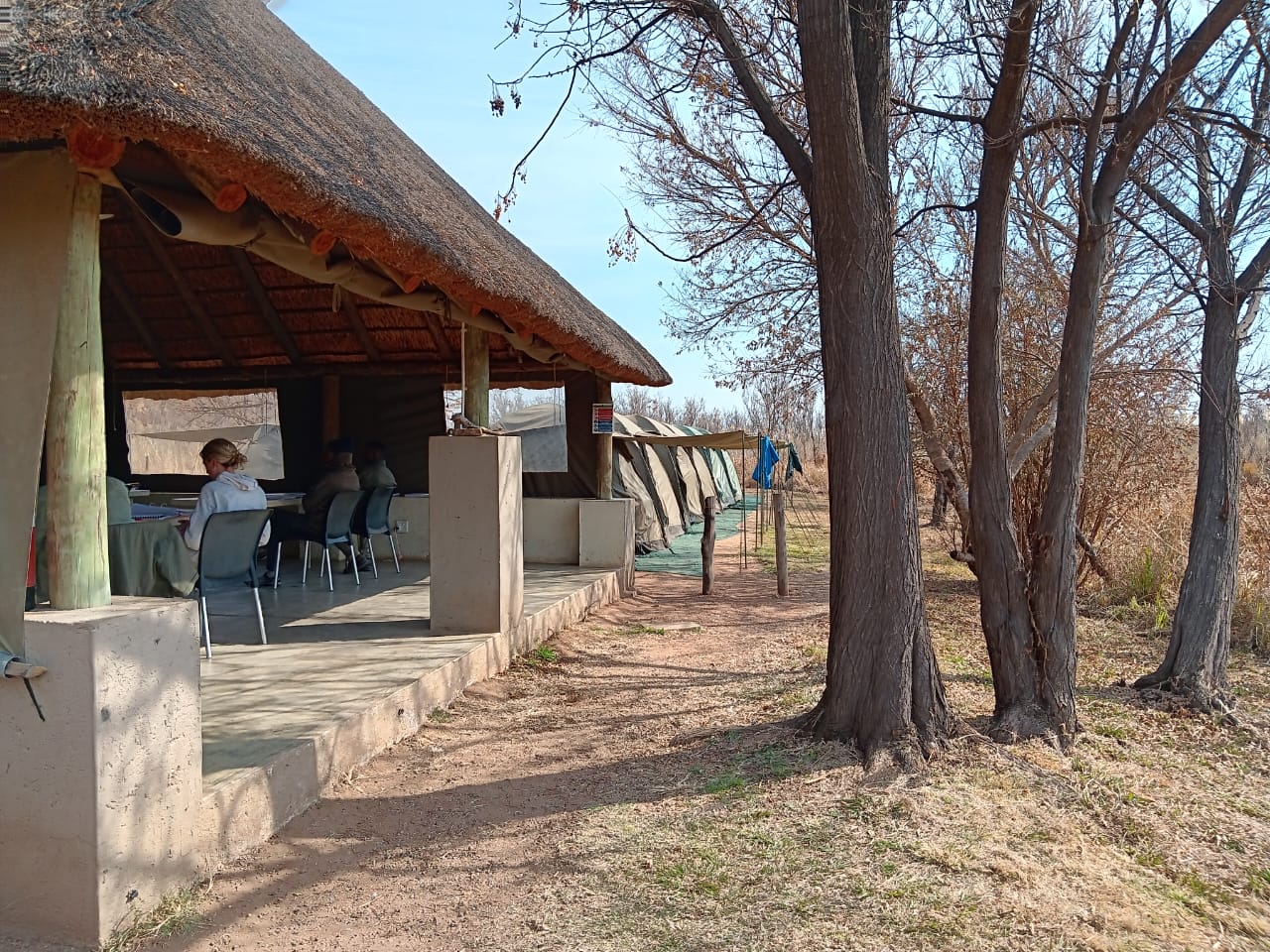

The group is small, with students enrolled in various programs—some longer, some shorter, and some more advanced, depending on their subscriptions. So far, we’ve had up to 14 students at camp, which is perfect for studying. We represent a range of nationalities and countries: Australia, Italy, Belgium, the UK, America, South Africa, Germany, Zimbabwe, and Tanzania. Everyone comes with different backgrounds and projects. Like me, some people have resigned from their previous jobs and plan to work in the industry; others are looking to change their lives, while some are already in the industry and are pursuing this additional certification to qualify for field guiding or trail guiding. One thing we all have in common: we love nature. I really appreciate my fellow students and instructors; the general atmosphere in the camp is great, despite minor issues like washing cups and teaspoons.
The pace is intense.
From Monday to Friday:
- We, generally, wake up around 6 for a coffee or tea.
- We are out for a game drive from 7 to 9:30-10.
- Breakfast when we head back to camp.
- Lecture between 10:30 and 13:00.
- Sometimes a lecture during the afternoon as well or studytime.
- Another game drive from 16:00 to 18:00.
- Sun is set at 18:00 and the nights start to get very chilly quickly, we had a few nights below 0.
- Dinner is in general at 18:00.
- Study time at night and in general we head to bed around 21:00, if not later depending on the program, the temperature, if we have an assessment or homework; if there is a bonfire.
- Saturday is reserved for studying prior to the written exam on sunday.
- Sunday morning written test followed by a nice rest in the afternoon with access to Wifi.
Some day, you are on duty and you need to wake up early to prepare and check the vehicles and sometimes pump up some flat tyres.
This is a daily excitement to be honest. I am feeling so happy and I never regret my decision. I have always something different to see, something new to learn and the topics thrill me.


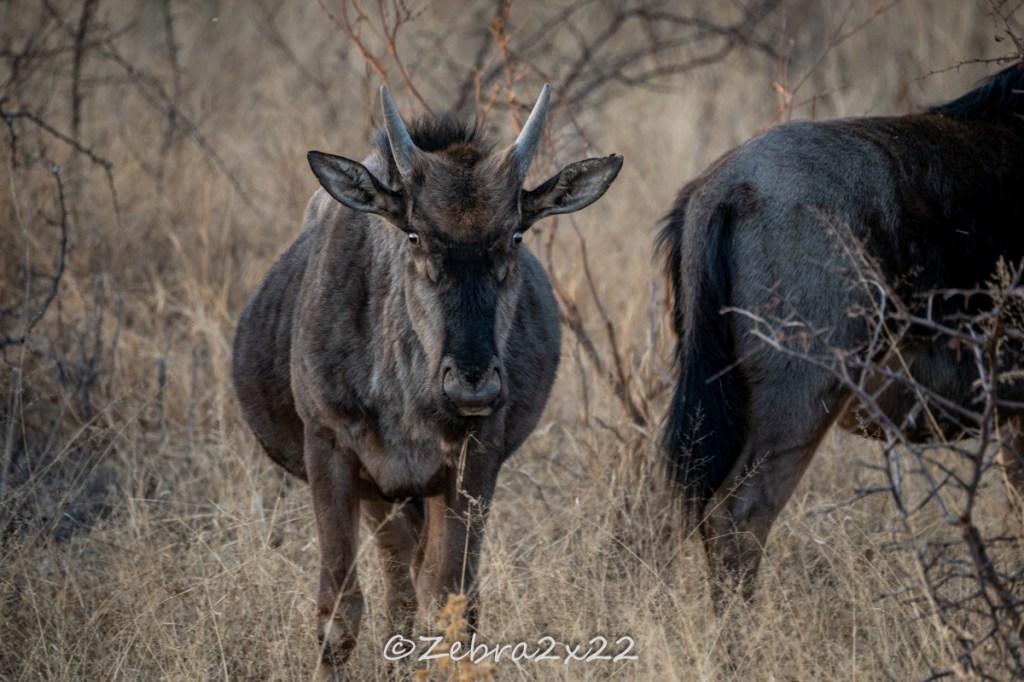
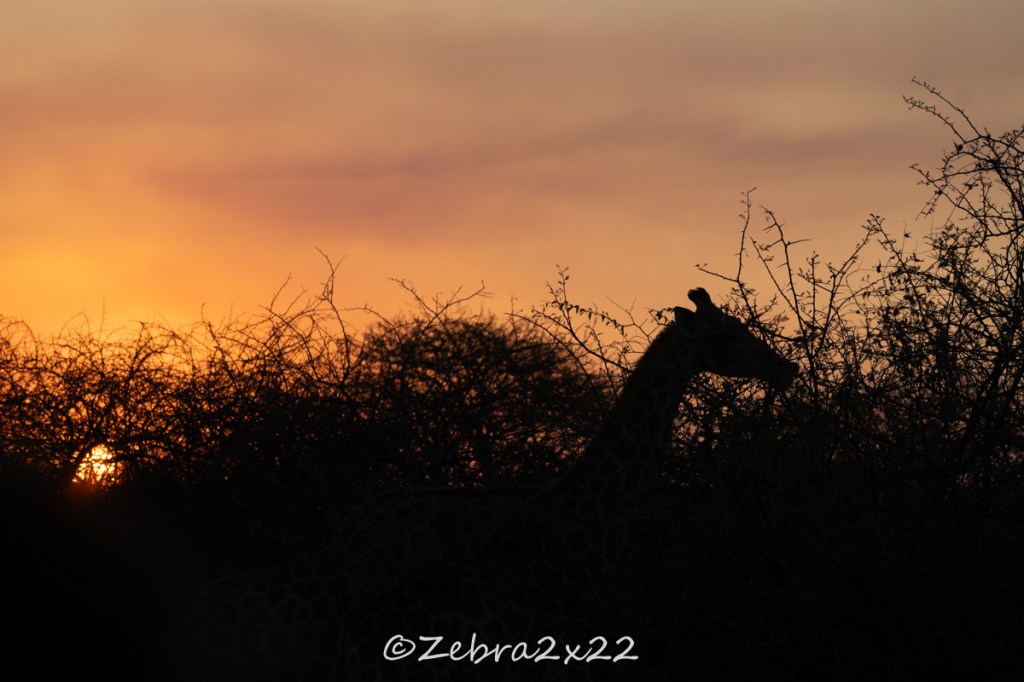
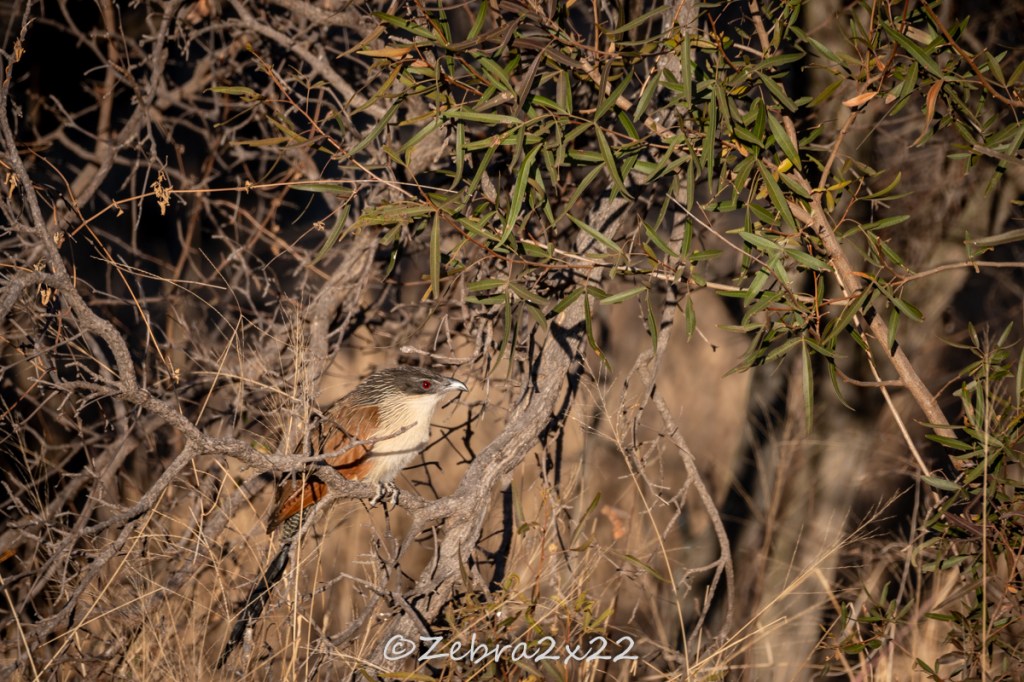
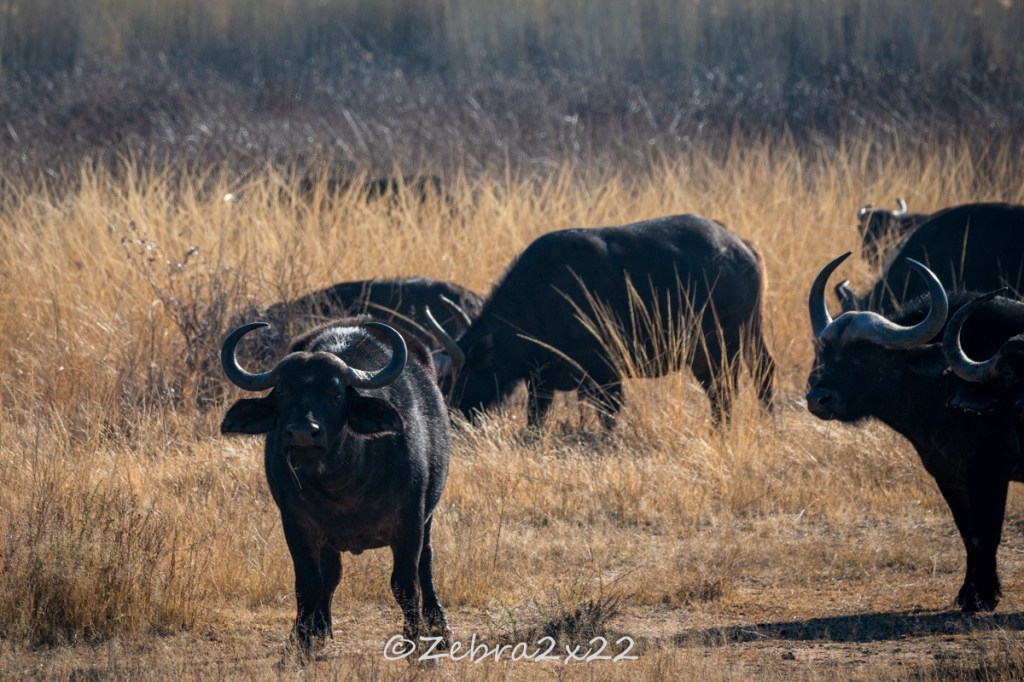

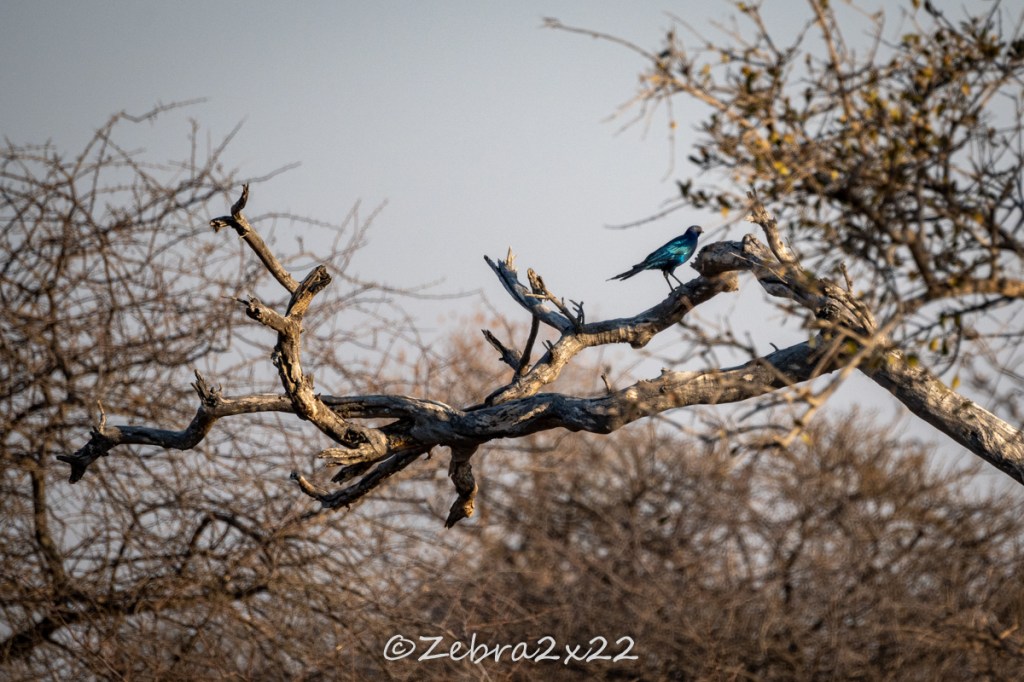

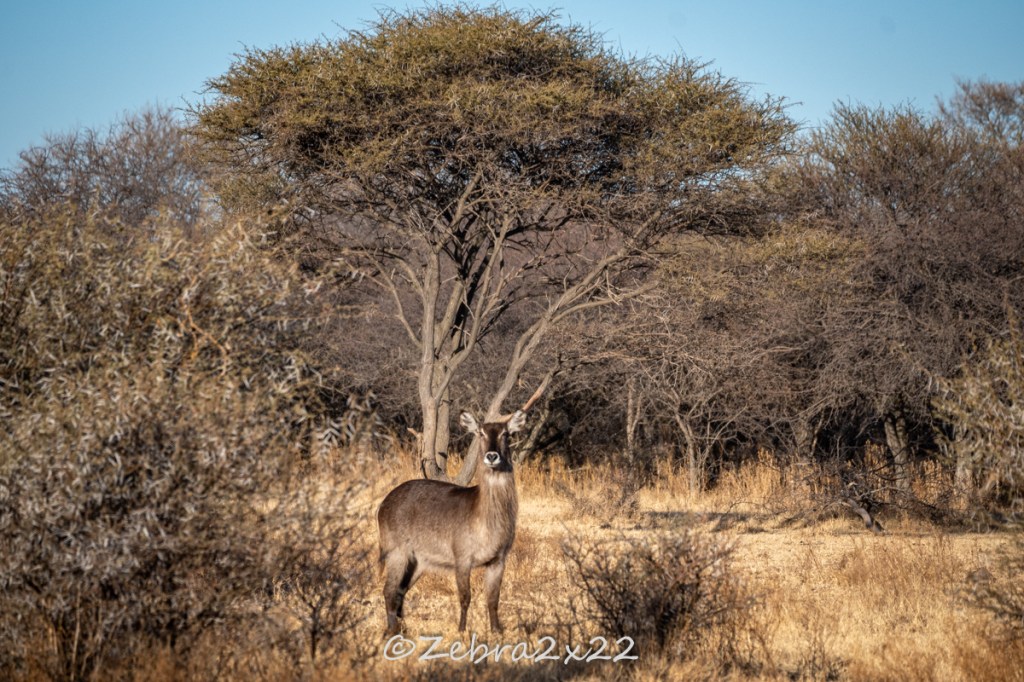

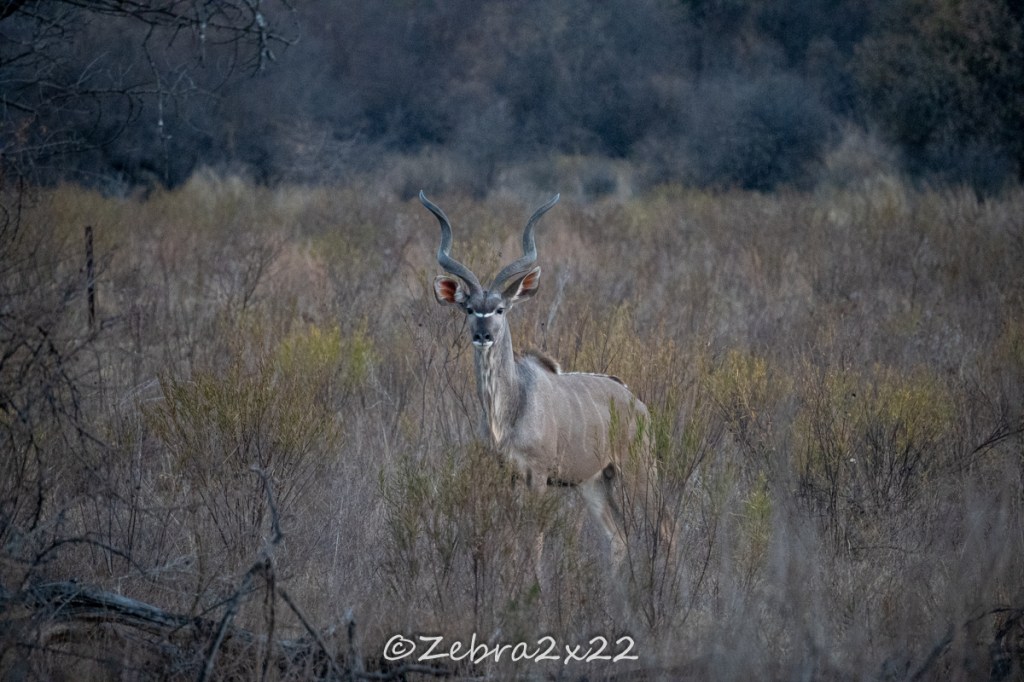

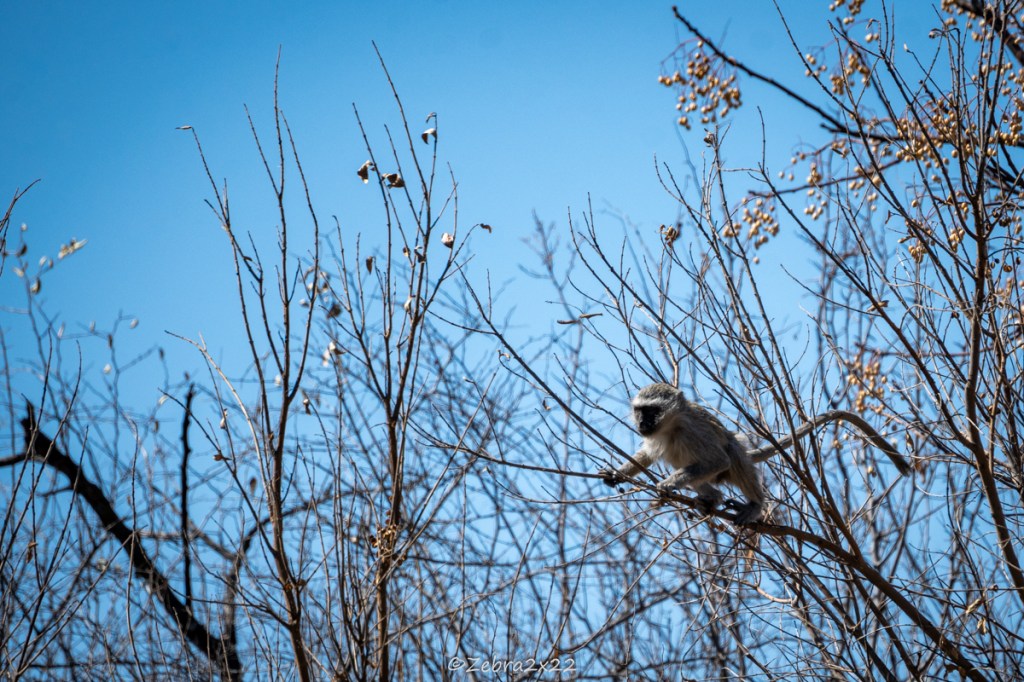
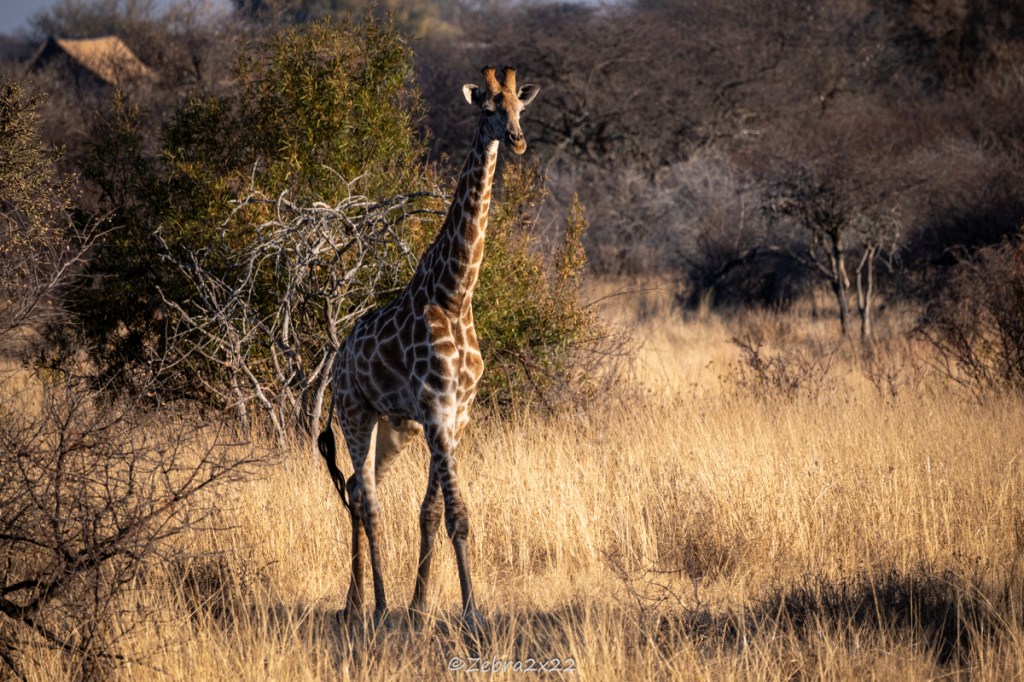
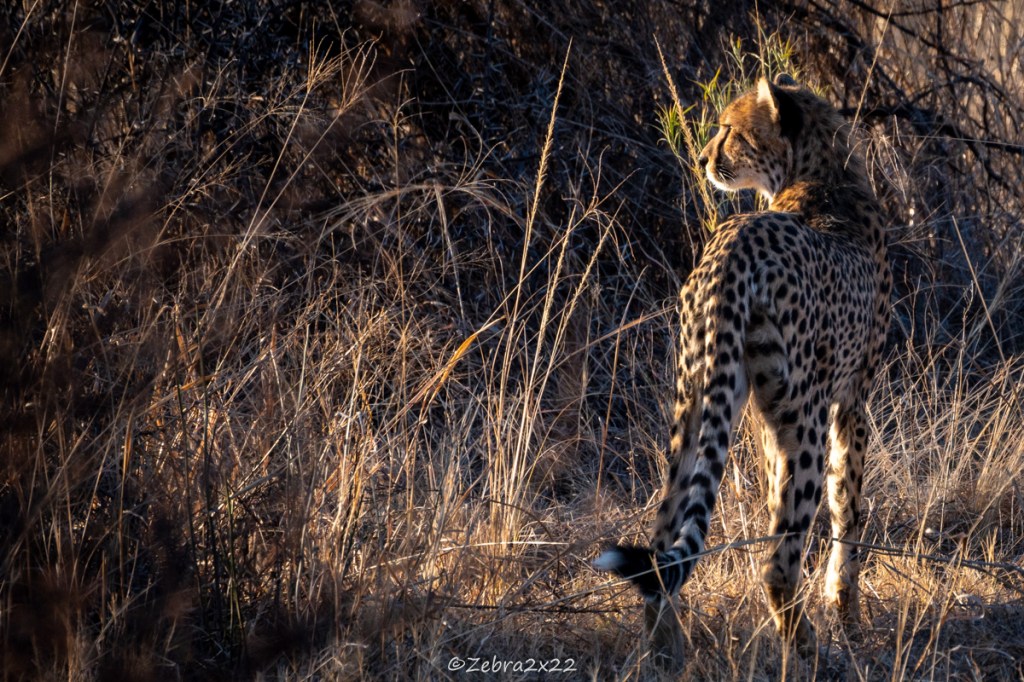
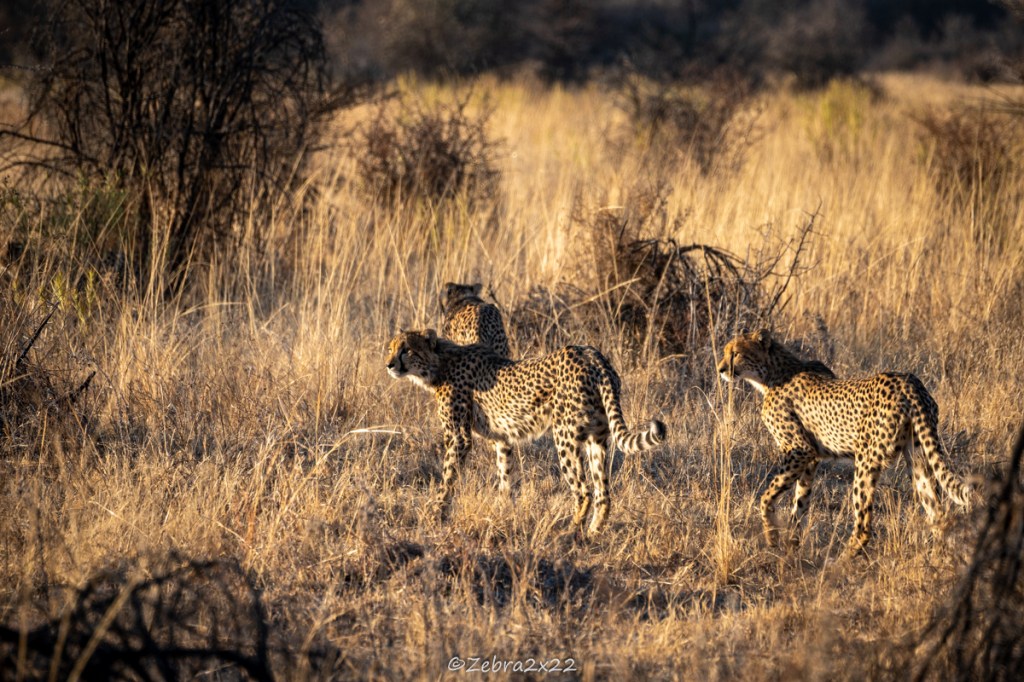

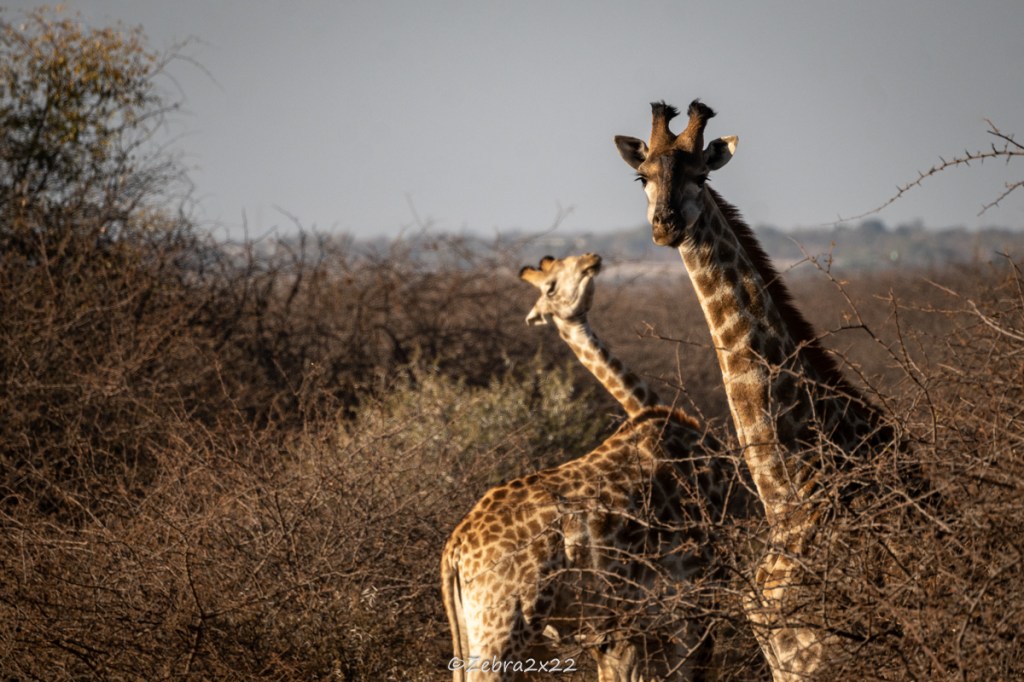

The program has been focused on the following modules for the first 2 weeks:
- Geology
- Biomes (large natural ecological area defined by climate, wildlife)
- Plants (Grasses and trees)
- Mammals
- Birds
- Animal behavior
- Taxonomy
- Historical Human habitat, Conservation mangement
- Field guiding best practices and code of conduct
We have a theory and practical workbook to fill in everyday along with the lectures and course materials to read. We have some practical exercises : Practical guiding (45 mn each) where you practice to be a field guide and drive your guests, presenting a tree with all its characteristics, an animal and written homeworks sometimes.
It is a nice feeling to start studying again, to learn everyday.
I really love it.
My Highlights of the First Weeks
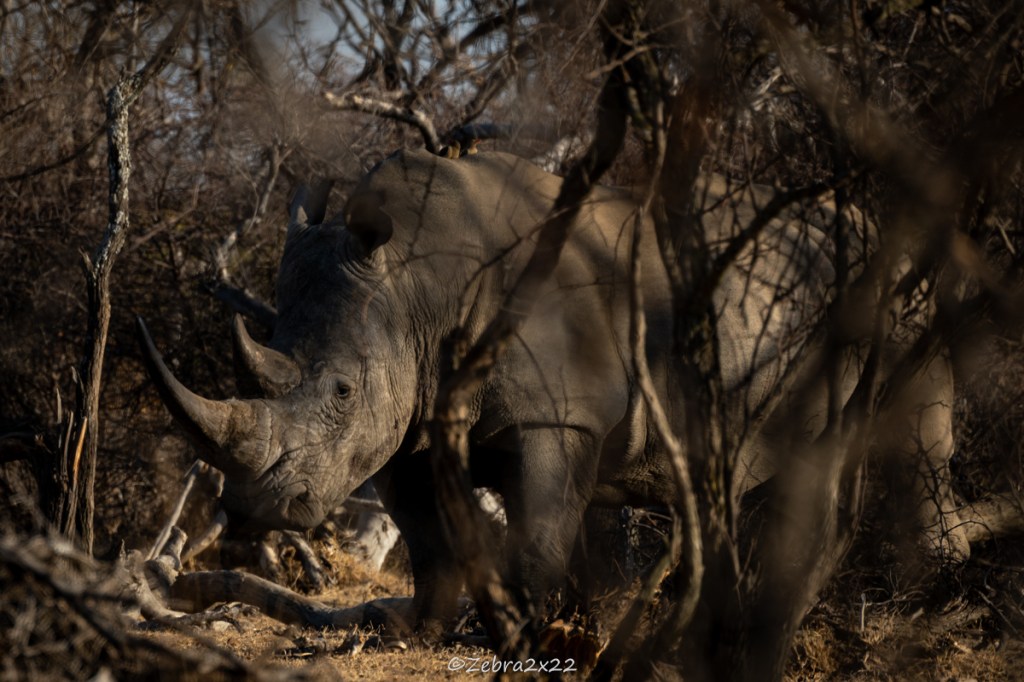
I had the incredible experience of being on foot for the first time and had the chance to approach a white rhinoceros with the other students. It was my first rhino sighting.
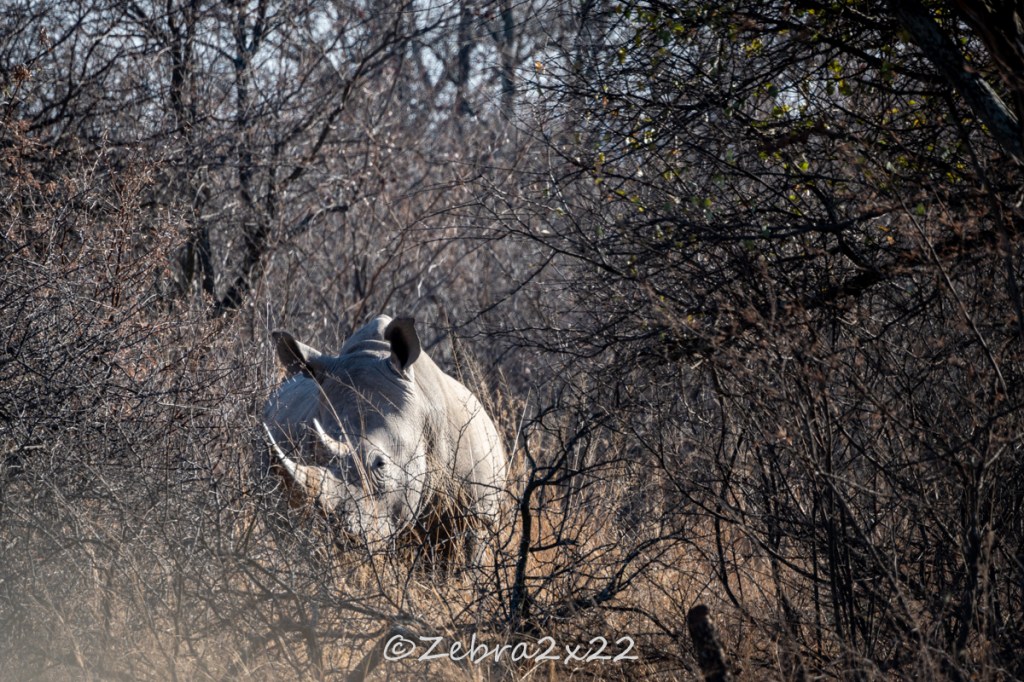
Another day, we were split into small groups, and we trailed a black rhinoceros through thick bushes on foot. These animals are known for their curiosity and might follow you, thanks to their excellent sense of smell, while you’re trailing them. They are more skittish than the white rhinoceros and are more likely to charge if they feel threatened. So, you must approach them with the utmost caution. We noticed, via the tracks, that the rhino started running and became aware of our presence; we decided not to pursue further for our own safety. I vividly remember the adrenaline of that moment—it was priceless.
I particularly enjoy the discussions around the bonfire, especially when we talk about rhinoceros conservation and its wide-ranging complexities.
3rd Week
This past week has been a bit different. We paused the theory lessons and focused on tracking and signs from 7:00 in the morning until 3:00 in the afternoon. The way it works is simple: we stop the vehicle, the instructor circles tracks, droppings, and things of interest. Each of us must identify the species to which the spoor or scat belongs, sometimes providing interpretations of what has happened or identifying the exact foot of the animal (right or left, front or back) and its pace. It’s very challenging and fascinating at the same time.
Depending on the difficulty of the question and your answers, you receive positive points for correct answers or negative points otherwise. This prepares you for a tracks and signs assessment by the CyberTracker organization.
- 70% to 79% is equivalent to Level 1.
- 80% to 89% is Level 2.
- 90% to 99% is Level 3.
- 100% is professional.
This is a recognized certification in the industry, especially if you want to pursue trail guiding. After a week of training, I now feel that my eyes are starting to see and interpret the tracks and signs. This is just the beginning, as there is so much to learn and see. We’re in winter, so there are barely any insects at the moment (not even mosquitoes), which makes it easier.
Throughout the week, my scores oscillated between 62% and 77%, which I’m proud of, considering I’ve never lived in Africa close to this wildlife. Each day, I created a PDF with the different tracks we encountered and compiled all my notes. You can see below what I’ve been working on.
On Saturday, we had the CyberTracker assessment. It felt very difficult, with a lot of new material. I really thought I had failed it, which I hated, as you can imagine. After we returned to camp, I did the dishes, took a nice shower, and cleaned my tent to clear my mind before the results were announced.
The suspense was intense. We had a general session in the lecture room where we were called one by one to receive our scores, give feedback, and review our errors in front of everyone. The instructor called each of us in ascending rank order. I was surprised not to be called before 70%, so in the end, I made it! I passed the exam with an 83% (a score I never achieved during the practical sessions). I was really proud.
4th Week
This week, we started a new program: Dangerous Game Week (DG Week). The plan is to walk near dangerous animals (the Big 5) on foot. We have 7-hour walks each day, which is great. I really felt my body needed some activity since we’ve been sitting a lot these past weeks, and we cannot leave the camp due to the risks. The instructors carry guns for our protection.
This morning, we were lucky enough to approach lions and a breeding herd of elephants on foot. I much prefer this way of experiencing wildlife compared to game drives in vehicles. I feel a profound respect for these animals and realize how vulnerable I am as a human being. The danger is very real, and without the knowledge of our instructors, situations could quickly turn tricky if not anticipated—which has not (yet) happened. You really need to be humble when approaching animals on foot. The instructor provides a lot of feedback on how he approaches the trailing and the reasons behind his decisions, which creates a sense of confidence and trust.
The general rules are: walk in line behind the gun bearers, follow their instructions, and most importantly, NEVER EVER RUN (unless instructed to do so, which is quite unlikely). You have to stand your ground to stay safe.



All in All
I cherish every moment of my studies right now, reminding myself to stay present. I’m happy with the decision I made about a year ago. I feel so good in the bush, close to the wildlife.
I try not to think too much about my future and all the unknowns ahead. I know it’s coming, and I’ll figure it out somehow. For now, I’m focused on passing my exams, learning as much as I can, and meeting interesting new people.

 Zebra2x22
Leave a comment