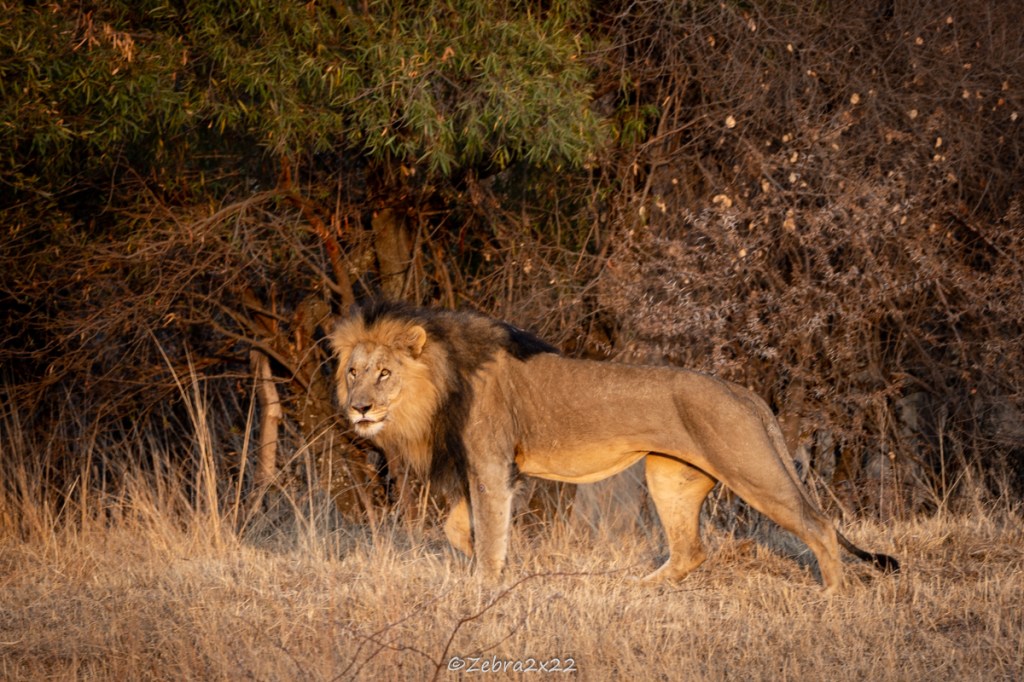
Since my arrival in the reserve, a lot of activities have been going on here related to the lions.
The reserve contained only one pride composed of 8 females, their offspring, and a male lion, known as Marakele (the reserve where he comes from).
He is the only male lion remaining in the reserve. The previous ones were either poached or put down due to an incident involving a human being killed and eaten; a lack of precautions, means, and luck saw that unfortunate person walking at night alone in the reserve, something you must never do in such an environment. It costs your life and gives the lions a taste for human meat; they start to see you as prey and have to be killed for this reason.
Marakele was once challenged by other males in the reserve and had encountered many challenges in defending the pride and its territory. He has ended up being a lion of 8 to 9 years old, with some scratches here and there, missing canines, and showing a magnificent mane, dark, almost black (a sign of important testosterone levels and a high likelihood of reproductive success).
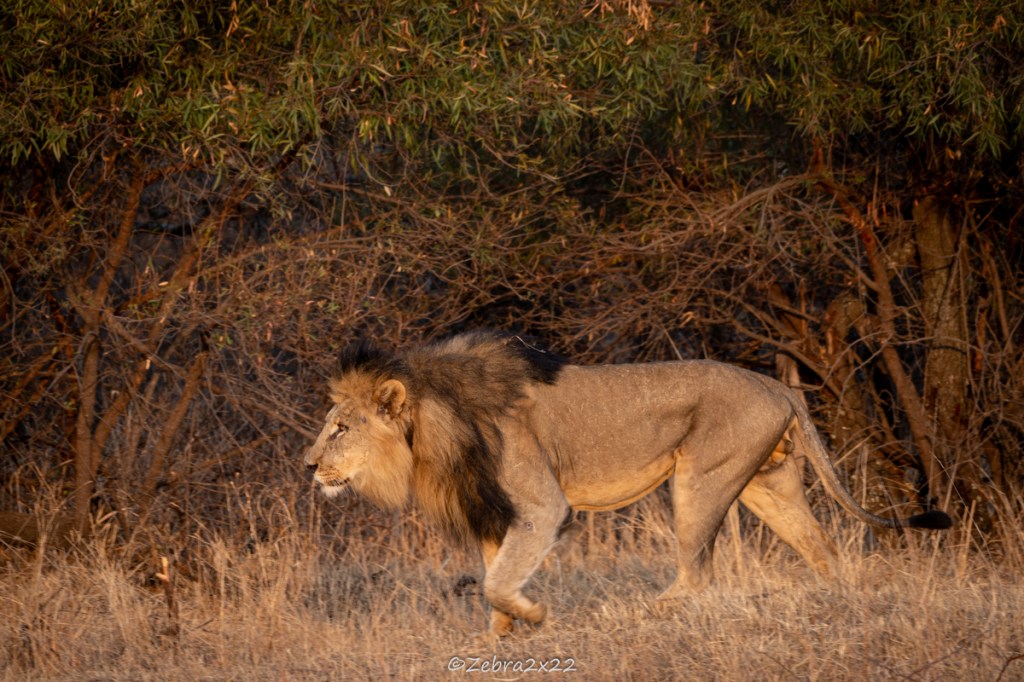
While learning all the stories about the lions, I also started to build my own history with them.
The first time I saw Marakele was during a drive. He was lying down with the northern lioness, an old female not able to reproduce anymore but with whom he spends a lot of time hunting and walking (the photo of my previous post).
The second time was during dangerous game week, first thing in the morning. That day we were lucky to tumble upon each other, first from the vehicle and then on foot while he was lying down with the newly introduced male. They knew we were a few meters away from them and tolerated us, chilling and meaning no harm.
The third time was not even 1 minute away from the camp, one of the moments I will always remember. He was 50 meters away from the camp, heading towards the BOMA, away from the vehicle, and started roaring loudly to advertise his territory.
I was really impressed that day. I realized how massive he was.
VIDEO by K. Doherty.
The 4th time was during my vacation in Leopard Song. The lion was close to the camp, and our guide decided to take us on a drive to try to find and see him at night, which we did. Another impressive moment being in between the calls of the lionesses and Marakele.
When I started my training, a new male of approximately 3 years was introduced in the reserve with several aims: to increase the number of apex predators to create a balance with the number of species and add new genetic patrimony in the reserve.
He came from Welgevonden Game Reserve.
The introduction is based on the lion being caged for several weeks so that he had time to acclimate to the new area, climate, and animal scents. He was locked in a cage called the BOMA, an enclosure referred to as the British Officer Mess area during colonial times.
The Welgevonden lion was released a few days after I arrived at the camp.
Several things were expected: he could fight for dominance with the male already in place, or walk into our camp as he explored the reserve. In fact, he did all of this. We saw some spoor in the morning (one of the nights I woke up to go to the bathroom).
In the beginning, we saw the two male lions hanging around together as if it was the start of a new coalition, something that can happen with lions as they will defend the territory and pride together and benefit from mating rights within the same pride, in an order according to the established hierarchy.
In general, these would be siblings, but there are exceptions to this rule.
This was not quite expected, and I was happy with the idea of a coalition. It went on for weeks. It was not a walk in the park—they were often seen growling at each other—but it remained stable.
In the mean time, the reserve decided to introduce 3 new females to the area, and they were placed in the BOMA next to our camp. The same process was followed, allowing them time to acclimate to the surroundings. The question is, how much time will they have to remain in there? A leopard was in a BOMA for 9 months and was shortly killed by a lion after its release. As I write this article, they have already been locked in there for 5 weeks. Apparently, the reserve is concerned about one of the females being pregnant. When she delivers, the cubs are likely to be killed by the dominant male in place. This frequently happens when a lion takes over a pride. By doing this, the male helps spread his own genetics by killing the offspring of other males and triggering oestrus in the females whose cubs were killed, giving him more opportunities to spread his genetic patrimony.
There is also concern about one of the young females in the BOMA—she is very young (1 year and a half) and might also be killed by the dominant lion for the same reasons.
It is hard to understand why these considerations were not taken into account before placing them here. I am really sad to be driving by them every morning for weeks now, seeing them locked down, lying there, angry about the situation as they tend to be aggressive with the game viewers visiting. Another suspicion is that this creates an easy lion sighting for the lodges around. The male lions are often visiting the lionesses, and the lionesses themselves are easy to see. A shame, if you want my opinion. Cages are not the place for lionesses, and they should have already been released by now. I really hope they will be released soon.
It has indeed created a lot of activity lately around the BOMA. The lions have been seen and heard a lot near our camp. We heard them growling close by, and saw tracks almost every day. The lionesses were the center of the males’ attention. This likely introduced an additional reason for the males to establish dominance.
And then, one night, we received the news that Marakele had been killed by the Welgevonden male.
A shock for everyone.
This was a likely outcome, but we didn’t expect it until it happened. People, including myself, remembered the stories of their encounters with him—how much you get attached and how much a wild animal can impact you.
We saw his cadaver the next day.
It was dragged away from the road as it was considered to be too close for tourists; apparently, they cannot see this, even though it is part of the natural life cycle. What difference does it make compared to any other cadaver? For some strange reason, the body was intact—no scavenger fed on it. The smell of a lion may be a factor in scaring them away.
And the next day, the cadaver was buried. Same question—why do such a thing? What is the difference? Why would you bury this cadaver compared to others? Why not let the scavengers feed off the meat as they should?
Many questions and frustrations about this series of events.
But most importantly, it’s how this lion impacted us all.
Rest in peace, Marakele.
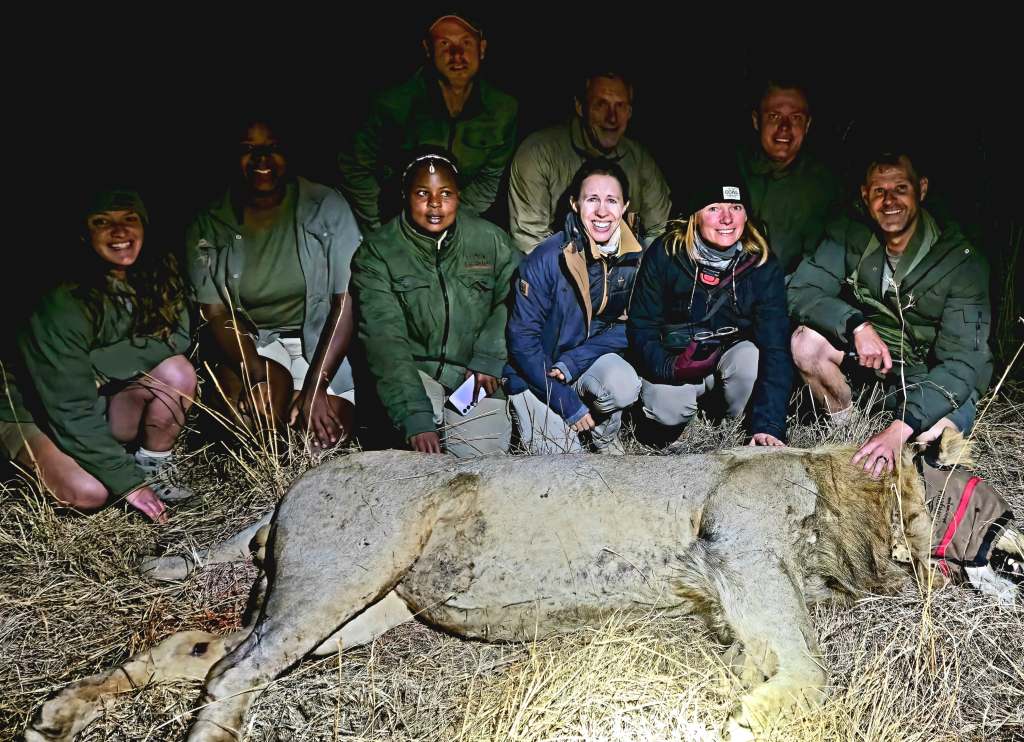
A few days later, Welgevonden was seen limping. The reserve could not allow the only remaining lion to die, so they sent a vet team to dart him in order to treat him.
We were lucky to be part of the event, and we were called shortly after the lion had been darted.
We could witness the entire intervention: the administration of antibiotics and the treatment of the wound on his leg.
I touched a lion for the first time in my life. It was very impressive. I did it very gently and briefly, as he deserves respect.
I realized how massive he is.
After the intervention, they injected the substance to wake him up. We watched him stand up weakly and head back to his life.
Another highlight of my journey.

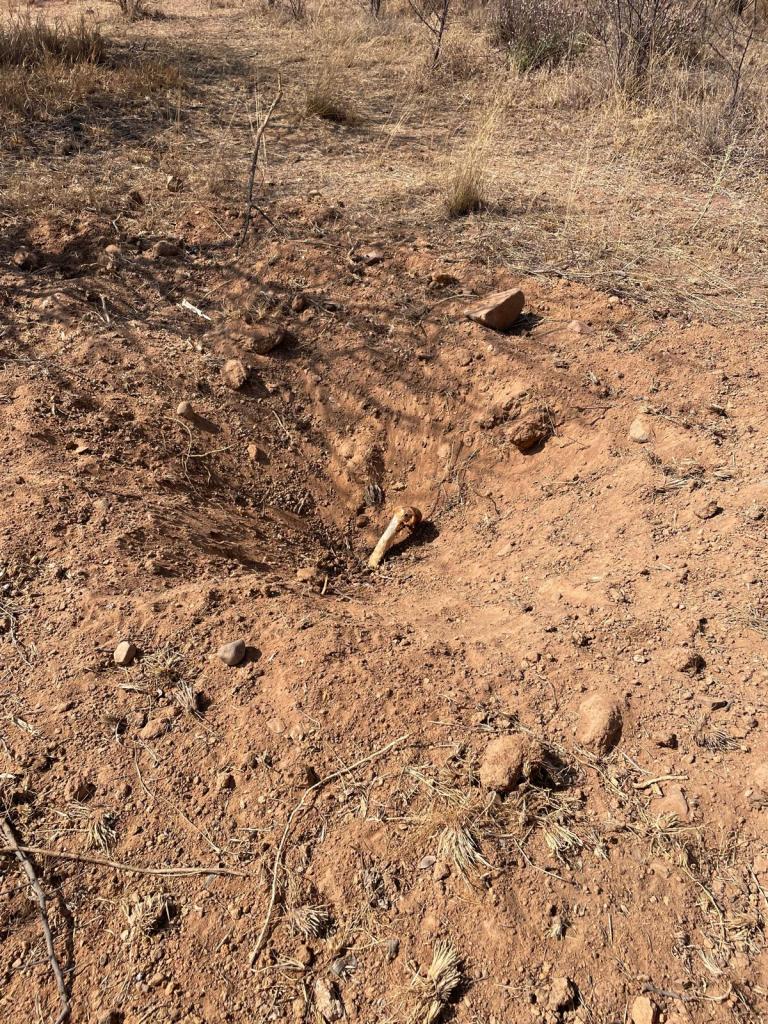
As a final note on this topic, the other day we walked in the reserve and passed by Marakele’s grave. For some reason, it had been disturbed. One bone, probably the femur, was prominently sticking out of the ground, likely chewed by scavengers. This disturbance did not appear to be the work of animals; it resembled human digging—unfinished and unconcealed.
I’m just stating some facts here. Lion paws and heads hold significant value on the black market, and lions are actively poached for them. What could be a valuable reason to disturb a lion’s grave? I can’t think of any. This whole grave situation feels wrong, and discovering that it has been dug up makes it even worse. Would similar actions have occurred if the body had been left for scavengers? I have serious doubts.
The death of a lion is causing a lot of noise and turmoil, and emotions are running high. There have been rumors on social media suggesting that Marakele’s death was a cover for hunting. I have seen the body, and there was no evidence of a gunshot. This was a natural death that has been handled strangely, given the involvement of humans.


 Zebra2x22
Leave a comment