
⚠️Caution – sensitive content ahead ⚠️
The remaining weeks of my internship have been very intense. I admit that time flew by, and I didn’t see the end coming. I’ve been fully immersed in both office and fieldwork, learning a great deal and continuing to progress in my journey.
Office work
When I wasn’t in the field, I contributed to office tasks such as prepareing newsletters and posts, continued the SEO website setup, monitored the progress on page indexation, finalized the volunteer brochure, and started a fundraising brochure from scratch.
As the camp coordinator was away for a few weeks, office work wasn’t limited to just digital marketing. I also helped a lot with cooking and cleaning during this time. I had the opportunity to cook my first potjie, a traditional chicken stew prepared in a pot over the fire. The first time I accidentally burnt it, but I improved with practice, and my second attempt turned out much better.
In addition, I started welcoming new volunteers to the camp, giving them a tour, ensuring they signed the necessary forms, and conducting the introduction meeting using an internal PowerPoint presentation.
Field work
I’ve made significant progress in the field, which remains my primary motivation and the reason I embarked on this life-changing journey. My progress in telemetry and animal tracking has been especially rewarding.
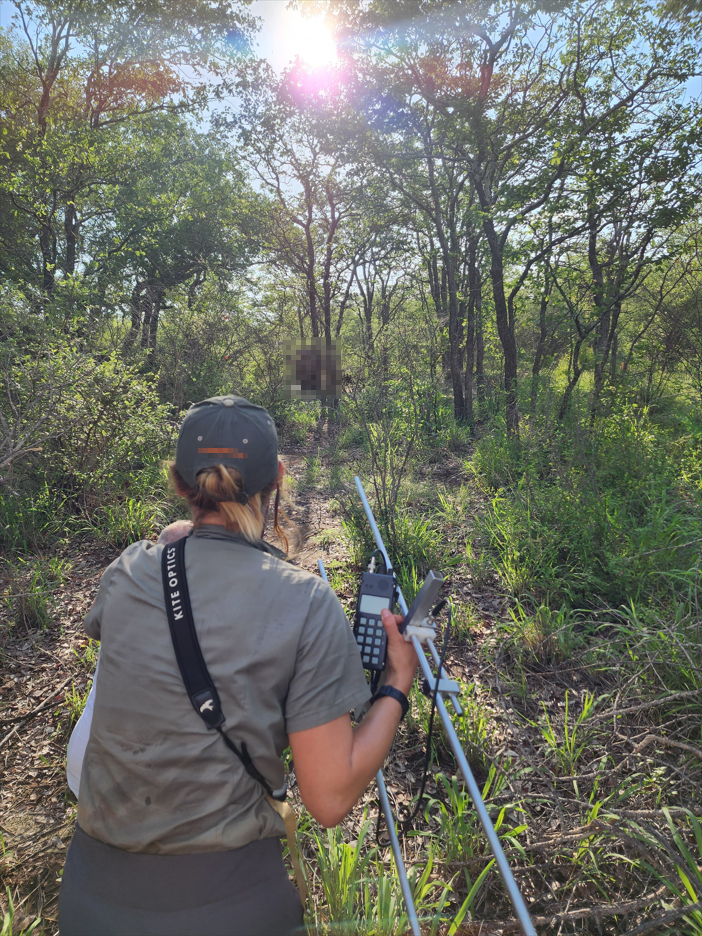
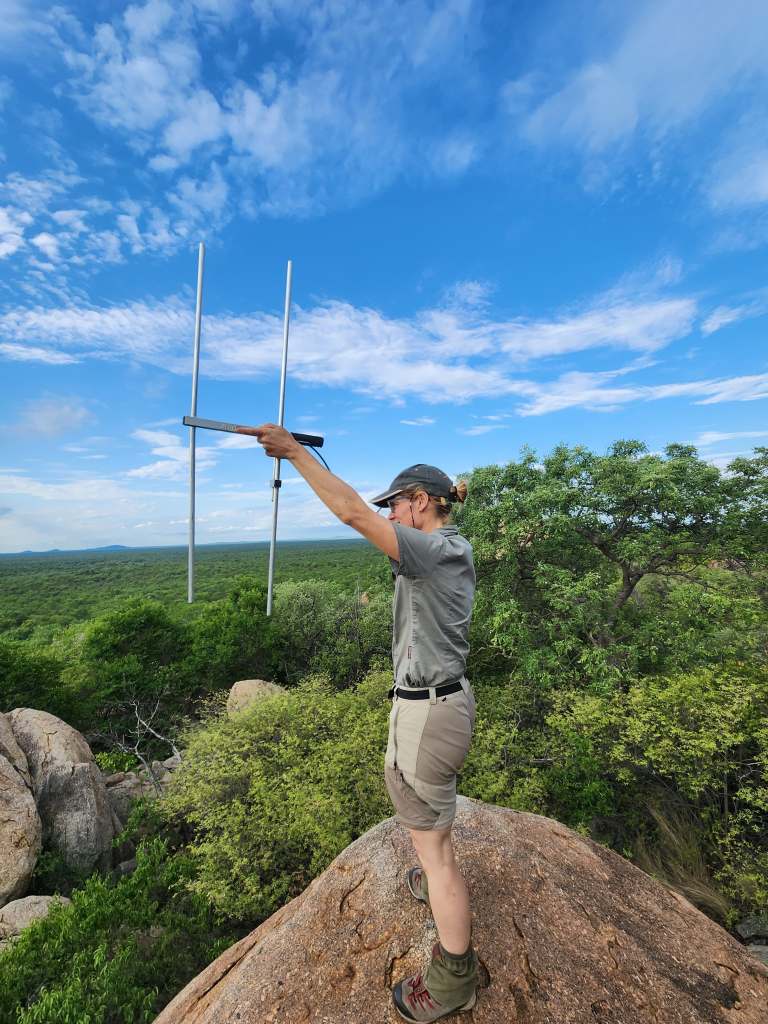
Locating animals on my own
Several times, I ventured out alone with the motorbike and the telemetry to locate cheetahs and other endangered species. It’s such a great feeling to be outdoors, enjoying all kinds of weather, the blooming vegetation, and having interesting encounters with wildlife on your own. There is nothing like being able to find and observe animals unnoticed, or else leaving a positive impression on both parties. Can you imagine being alone in the bush, unarmed, observing and monitoring one of the Big Five?
I was fortunate to locate some of the big 5 individuals several times. At times, they were completely separated from one another, and other times, they were all together. At first, I thought finding them individually would be harder since it takes more time to pinpoint their exact location. However, the opposite proved true, as it allowed me to observe each of them up close. When they’re together, you see them faster, but you need to find a way to view them all, ensuring they’re healthy. When they’re together, they’re easier to find, but it takes time and patience to view all of them, ensuring their health status. This requires a careful approach, staying unnoticed while observing each one before they move on or spot you.
Driving the game viewer
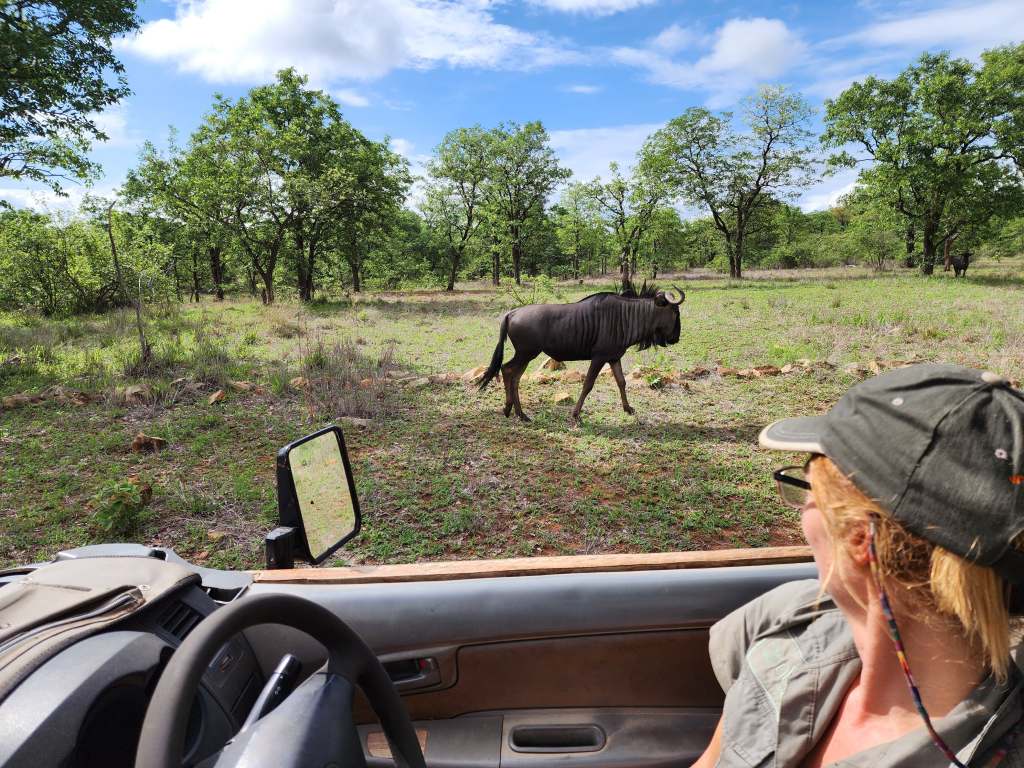
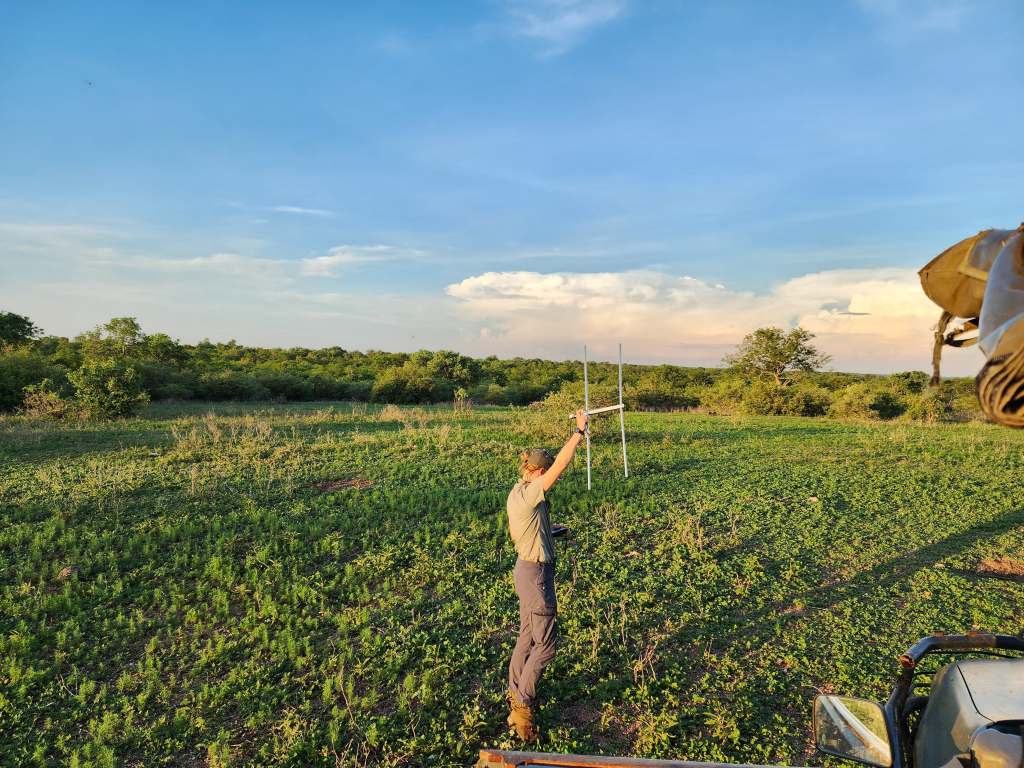
With the volunteers and under the guidance of an experienced ranger, I also drove the game viewer in various weather conditions, used the telemetry, and found animals several times, even leading the group. I truly enjoy connecting with volunteers, guiding them in the bush, and sharing my little knowledge and experiences with them.

Photos by V. Fuenzalida
Setting up camera traps
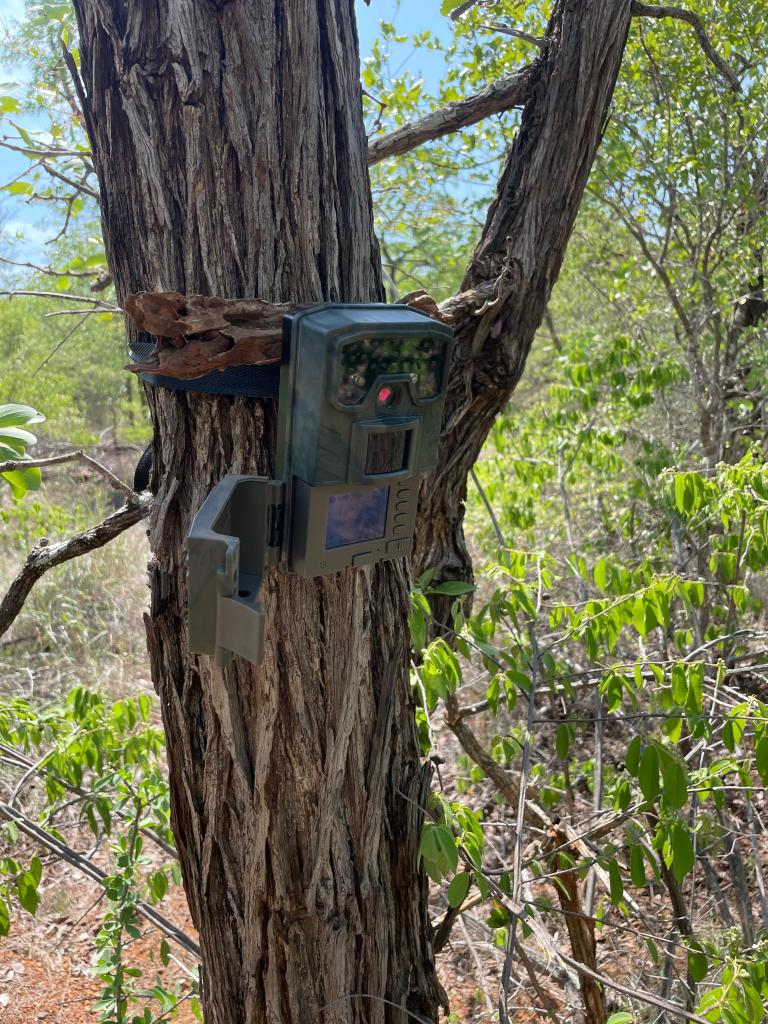
I also assisted one of the rangers set up camera traps in the reserve. We knew a female leopard was frequenting the area around the lodge, as she had been sighted multiple times by various guides. Our goal was to investigate her, identify her, and observe her behavior. We had a rough understanding of her territory and the neighboring territories of other leopards.
Our first task was to find her tracks, which we managed after a couple of hours of searching and encountering other tracks, including those of a male leopard and spotted hyenas. We then searched for an ideal spot to place the remains of a zebra.
- It had to be placed in a solid tree high enough to prevent hyenas from reaching it but within the leopard’s climbing range
- A lot of shade was needed to keep the meat from rotting too quickly in the heat and to limit the scent near the lodge.
- It had to be far enough from the lodge, as activities around it were not visible to guests, and that the smell of the carcass wouldn’t impact their experience.
We had to drag the zebra leg from the road to leave a scent trail, which would attract the leopard.
We tied the meat securely to the tree to prevent it from being removed, and set up the camera trap at the best angle, considering factors like how the camera was framing the test video, whether any leaves or branches would trigger it unnecessarily and drain the battery or fill the SD card too quickly.
It was interesting to see and learn the whole process, understanding all the parameters that need to be factored in to make a meaningful trap.
Afterward, we collected footage of a male leopard and some hyenas, but not yet the female leopard we were hoping for. We decided to continue feeding this bait site with additional carcasses found during our duties, as it often takes time for wildlife to become accustomed to visiting a particular spot.


Cheetah cubs watch duties
Performing cheetah watch duty is an absolutely amazing experience. It’s a privilege to observe the cubs regularly, track their progress, and monitor their development while ensuring their safety. It’s a journey to get close to the cheetah, build a bond with her, and ultimately gain her trust—despite her charging at me several times when she was moving dens (which meant she almost came at me, but I stood my ground, calmly talked to her, and shared my intentions until she backed off).
I loved it so much that I spent both Christmas and New Year’s Eve on night duty with them.

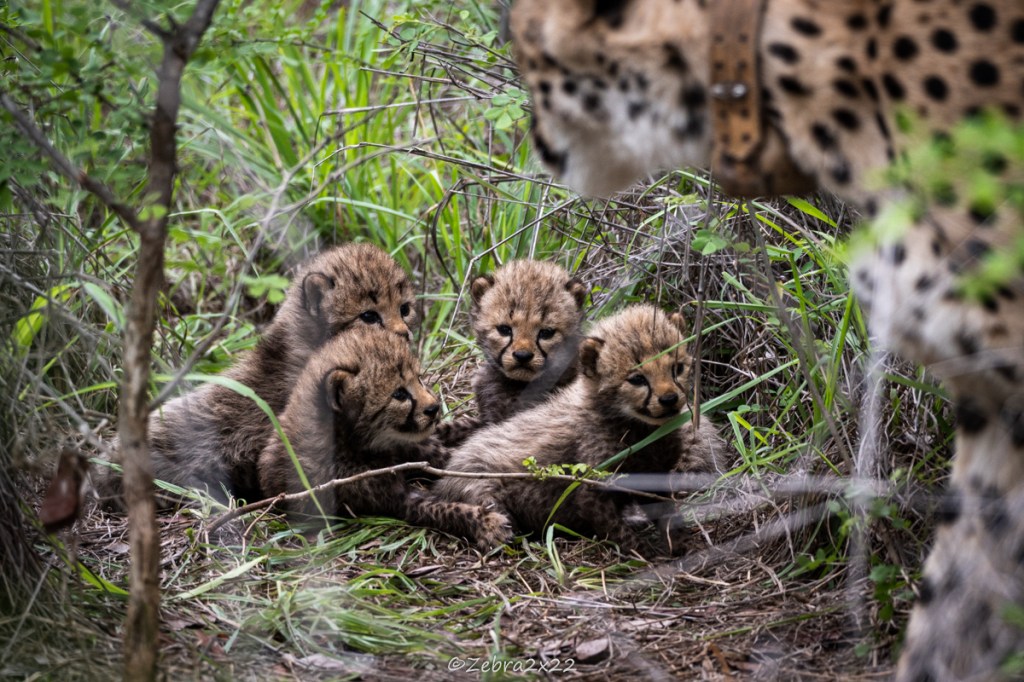


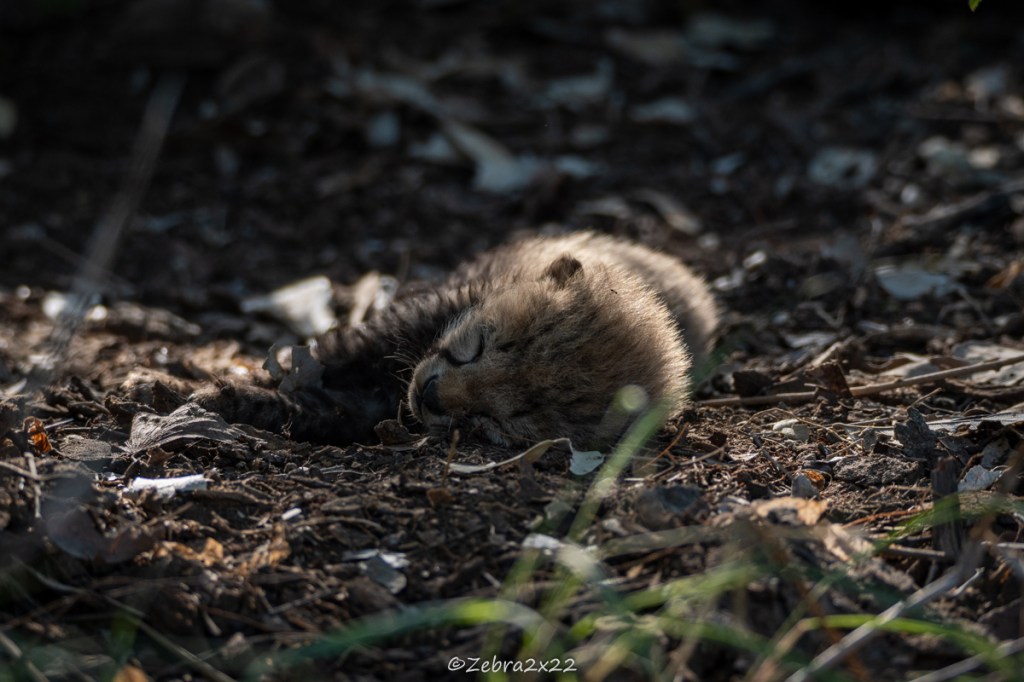
Night duty is a unique and challenging experience. It requires staying awake all night to monitor the area, identify, and scare away any predators. If you’re lucky, the night sky is breathtaking, you can take a moment to stargaze and identify constellations in the Southern Hemisphere. I usually performed the duty with one of the volunteers, and we had many great conversations, forging genuine human connections. The reward, however, comes the next morning when you get to see the cheetah cubs again—it’s a precious gift. Generally, the female is out for a walk, a hunt, or stretching her legs, giving you a better opportunity to observe the cubs. and all the efforts from the night before make sense when you observe those feisty cubs.
It’s also during this time when we feed her using the motorbike. Once she starts moving away from the den, we attract her further away to avoid other predators being drawn to the den by the scent of a fresh kill. One would sit on the bike holding an antelope leg, after presenting it to the female cheetah to encourage her to follow us. The driver would then proceed along the fence road at a steady pace while the female cheetah ran after us. The meat is then dropped far enough from the den and the carcass removed afterwards.
Becoming a proper bush girl
My body has changed a lot, adapting to my new environment; I’ve started to become a proper bush girl. I have been bitten by pepper ticks (the very tiny ticks) so many times that I probably contracted tick bite fever. I also began wearing shorts instead of pants and found myself enjoying working in the rain with pleasure. I still need to build more muscle in my arms to lift heavy objects or when strength is needed, but that will come in time. Prior to my office work in the mornings, I’d use the opportunity to run for at least an hour and do some exercises (yoga, stretching, muscle strengthening). This is a recent development for me, as I had never run for the past 20 years.
Being in the bush has also sharpened my instincts. I’ve learned to identify key animal calls. I had already learned to recognize the alarm calls of oxpeckers (a very important bird that alerts to large animals), monkeys, birds, and antelopes, as well as identifying animal spoor. I have started recognizing squirrel alarm calls, which I can now use to detect potential danger or pinpoint animals I’m tracking.
I also encountered the ‘3 S’s’: scorpions, spiders, and snakes. I was bitten by a harmless scorpion, had an interesting encounter with a small snake in my room, and walked through countless spider webs.


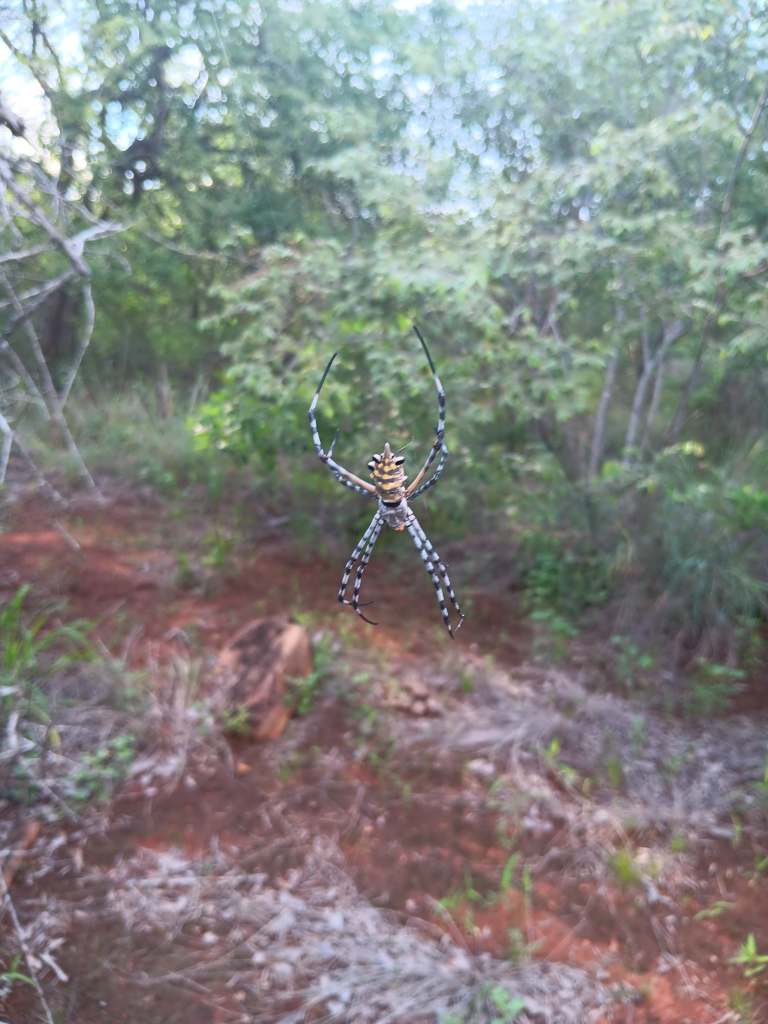
Several noteworthy events occurred in the reserve during my time there.
Lions escape
On Christmas Day, two of our male lions escaped into a neighboring reserve. We were heading out to locate the cheetah males when we heard the news over the radio and immediately shifted our focus to head south and assess the situation. We observed that two of the males were on one side of the fence, while the third was watching from the other side. We suspect they had fought with the two big lions from the neighboring reserve. One of our males was injured, with noticeable scratches on his face. We began the rescue mission, informed the reserve manager, opened the gate, and tried to attract the two males with the remains of a carcass tied to a car. We thought it would work. The lions started moving toward the gate but stopped before crossing. Despite several attempts, they refused to go through.
Next, we tried using a speaker to broadcast distress calls from a buffalo calf and lion roars. It almost worked, but the lions were still hesitant to cross. The reserve manager called a vet, and we were granted permission to enter the neighboring reserve. We managed to dart the uncollared lion, carried him to the car, and the vet provided initial treatment. We tried to capture the other lion, but had no success.
Later that night, I went with one of the experienced rangers to try another solution: we broadcasted lions roars from his coaltion to lure the dominant lion through the gate while tracking him with a thermal camera. The lion responded and trotted in our direction, but once again, he refused to cross the gate, stopping just before it. We attempted to set up the gate to encourage him onto our side and block his path along the fence, but despite multiple tries, we had no success. The lion eventually moved further away into the neighboring reserve, and we decided to call it a night.
The next day, the same scenario repeated itslef: we couldn’t dart the lion and bring him back.
On the third day, the lion found his own way back into our reserve, leaving us with a extensive fence repairs to handle.

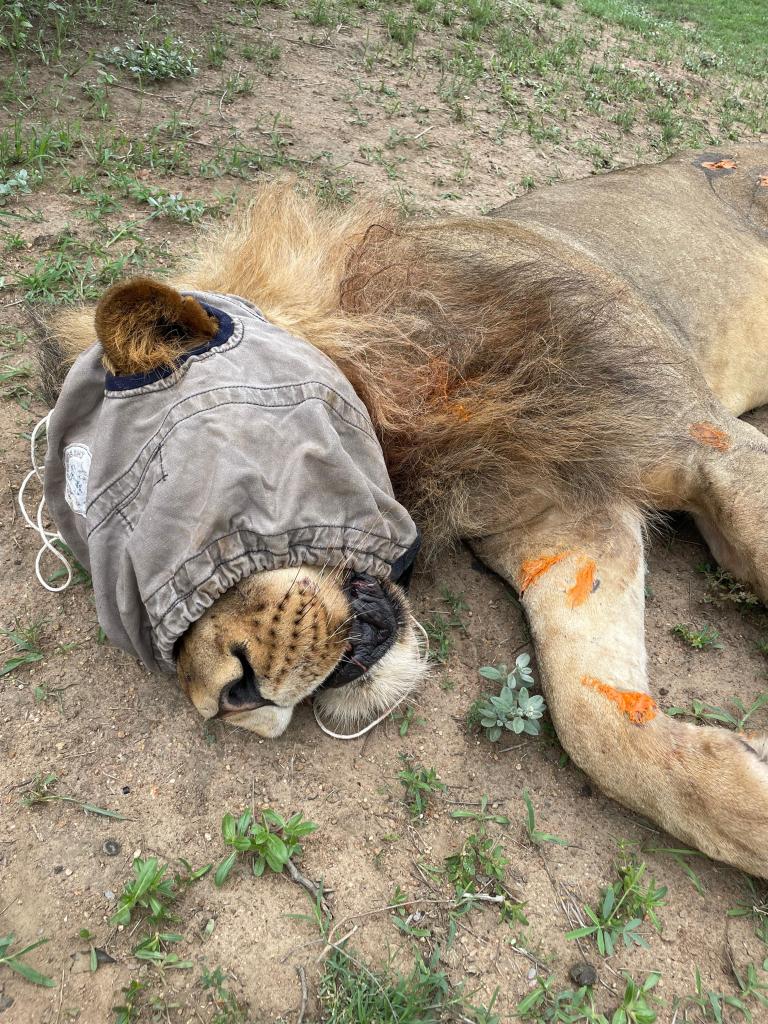
Snare removal operation
In another incident, a female buffalo was identified with a snare around her neck by our anti-poaching unit. It was crucial to remove it quickly to prevent further injury. The reserve manager organized a veterinary intervention for the following day, and we supported the operation in the field. Early in the morning, we drove the game viewer through the reserve, using telemetry to get as close as possible to the buffalo herd. The helicopter arrived swiftly from Phalaborwa, the neighboring town, identified the female from the sky, and darted her. On the ground, we assisted with the veterinary procedure: the snare was removed, antibiotics were administered, and the wound was disinfected. The snare had embedded about 3 cm into the buffalo’s neck, and maggots were already feeding on the decaying flesh. Despite being sedated, the buffalo was clearly in pain.
These experiences highlight the critical importance of continuing the fight against poaching, especially when it comes to removing snares before they cause irreversible damage. Most small animals will die from snare injuries in a short amount of time (sometimes as little as 20 minutes), while more robust animals may fight against it but remain trapped, potentially suffering broken limbs in the process. The strongest animals may break free, but part of the snare can remain wrapped around their body, causing infections and eventually leading to a slow, painful death if no intervention is made.
Constant vigilance is necessary.
Encountering lions on the bridge
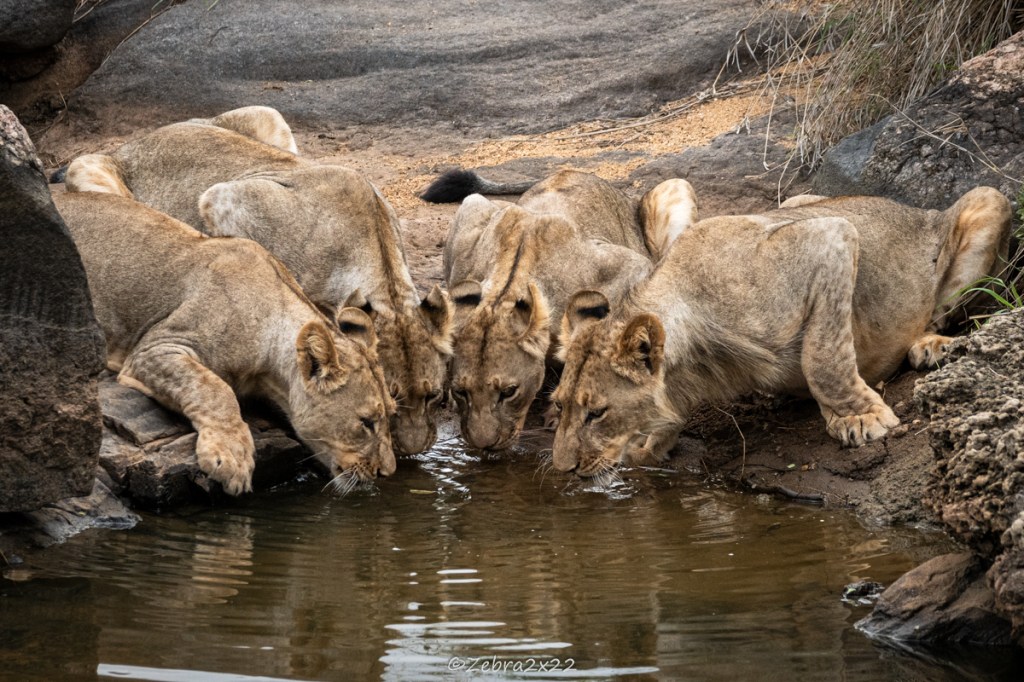
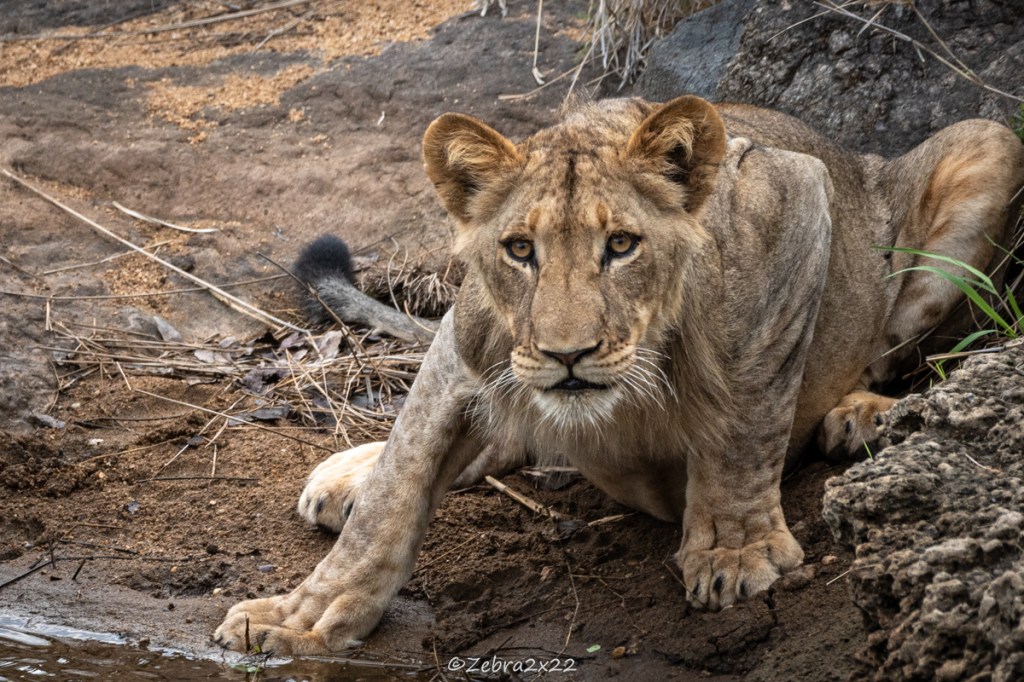
One early morning, we heard numerous alarm calls coming from the riverbed nearby, made by baboons, vervet monkeys, impalas, and squirrels. The guide was convinced that one of the carnivorous Big 5 was in the area—most likely a lion or a leopard. We decided to investigate and head toward the source of the calls. What a surprise it was to cross the bridge and find ourselves face to face with a lioness and her four cubs, also crossing the bridge at the same time.
Each day in the savannah is different—nature and wildlife are unpredictable. Starting a day like this is priceless. We were lucky to witness such a special sighting, staying long enough to observe them drinking, interacting, and calling to each other when they became separated. It was fascinating to watch how the cubs followed their mother. At the time, I was driving the game viewer, and the experienced ranger guided me in positioning the vehicle in the best way to enhance the volunteers’ experience and anticipate the pride’s next moves. His predictions were spot on, reflecting his deep experience with lions in the field.. I was amazed by this and hoped to gain enough experience in the future to anticipate animals’ movements, improving guest experiences and securing great sightings.

Anticipating the best elephant herd sighting
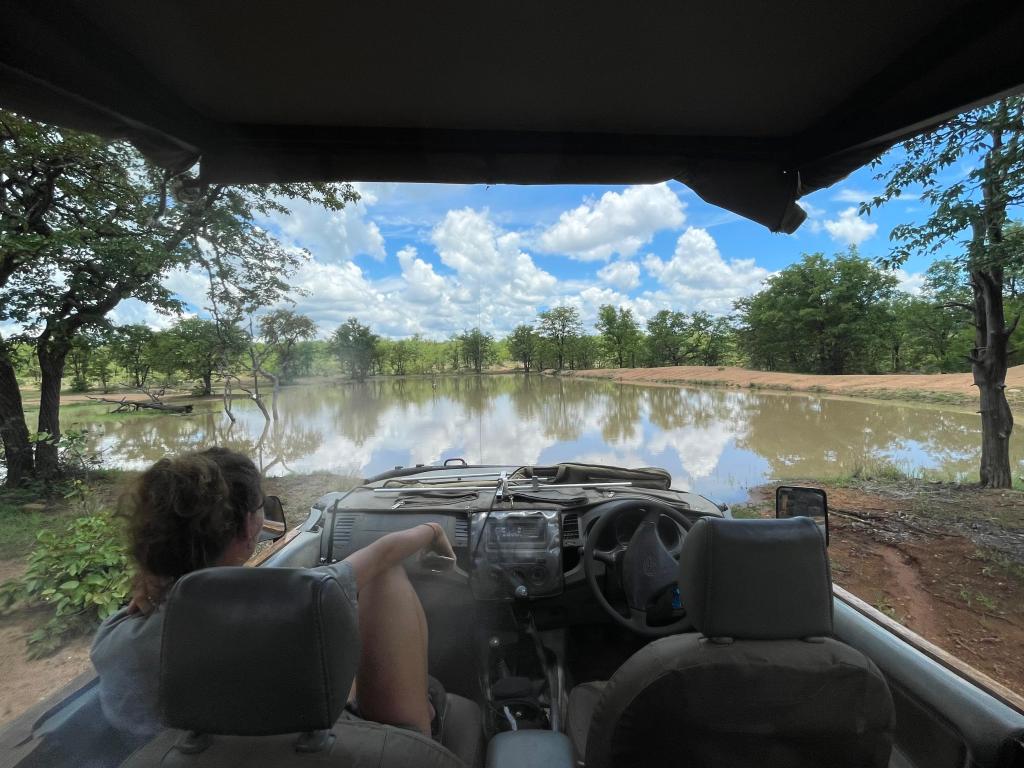
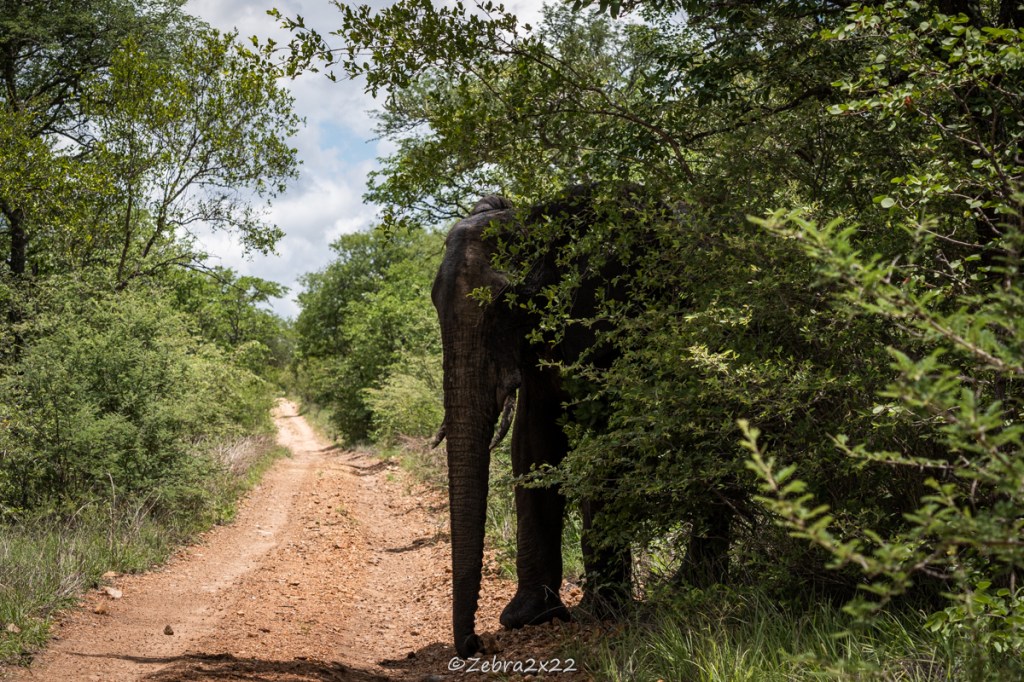
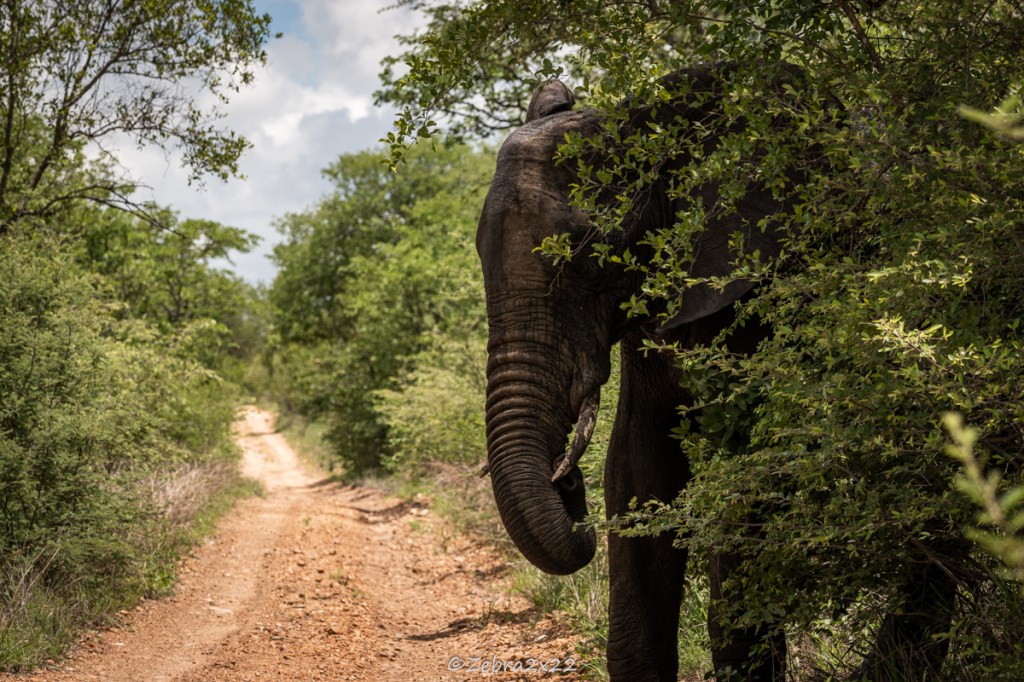
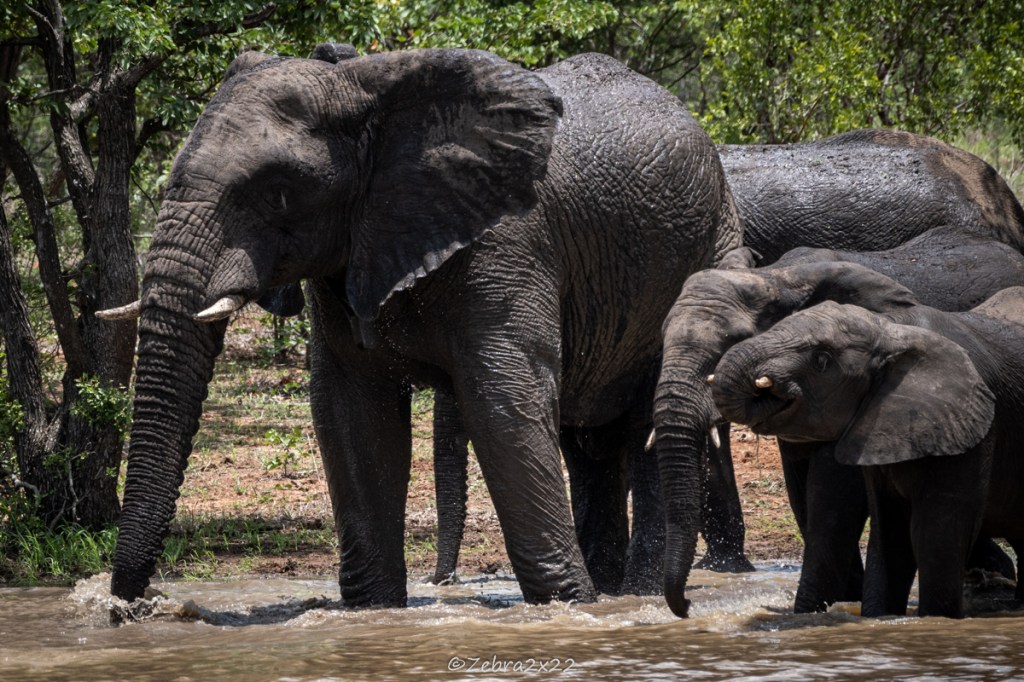
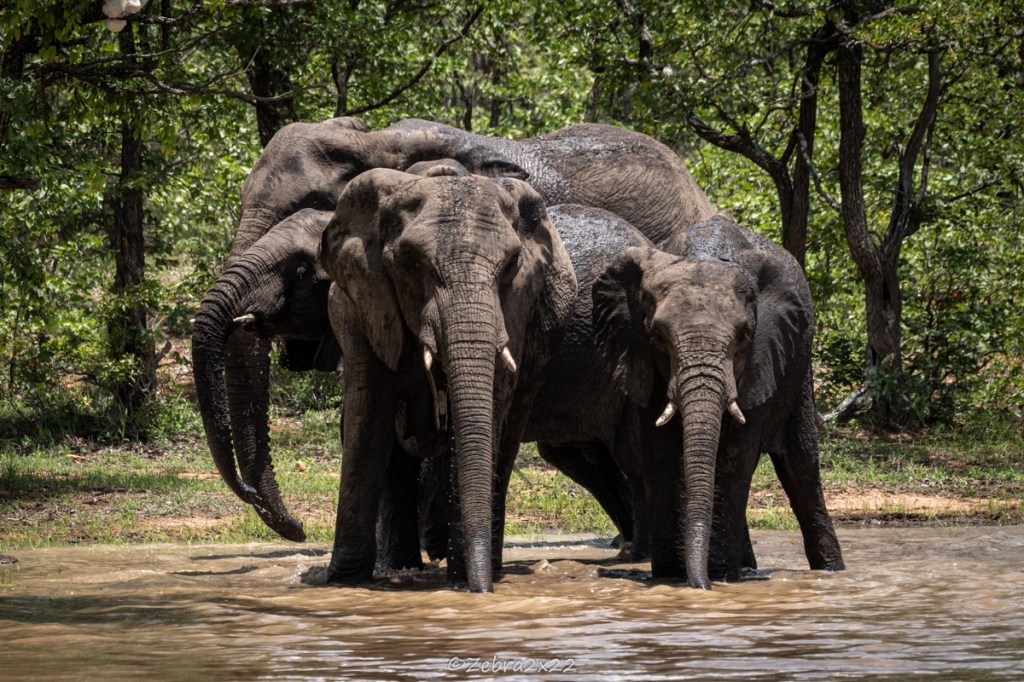
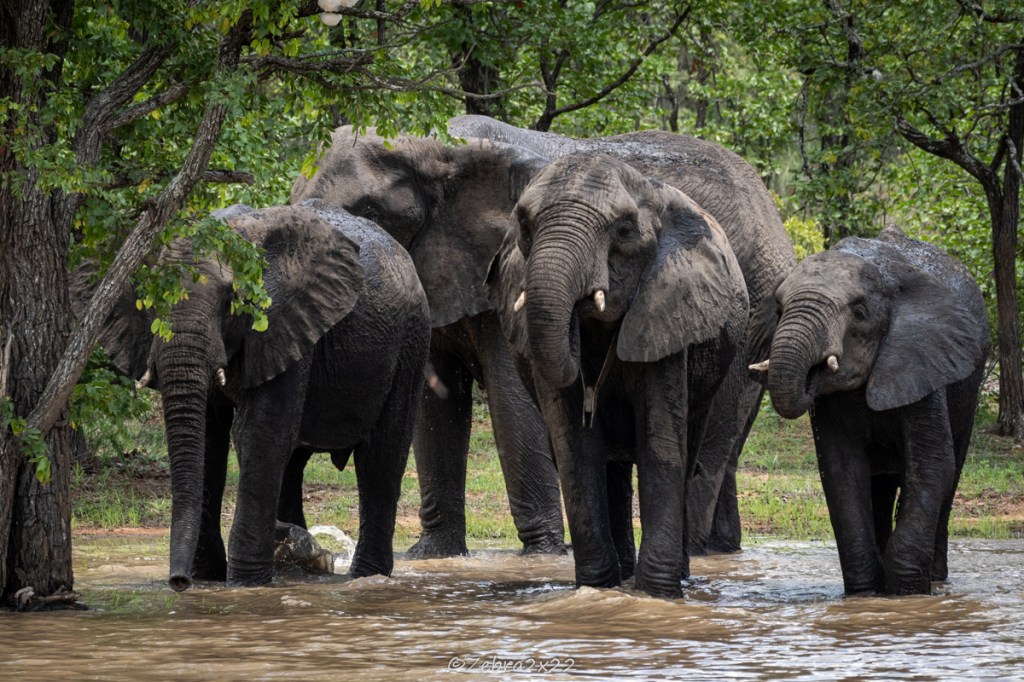
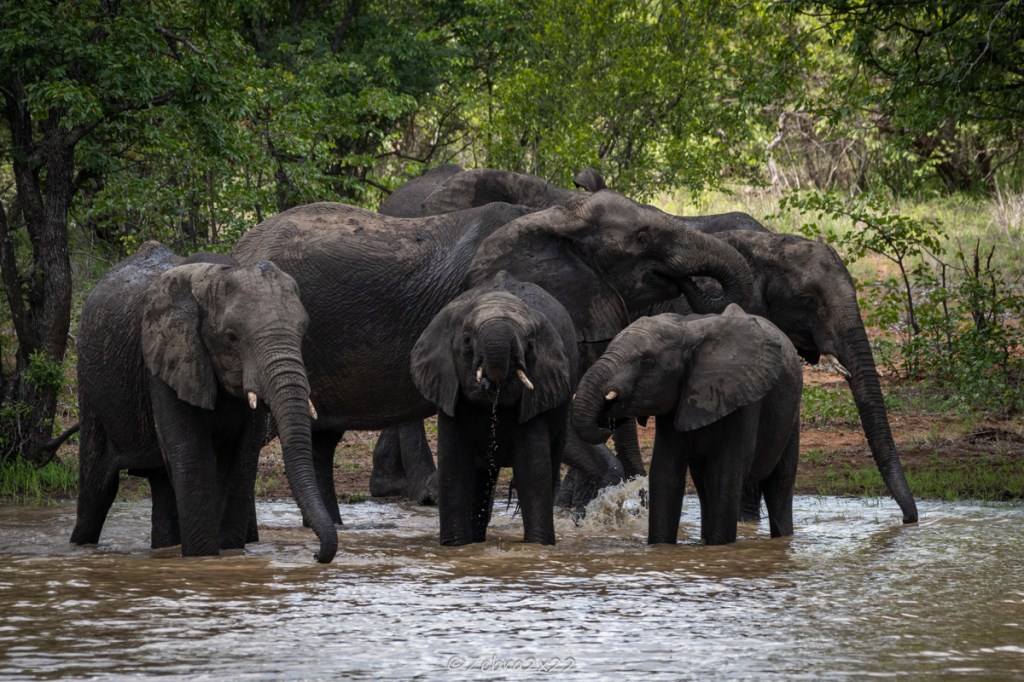
A similar experience happened with the elephant herd. Since the beginning of my internship, I had only seen the elephants once close to our camp. They had migrated south into a dense part of the reserve, making them difficult to spot. During one of the monitoring drives, I used the telemetry to check on the elephants, as they were supposed to be in the area. We knew they were nearby, but we couldn’t see them from the game viewer. I kept checking while we were monitoring other animals in the reserve and simultaneously cleared the signs of the elephants’ journey on the road. Many trees had fallen and needed to be removed or pushed aside. Until the very end, I truly thought we were going to spot them, but without success. Just as we decided to head back to camp, I spotted one of the elephant cows to the left. They were heading south, likely toward the waterhole. We enjoyed the sighting until there were no elephants left, then decided to head toward the waterhole and position the game viewer in anticipation of their next move. They all arrived at once, and the sighting lasted for about half an hour. We watched the entire herd drink and play in the water. They came, and just as suddenly disappeared with the trumpeting sound of the matriarch. It was an incredible, breathtaking experience—one of the best elephant sightings I’ve had. It was so intense that one of the volunteers was moved to tears. and I was close to the same myself.

Warding off predators
One of the dangers the cheetah cubs face is the constant threat of attack from lions. If an encounter occurs, lions typically attempt to kill the cubs, not for food but to reduce interspecies competition. We spotted one of the lionesses near the den in the northern part of the reserve. She was heading east, toward the area where the cheetah cubs were. Fearing a potentially fatal encounter, we decided to intervene and drive the lioness away from the cubs. At that time, the female cheetah was out hunting. Upon reaching the lioness’s location, we discovered she had made a kill, and she was very protective of it, staying close to it and growling at us. We repositioned from another angle. According to my measurements, she was still at least 30 meters from us. The bush was dense. She charged us. She halted just 10 meters from us, stopping right before a fallen tree. Our experienced ranger vocalized and stood his ground. We decided to retreat once the lioness stopped staring at us and backed off. The charge was very serious. It was one of the most impressive lion charges I have ever faced since beginning this journey. It happened so quickly. The lack of visibility worked against us, as we only saw her at the final moment when she suddenly stopped. She was incredibly stealthy when she began. After the encounter, we decided to leaver her in peace, hoping she would stay a few more hours to feed on her kill before moving further away. We planned to continue monitoring her in the following hours and days to see how the situation evolved. Thankfully, the incident ended there, and the lioness moved further south and away from the cheetah cubs.
Handguns Competency Certificate
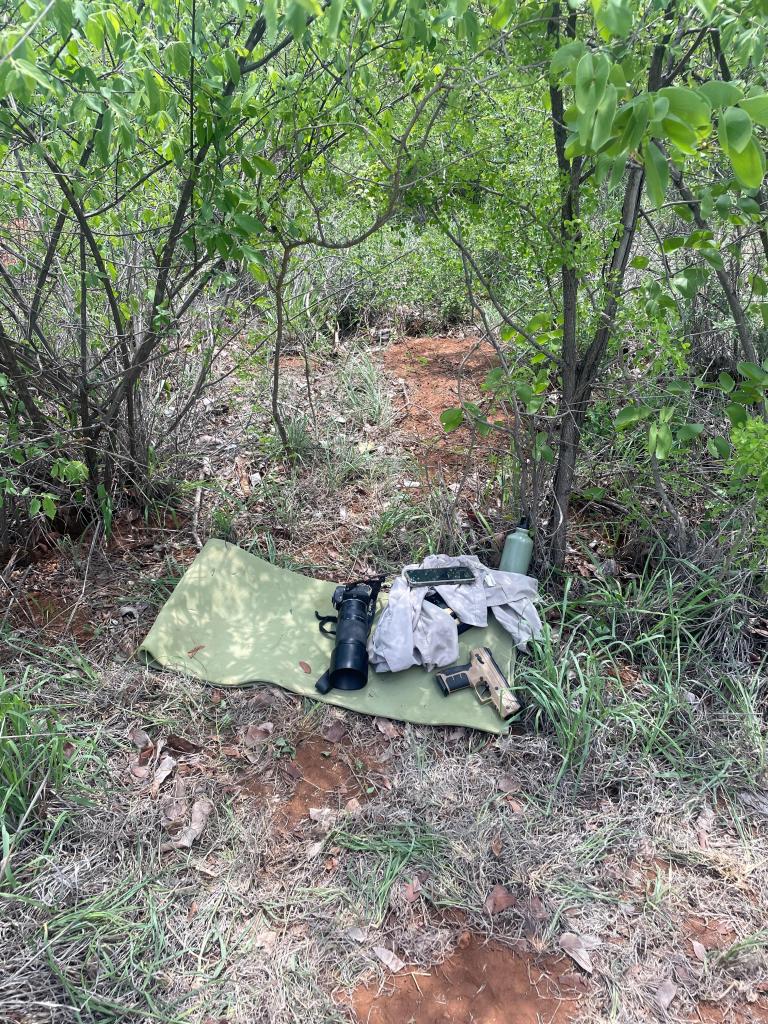
On another note, I also passed my competency certificate for handguns (revolvers and semi-automatic pistols) and shotguns, hoping to use it during my internship. Unfortunately, I received the official paper on the last day of my internship, so it didn’t have any impact on my time there.
My last epic day
The last day was truly epic, and I was worried I wouldn’t make it to the start of my next adventure, which was planned for the following day. I wanted to make the most of every moment, as usual. Some of the staff were heading to a training and airgun encounter, so the tasks were divided among the rest of the team. It was a very rainy day, and most of the animal locations didn’t update on our app. We had to rely on the last known locations and our knowledge to track them down.
I took the motorbike and headed first for the collared female leopard. Despite the heavy rain, I managed to get fairly close to her, but she slipped away unnoticed. I decided to move on to check on the other animals, as this was the start of my journey, and I could always return if time allowed before heading back to camp (so I thought).
Next, I went to monitor the cheetah males while also tracking the signal of the spotted hyena. They were near the fence, and I had to cross several muddy puddles with the motorbike. I almost fell in one of them but kept going, continuing my search on foot.
I then ventured further north in search of the spotted hyena. I checked the usual area where she tends to be but had no luck. I stopped at each junction using the telemetry, but there was no sign of her. I then headed into a remote area, crossed the river further north, and searched in an area I had never been to before.
On my way, I crossed paths with the maintenance team, who were inspecting all the river crossings due to the rain. They informed me that I could cross the next one and showed me a video so I could assess the water depth. When I reached this crossing, I started doubting whether I could make it—the current seemed strong, and the path was very hilly (which doesn’t really show on the video). However, with the support of the maintenance team, who were behind me and ready to assist if needed, I decided to give it a try. I managed to cross without any issues, though I almost fell on the slope on the other side when I couldn’t switch to second gear. I was proud of myself for overcoming that obstacle.
Continuing my search for the hyena, I arrived at the second river crossing. The current appeared strong again, but thanks to my earlier discussion with the maintenance team, I felt confident and decided to cross. This one was much trickier. There was a huge hole when I crossed, which caused the engine to stall. Somehow, the motorbike made it to the other side, but once I was there, I couldn’t start it again. I tried the kick start, but the engine would shut off as soon as I accelerated. I called the maintenance team on the radio for help. Fortunately, they were still nearby, equipped with screwdrivers, and began assisting me by getting rid of the water in the air filter (which fortunately had none) and draining excess water from the carburetor. Once done, the bike started without any issues, and I was able to continue my search for animals while heading back toward camp.
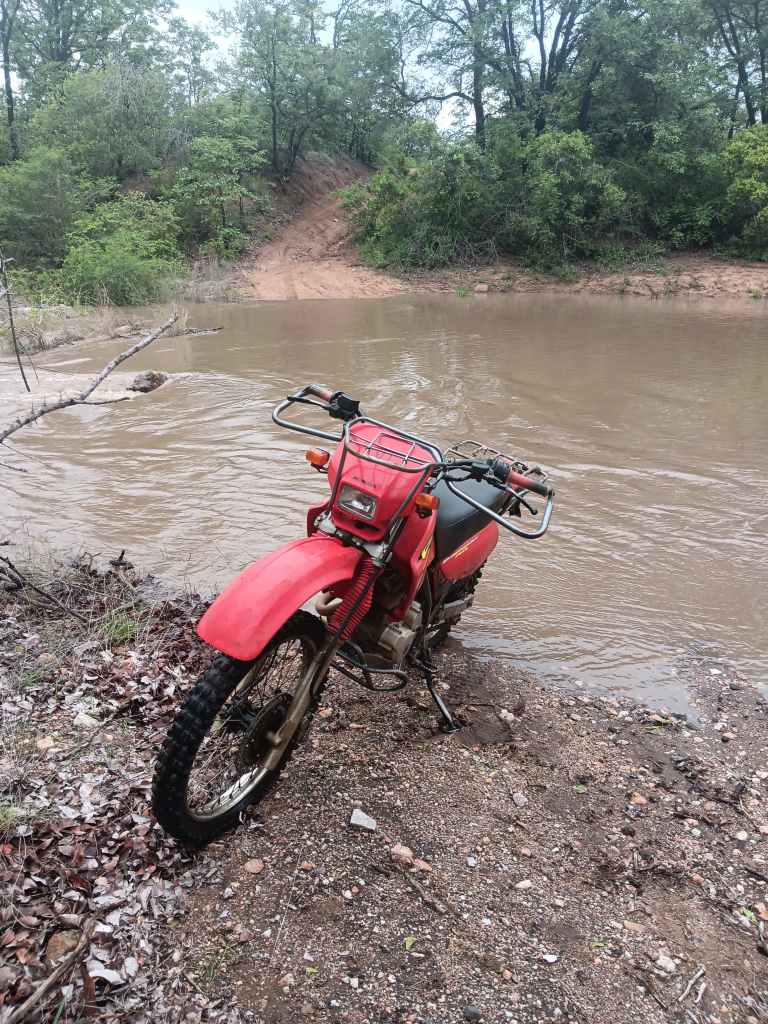
The motorbike managed to get me to camp slowly, but once there, it wouldn’t start again. I informed the team about the incident, and they explained that it’s best to cross rivers on foot first to check the water level before attempting it with a vehicle or motorbike. Looking back, it made perfect sense, but at the time, I hadn’t thought about it. Lesson learned! Fortunately, the camp coordinator fixed the bike later that afternoon.
I wanted to check on the female cheetah and her cubs before leaving for Europe, so I volunteered for the cheetah duty in the afternoon. The rain had stopped, but the roads were still soaked. I fell in one of the mud puddles, but thankfully, neither the motorbike nor the telemetry was damaged. My knee was a bit sore, but nothing serious.
I had to stay in the bush without the vehicle because the cheetah was in a very dense area. At 6 p.m., a thunderstorm started while I was still out there, protected by my raincoat. I was supposed to be relieved from my shift by 9 p.m., but I didn’t hear from the team. They had gotten stuck with the vehicle in one of the water crossings, and there was no way to pick me up or transfer the shift. I was asked to continue the duty for the night.

I wasn’t prepared for this, didn’t have any food with me, and was exhausted from the rain. I was cold but still dry. Originally, I was planning to pack during the night and leave at the first hour the next day. The thought of more rain made me worried that the situation could worsen overnight.
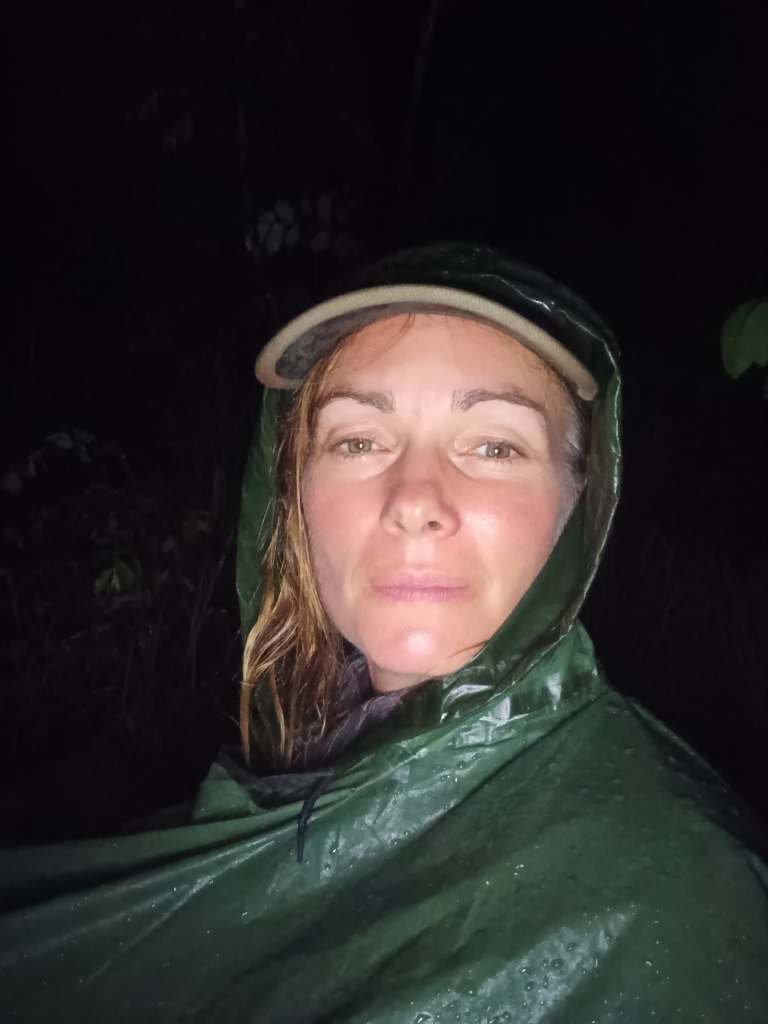
Eventually, they found another way to come and pick me up, using the normal tarmac road outside the game reserve. They drove until the corner, I had to cross the river on foot, then climb the electric fence before I could finally get back to camp, ready for the next day. What an adventurous day that I’ll remember for quite some time!
What’s next?
I am now heading to Botswana for approximately 10 days to explore parts of the Okavango Delta during the rainy season before heading back to Europe to see family and friends and start wearing contact lenses, which will be more practical in the bush.
I’ll miss a lot of things about this internship. The first things that come to mind are:
- The connections I made with the volunteers and the new friendships I formed.
- The cheetah cubs watch duties, which are by far my best memories.
- Finding the rhinos on my own.
I plan to return to this place in April. I love the activities I’ve been involved in. Being outdoors is priceless to me, and I want to continue improving and growing—leading game drives and bush walks with the volunteers, walking with the lions, getting used to analog and old digital telemetry, and even finding the female leopard on my own! It’s a great program to look forward to. In the meantime, I plan to start my NQF4 theory, the second level of field guide certification.

 Zebra2x22
Leave a comment