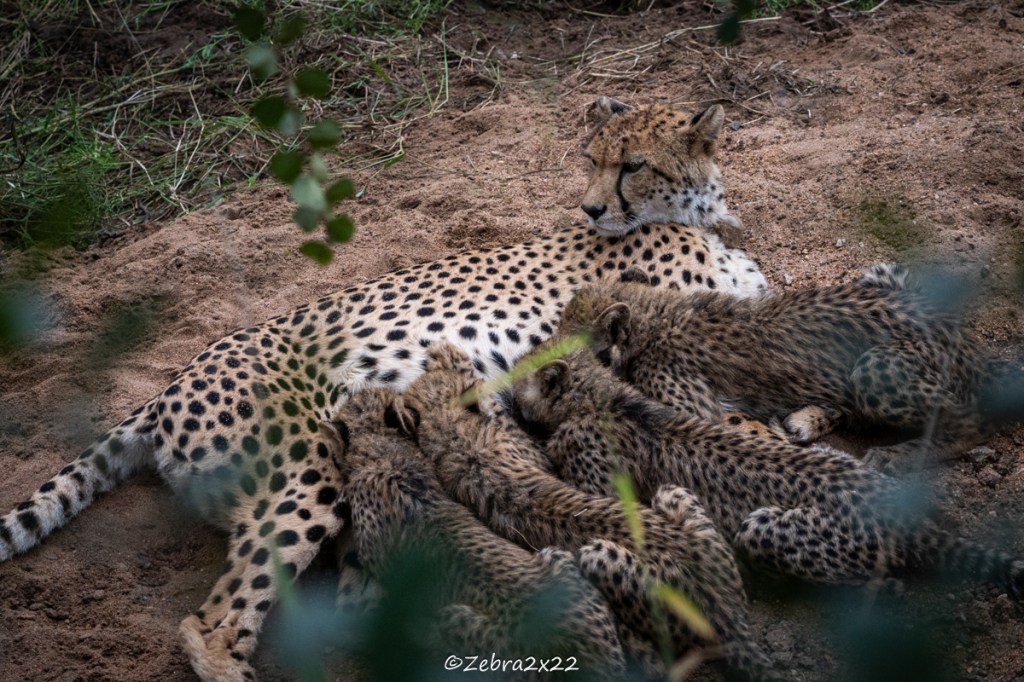
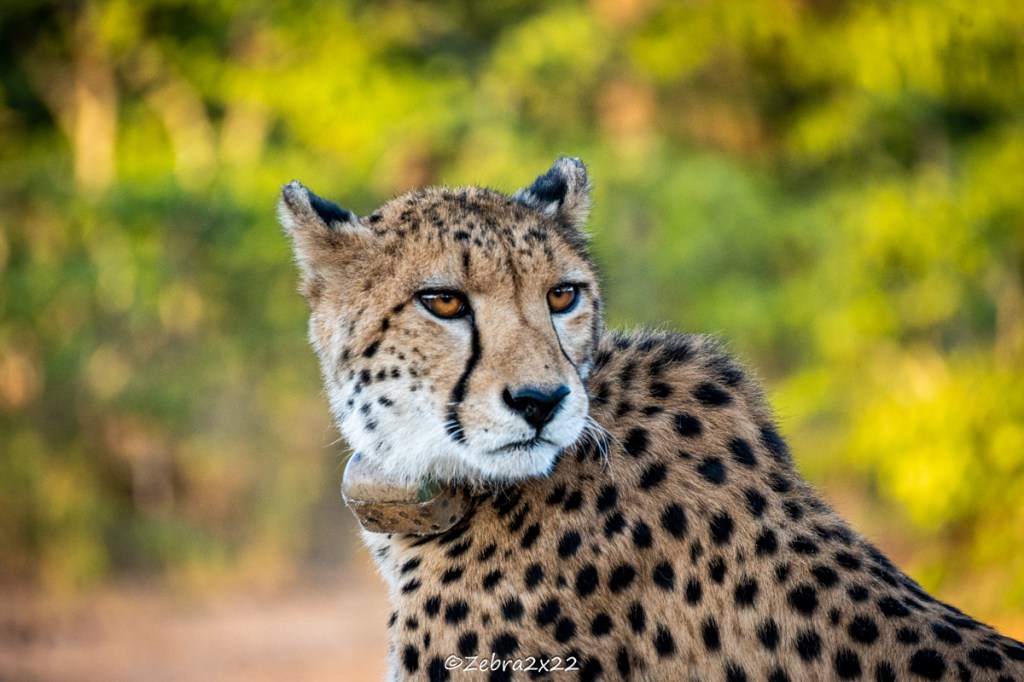
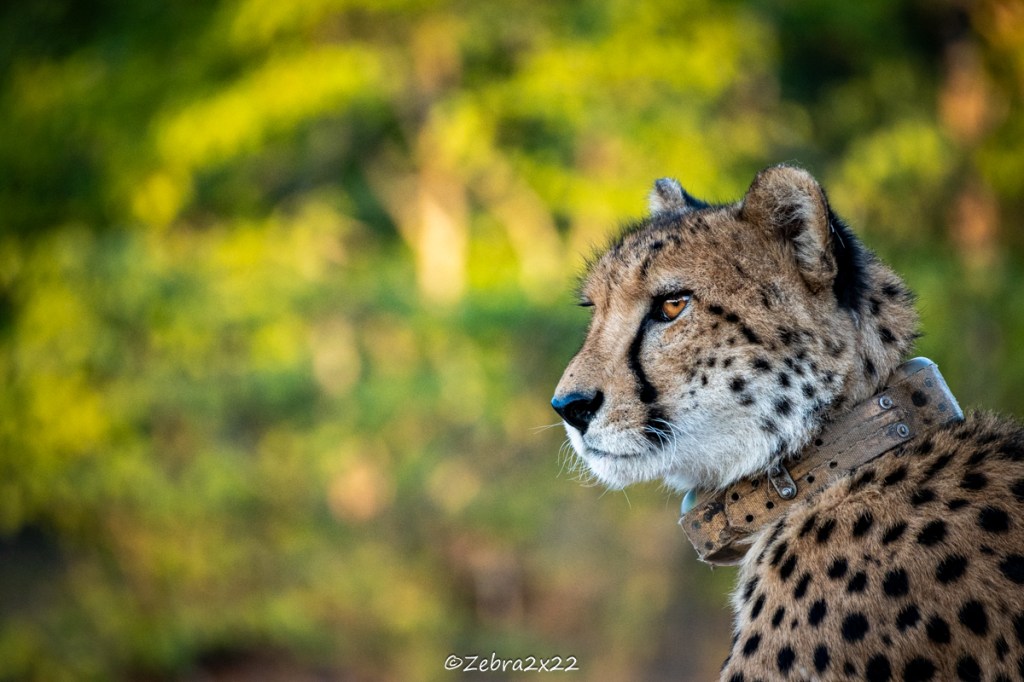
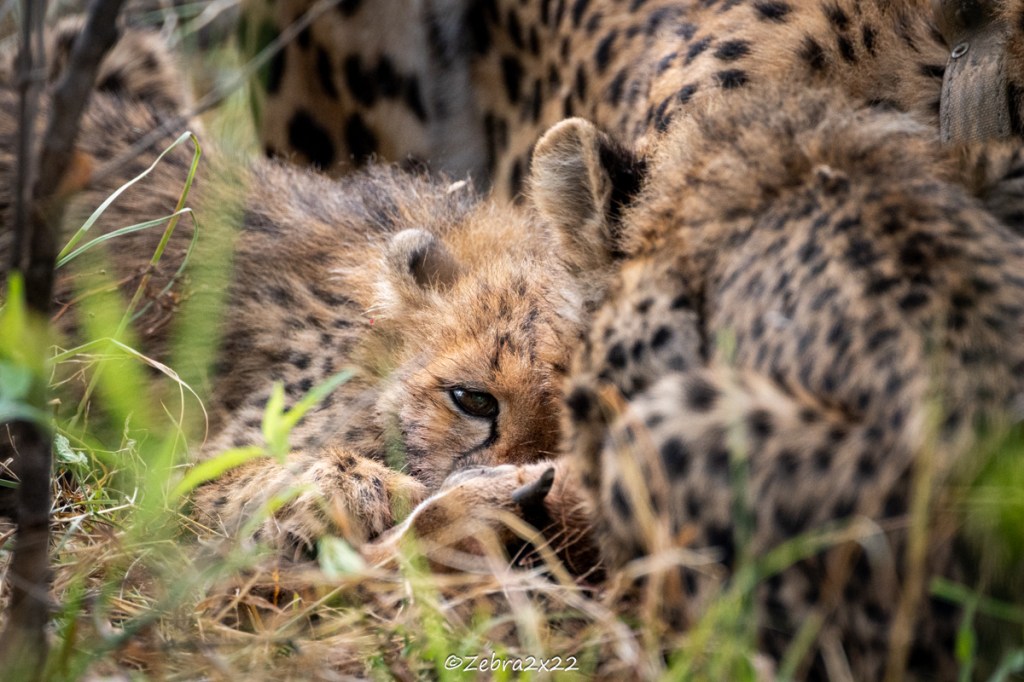
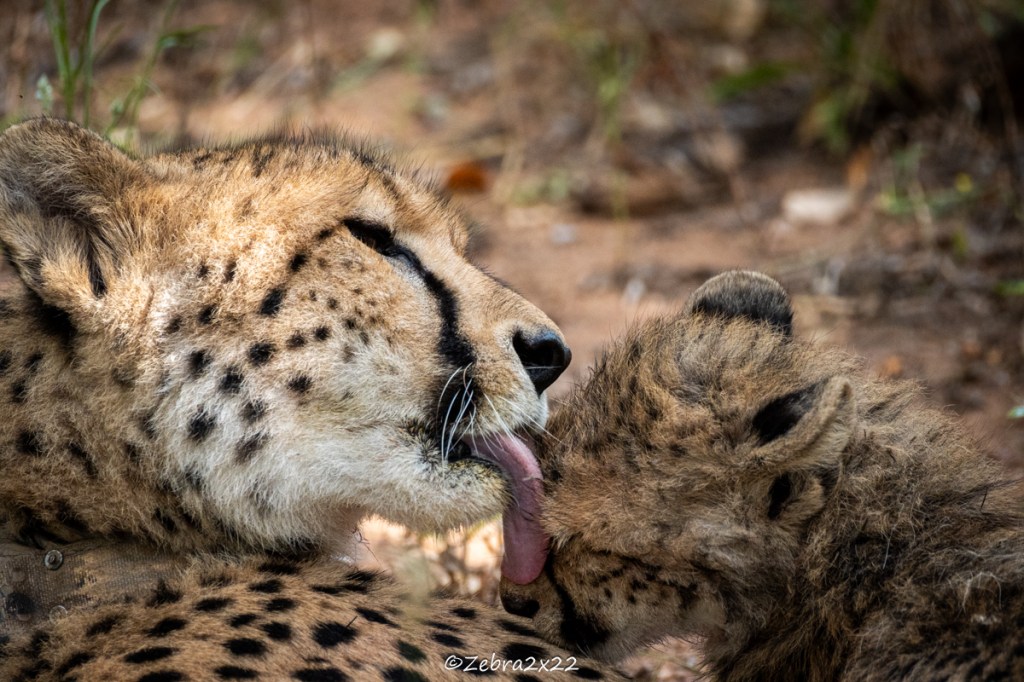
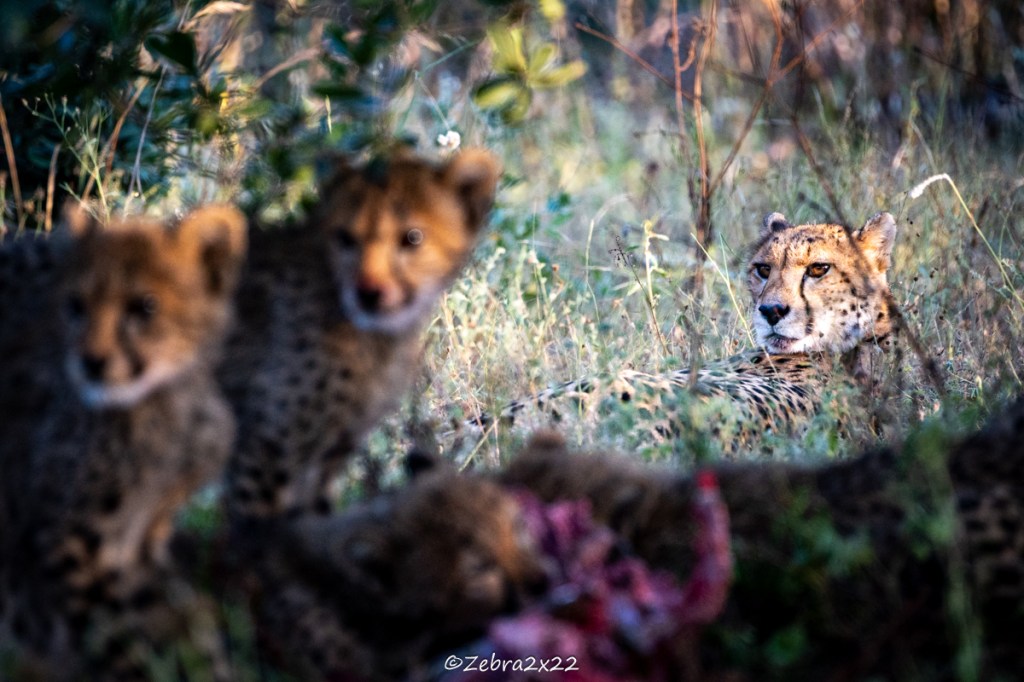
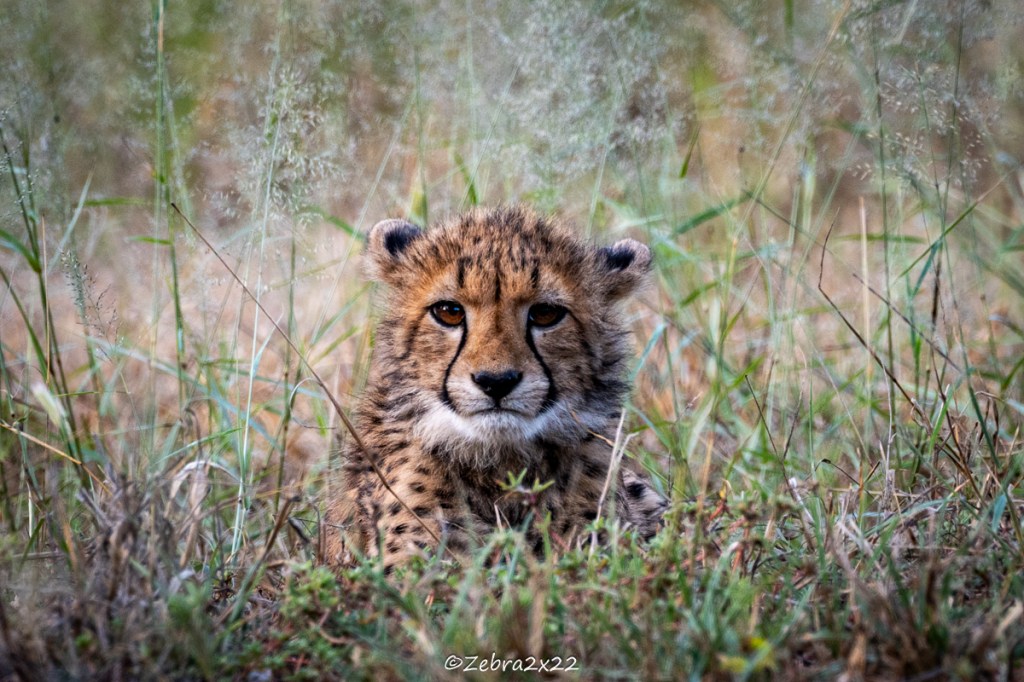
When I joined the program, my main task was to look after the female cheetah and her four cubs, who were just four months old. At the end of last year, I had already spent a lot of time with them, just after they were born and gradually became more confident in the process. I felt that I had established a relationship with the mother based on trust and respect. She tolerated my presence and meant no harm. Being a wilded, mother-reared, captive-born cheetah, she was habituated to humans and did not perceive us as a threat, even to her cubs.















Understanding the mission
I would spend three hours in the morning and three hours in the afternoon with them, before they settled for the night. The goal of this monitoring was to protect them to the best of our abilities and increase their chances of survival. Cheetahs are at the lowest rank in the predator hierarchy and can be killed by other predators such as lions, leopards, or hyenas, which may do so to reduce competition for food. Even buffalos can trample cheetah cubs to death in an attempt to reduce the number of predators. The cheetah population is declining, with fewer than 6,500 individuals estimated to remain in 2021. The species is classified as Vulnerable, so every effort and action to support their survival is worthwhile.
The main impact of our monitoring was the protection we could provide if a cheetah were ever caught in a snare. In such a case, we would respond quickly with the help of a veterinarian to release the trapped animal. Fortunately, this never happened. However, thanks to our daily patrols following the cheetahs, especially when they were hunting, we discovered many snares in the reserve. On one occasion, I found the first four snares of what turned out to be an area containing 72 fresh snares, later reported by our Anti-Poaching Unit (APU).
Daily Life with the Cheetahs
Each day, I would take the electric scooter, locate the cheetahs using telemetry, and spend both the morning and the afternoon observing them. The beginning was challenging, as I was no longer used to being in the bush and had to stay alert to everything around me.
Not every shift was the same. When the cheetahs had recently fed, they would usually spend the next two to three days resting, digesting, and lying in a shady spot away from other animals — a place where the mother felt safe. After the second or third day, she would start moving again, wandering in search of prey, particularly her favorite: impalas.
Some days, I would find them easily and spend hours quietly observing them. Other days, it could take me the entire morning to locate or follow them, not to mention the occasional technical issues with the tracking equipment. Even after finding them, I could easily lose them again when they were on the move. Once, I took just a minute to get my camera out of the bag — and in that moment, they vanished. It took me two hours to find them again, guided by telemetry signals and the alarm calls of tree squirrels.
What the Cheetahs taught me about Hunting
I began monitoring them around the time we stopped supplementing their food. The mother could finally start hunting again — which she did, with remarkable success, considering the reserve offers few open areas. Somehow, Athena adapted beautifully to this unusually bushy environment.
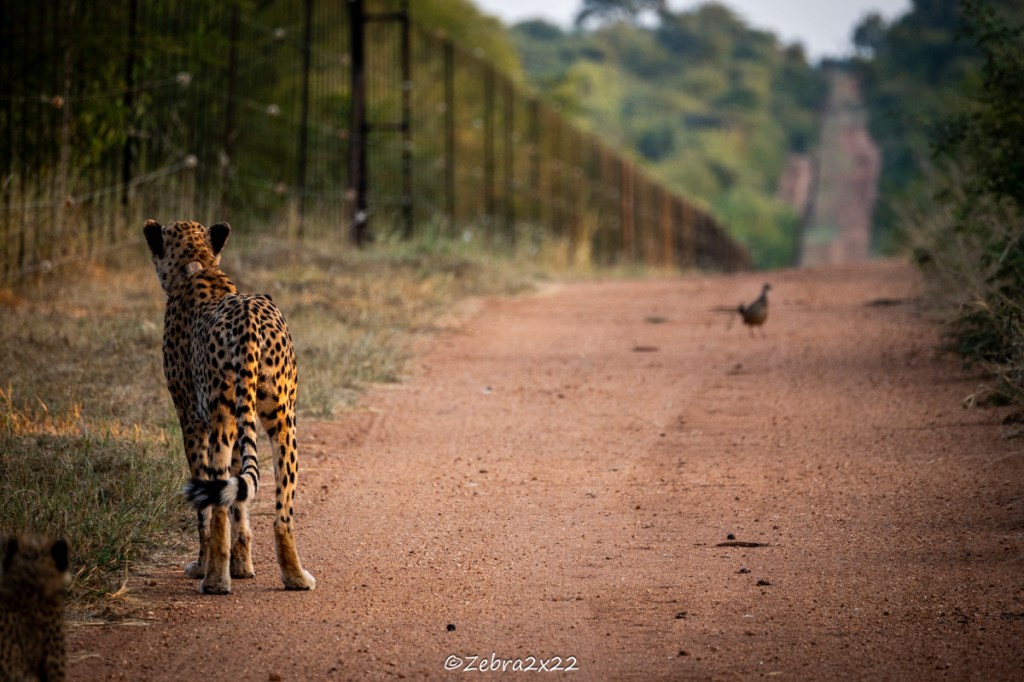
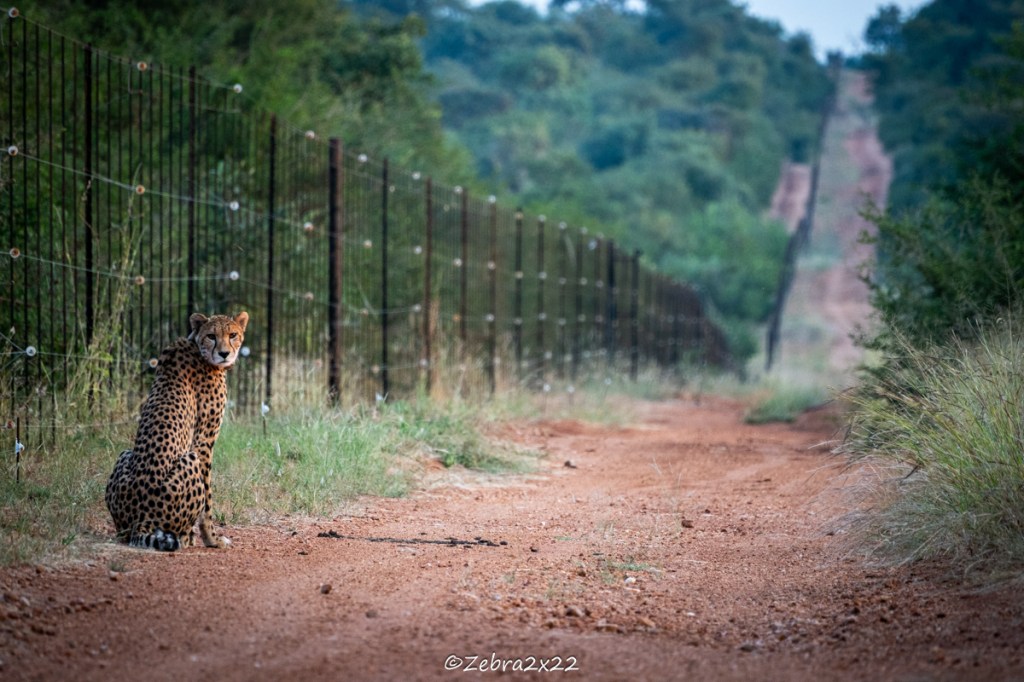
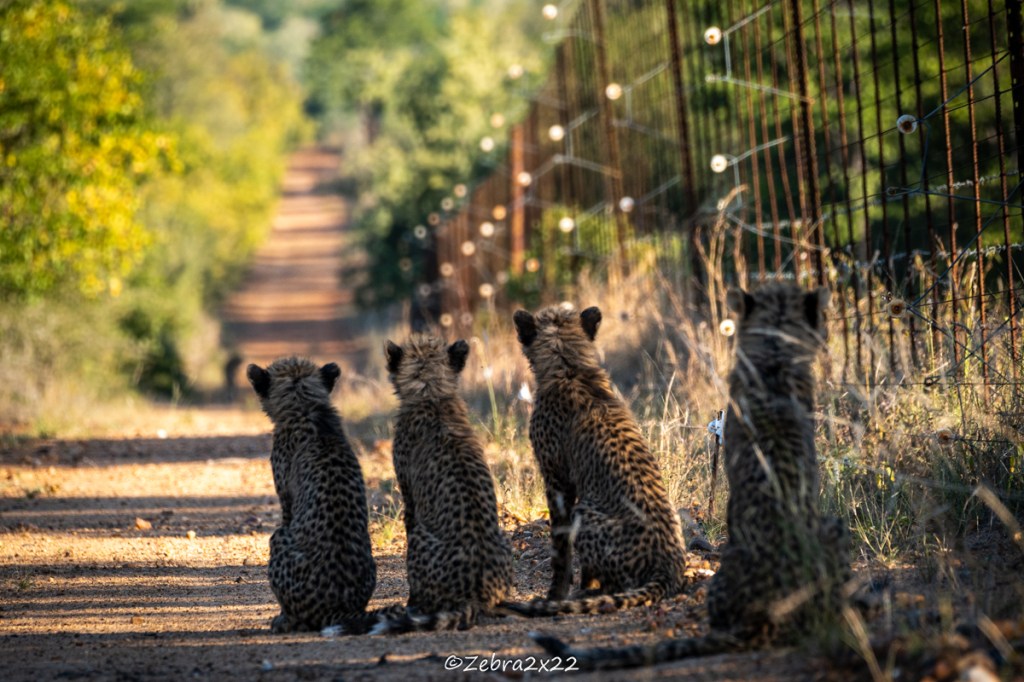
She liked to stay close to the fence near the road. During that transition period, when she began to feel hungry, she would sometimes chase motorbikes passing by or call in the direction of the road, as if waiting for something. Once, after an unsuccessful hunting attempt, she was limping and hadn’t caught anything for more than five days. At that point, we decided to supplement her and the cubs. It wasn’t to my liking, but the managers believed it would help her recover and prevent any dangerous mistakes driven by hunger. I have to admit—it worked.
Monitoring them during this time allowed me to observe the nutrition cycle and understand how complex their lives are, and how quickly things can turn in the wrong direction. An adult cheetah can go up to ten days without eating. In contrast, when they hunt successfully and regularly, they can go as long as forty days without drinking, as they obtain enough water from the fluids of their prey.
Typically, a cheetah won’t wait ten days before hunting again. They try to eat as much and as quickly as possible, since their kills are easily stolen by other predators or scavengers. Cheetahs don’t defend their kills; they would rather abandon them and live to hunt another day. After feeding, they lie down with huge, round bellies and spend days digesting and resting like proper cats. Then, once recovered, they begin searching for game again and will hunt as soon as an opportunity arises.
I noticed that after a failed hunt, a cheetah tends to rest and regain strength until the next day. They must carefully weigh their chances—they can’t afford to waste too much energy. A vicious cycle of failed hunts can quickly weaken them, leading to poor decisions, risky chases, or even injuries born of desperation. It’s a delicate, endless balance that can easily tip in the wrong direction.
The Day of the Leopard
One day, I was with the cheetah family. They had made a kill the day before and had stayed with it overnight. The morning began calmly. Some lodge guests joined me for a short visit and were lucky enough to have an incredible sighting on foot. After they left, I continued my monitoring, expecting a quiet morning of resting and digesting.
The cubs were playful and started chasing a wildebeest in an open area. Then, suddenly, they all stopped, gathered together, and went very quiet, staring in the direction of their mother, who was trotting toward a denser patch of bush.
I heard strange noises I couldn’t immediately identify—and suddenly, all the cubs vanished.
I turned around and saw none of them. Normally, when the mother and cubs are separated, I try to stay with the cubs. But this time, there was no point—I couldn’t locate any of them. I decided to walk toward the female cheetah while continuing to hear those strange calls. When I got closer, everything happened in an instant: a leopard, probably a female, leapt down from a tree and was immediately chased away by Athena.
I stood there in awe, not fully realizing what had just happened. Once the leopard had fled, the cheetah mother started calling and searching for her cubs, but she couldn’t find them. I quickly lost sight of her as well and didn’t know whether they had reunited. Fortunately, the volunteers’ game viewer was nearby, and together we searched for the cheetah family. Eventually, we found them close to the road—right where they liked to stay.
It was an encounter with another predator that I witnessed — perhaps the first for the cheetah cubs, though probably not. These incidents are crucial for their chances of survival. They need to be able to identify threats as quickly as possible.
My presence likely helped chase the leopard away, as they tend to be very skittish in this reserve. I don’t know what would have happened if I hadn’t been there — a cheetah doesn’t stand a chance against a leopard, and leopards won’t hesitate to kill them to reduce competition. Maybe that day I truly saw one of the benefits of monitoring in action — and I learned a lot from it.
A Lion Intruder
The tensest moments were when we knew lions were nearby, as they too would not hesitate to kill the cheetahs. We went several times with the vehicles, ready to intervene if needed — fortunately, that wasn’t required.
One day, we had a lion intruder in the reserve. As we were observing the cheetah family with the volunteers, this lion walked in our direction but quickly shied away — he was extremely skittish. We spent a lot of time using a drone equipped with a thermal camera to try to locate and dart him once we confirmed he wasn’t one of ours, but without success.
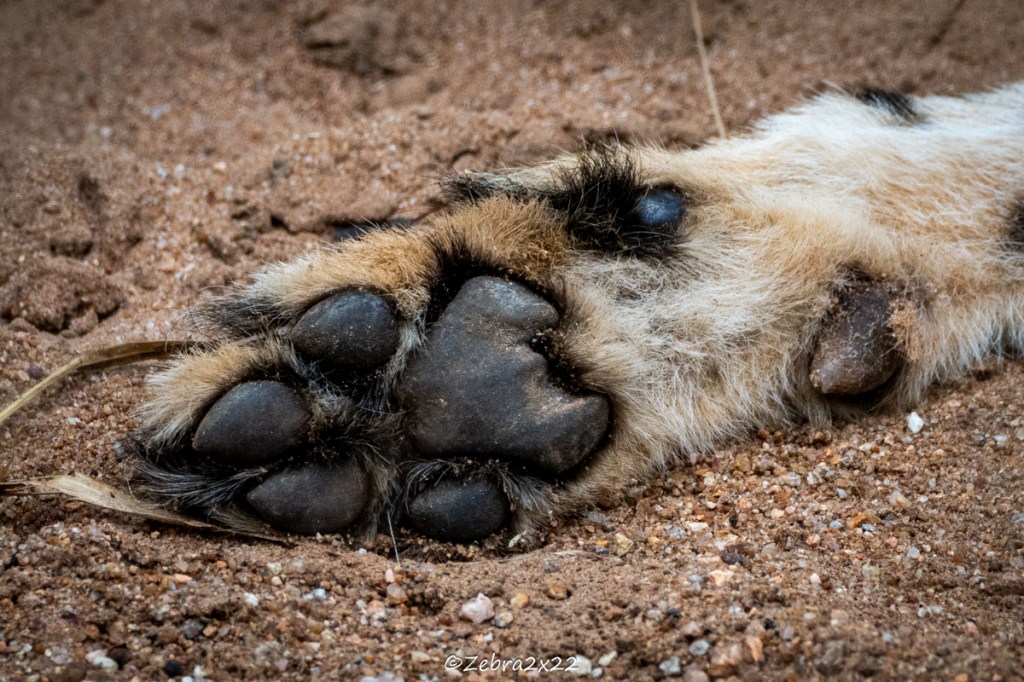
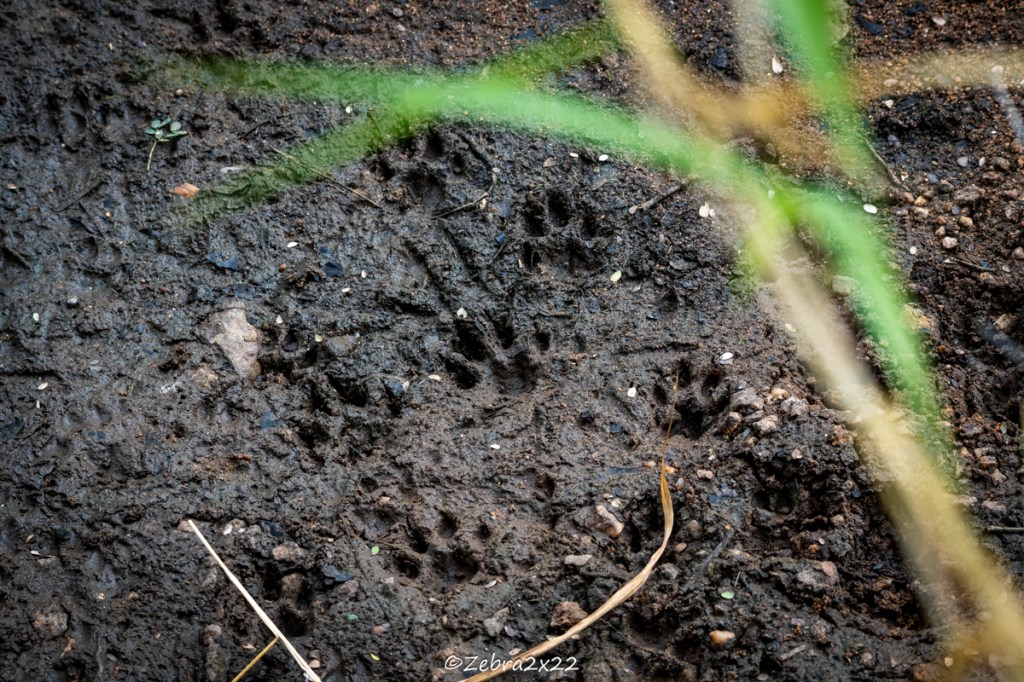
Over the next few days, I could see his footprints all over the area, but our paths never crossed. Eventually, he managed to leave the reserve.
Getting to know the cubs
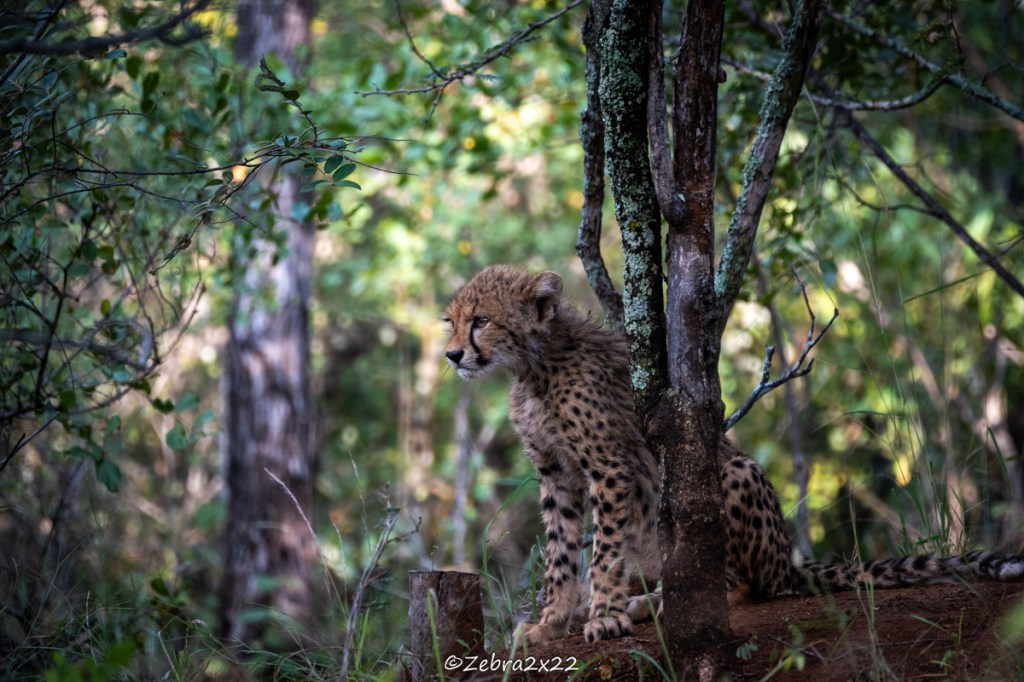
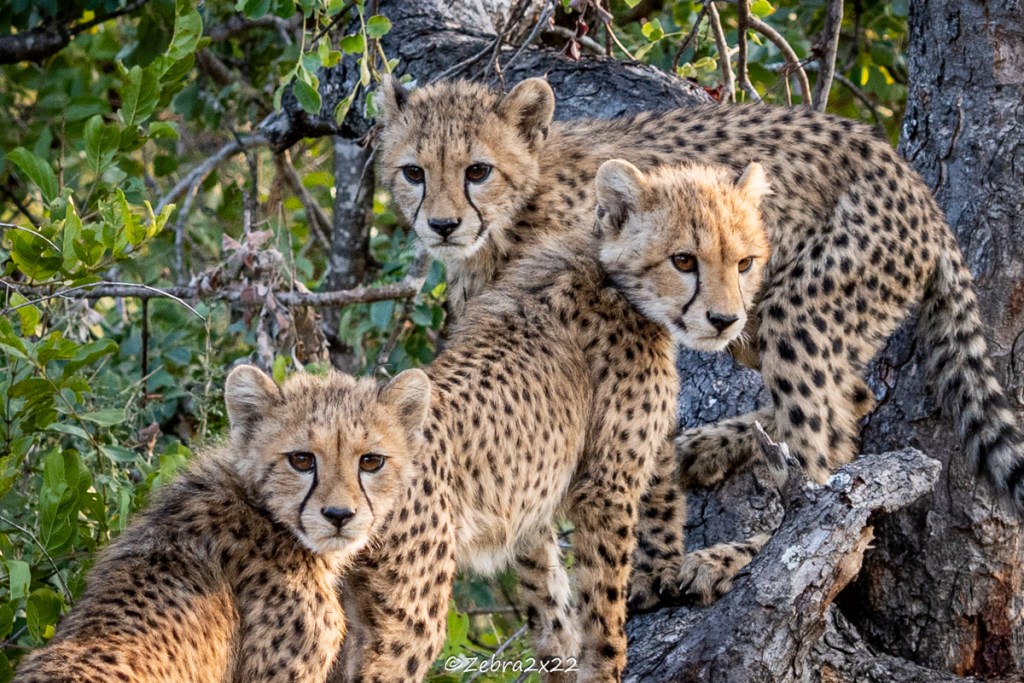
One of my first challenges was to distinguish the four cubs — both by their behaviour and physical appearance. We believed there was one male and three females. They were given coded names instead of real ones: Aju1 to Aju4.
The naming followed a system: the first two letters of the scientific name Acinonyx jubatus, followed by a letter for sex (in this case “u” for unknown, until confirmed), and a number.
The male (Aju1) was the easiest to identify. He had a very distinct head shape, gaze, and behaviour. Early on, he had a stiff hip and often lagged behind. Some nicknamed him “Potato” for his lazy attitude.
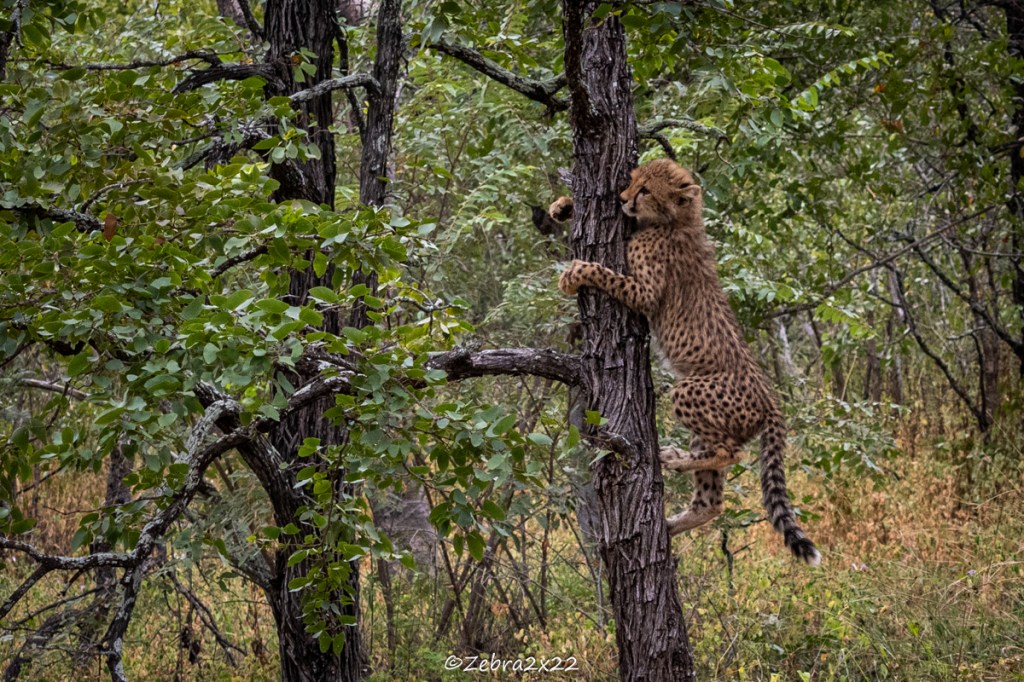
One of the females (Aju4) was also easy to recognize — she was the smallest, more cautious and skittish. She usually ate with her mother and waited to feed last. Despite that, she could be very energetic and was the best climber among them.
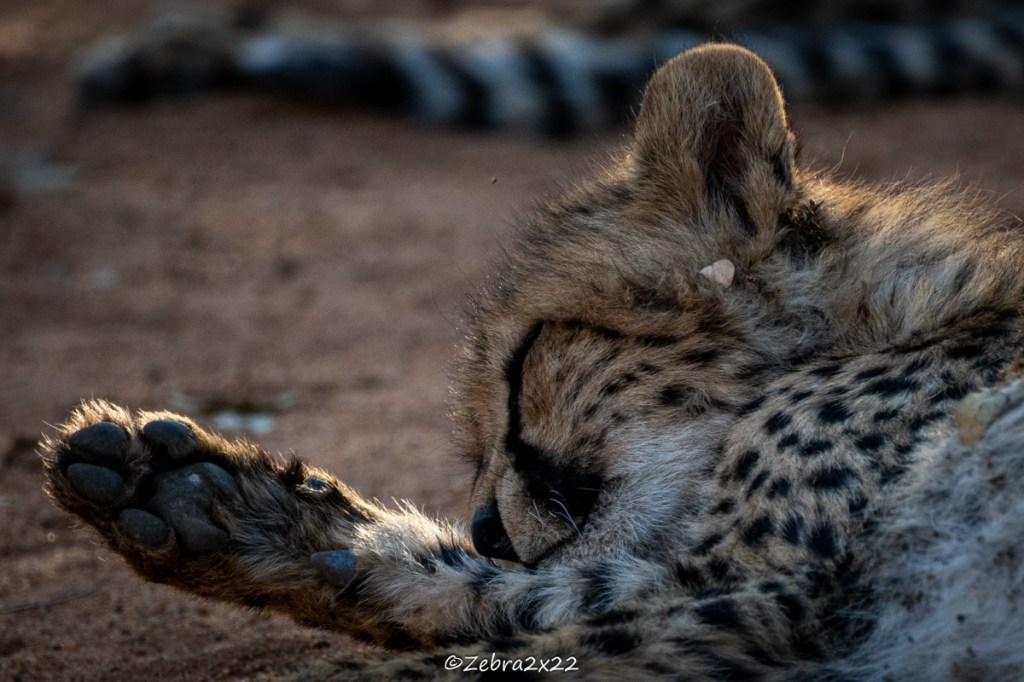
The two middle females (Aju2 and Aju3) were almost identical and very hard to tell apart. They were always together and got along well. Aju2 was bossier and braver, often the first to climb trees and very protective of her food, defending it fiercely. Her personality helped us identify her before any physical traits did. Later, we noticed she had darker fur over her shoulders, broken stripes around her eyes, while Aju3 had solid ones. The inside of Aju3’s foreleg was also distinctive, marked by two black lines like bracelets.
All this information is recorded in an ID kit, which must be updated regularly as they grow and change rapidly at this stage of life. This is essential — in case of injury, it’s crucial to be able to identify each cub and understand their usual behaviour to spot anything unusual that might require attention.
I wrote a daily report of my encounters with them; here is one example from April to give you an idea of what I observed each day. This process allowed me to understand them better and keep track of all the events I witnessed, helping me in the process of identifying them. All of this information is also entered into EarthRanger — including the location and health status of all individuals — to track their behaviour. Ajf1 is Athena.
6:30 – Ajf1 & cubs at almost the same location as the previous day.
The cubs are very playful at this time of day.
Ajf1 goes regularly onto the road as if she wants to move, sometimes chasing one of the cubs as if to reprimand him or her.
The cubs sniff the place where Ajf1 was lying down.
7:30 – 9:00 : Ajf1 starts to be mobile.
14:30 – I found Ajf1 & the cubs not far from where I left them.
14:50 – Ajf1 killed a scrub hare.
The cubs are very afraid when she hunts, 2 of them run in the opposite direction. They found their way back to their mother.
She lets them eat first. They are ferocious and hungry.
She takes half of the kill and moves a bit further away, leaving the cubs with the remaining half.
After a while, she calls them .
Aju1 steals a portion and defends it.
Aju2 is also dominant. Smart, she finds the rest of it and defends it even against Ajf1.
I think most of them got their share at this point, Aju4 got the smallest portion and was bullied a lot.
It is a moment of tension as it is just a small snack for them.
Ajf1 looks stressed out: the cubs are very noisy. 40mn later almost nothing is left of the kill.
16:00 – Back on the road.
16:10 – Nice open area to rest.
17:00 – Ajf1 stands up and looks around.
17:20 – Arrival of a Sable antelope herd.
Aju1 &Aju4 are scared.
17:30 – On the road again
17:45 – Ajf1 is close to this open patch she likes, I leave them here.
Treating the injured cub
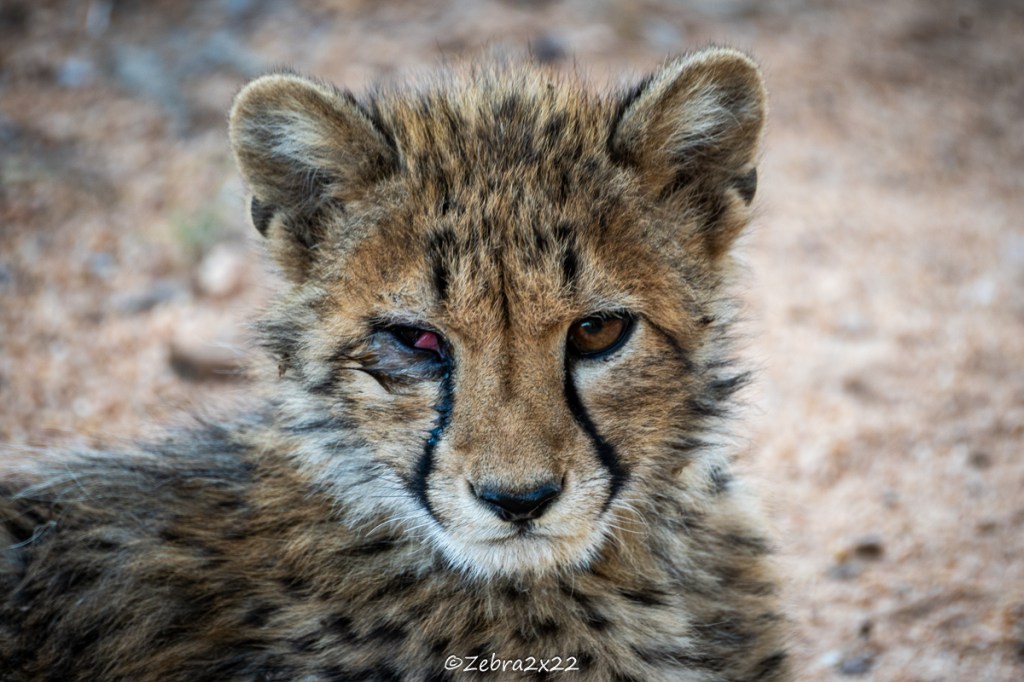
Having done that identification and habituation helped us later treat one of the cubs. The little male developed a tick infection near his eye. The vet came, darted the cub, and administered antibiotics. I wasn’t present during the procedure, but I followed everything over the radio as I was overseeing the operations room that day.
It went better than I expected — the female cheetah didn’t react badly to the intervention, even when the vet got hold of her cub. Unfortunately, they became separated afterward, as the female was out hunting and hungry, while the cub was still recovering from the anaesthetic. We had to lure her back with an impala carcass to reunite the family.
We continued monitoring the cub’s eye. It improved, though not completely. The vet mentioned it might require another procedure in the future to remove what he called a cherry eye — nothing urgent, but something to keep an eye on.
Walking with the tribe
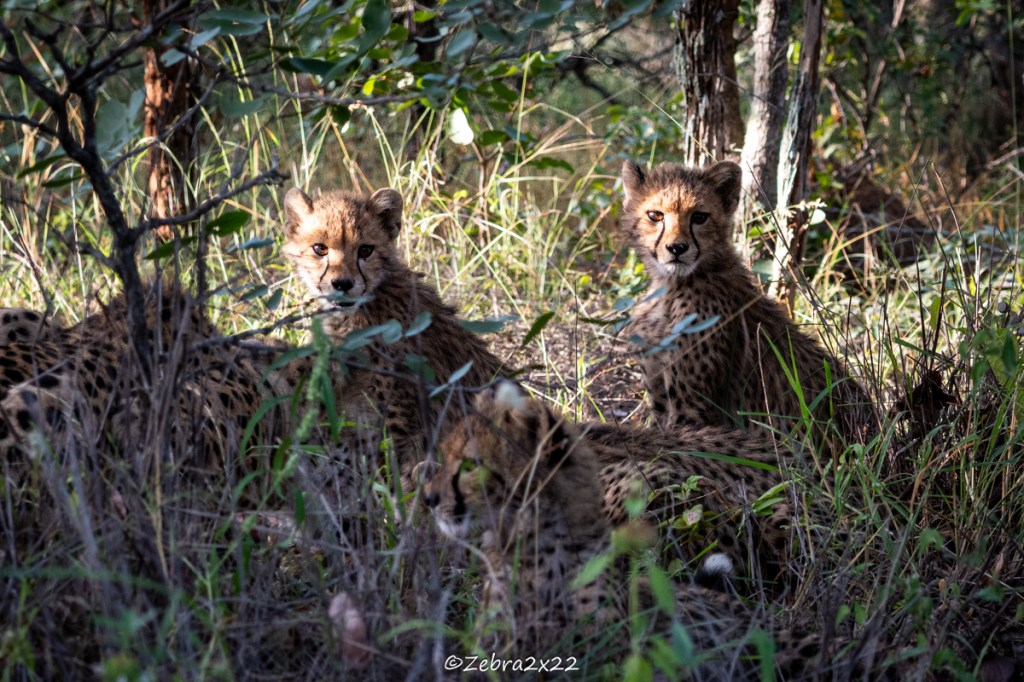
My monitoring moments with them were priceless. I could spend hours watching and escorting them; I genuinely felt like part of their tribe. Some of the cubs were wary — especially the smallest one, who sometimes hissed at me — but that stopped after a few weeks.
I watched them evolve day by day: sleeping, resting, drinking, suckling, hunting, walking, calling to each other, grooming, purring, playing, and climbing trees. They seemed to grow bigger overnight.
There’s no word that truly captures the feeling of walking beside them while they’re on the move — hunting, searching for prey. It’s an indescribable experience.
The Hunt and the Kill
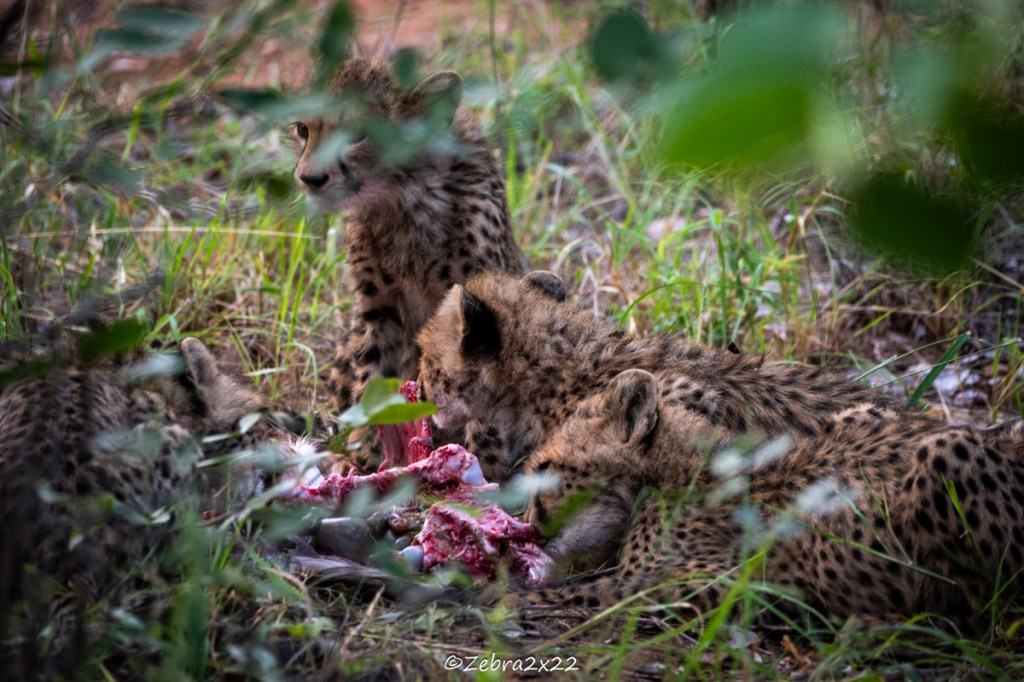
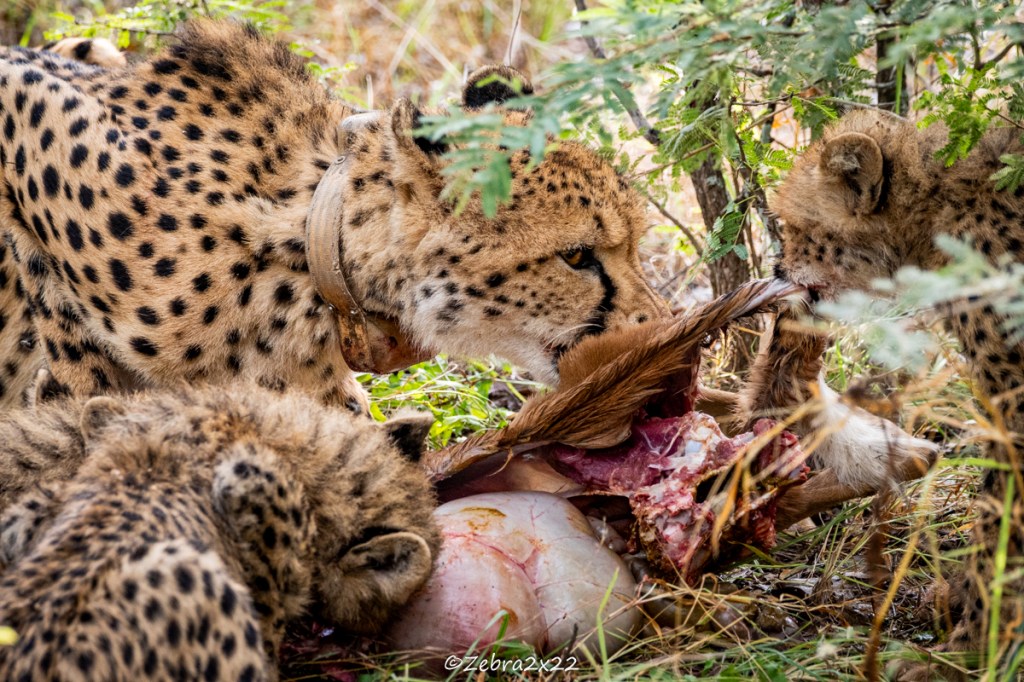
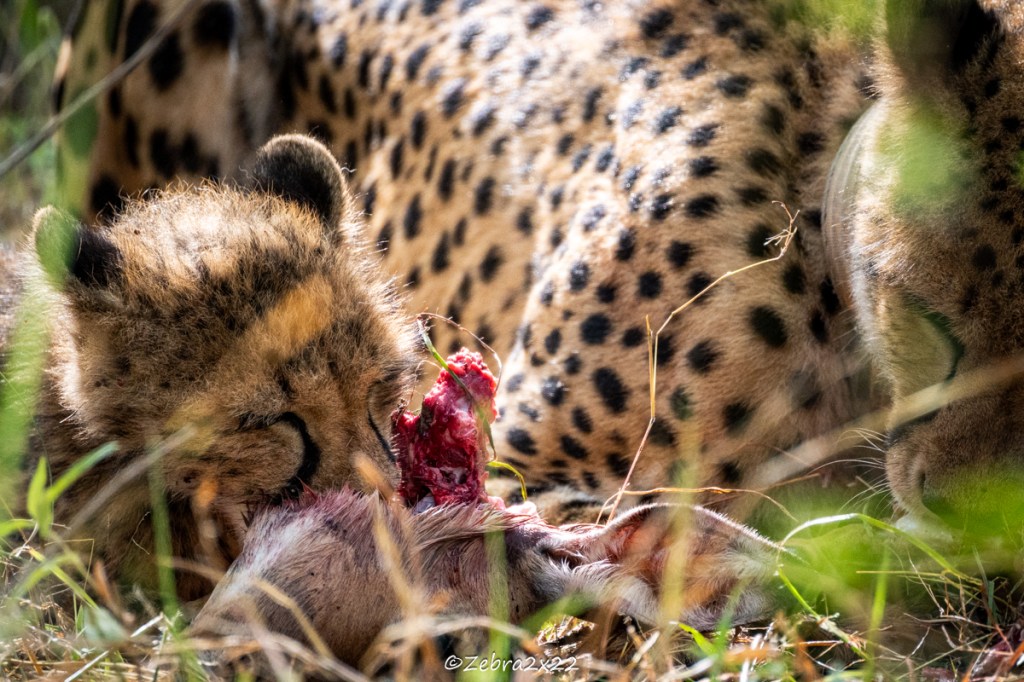
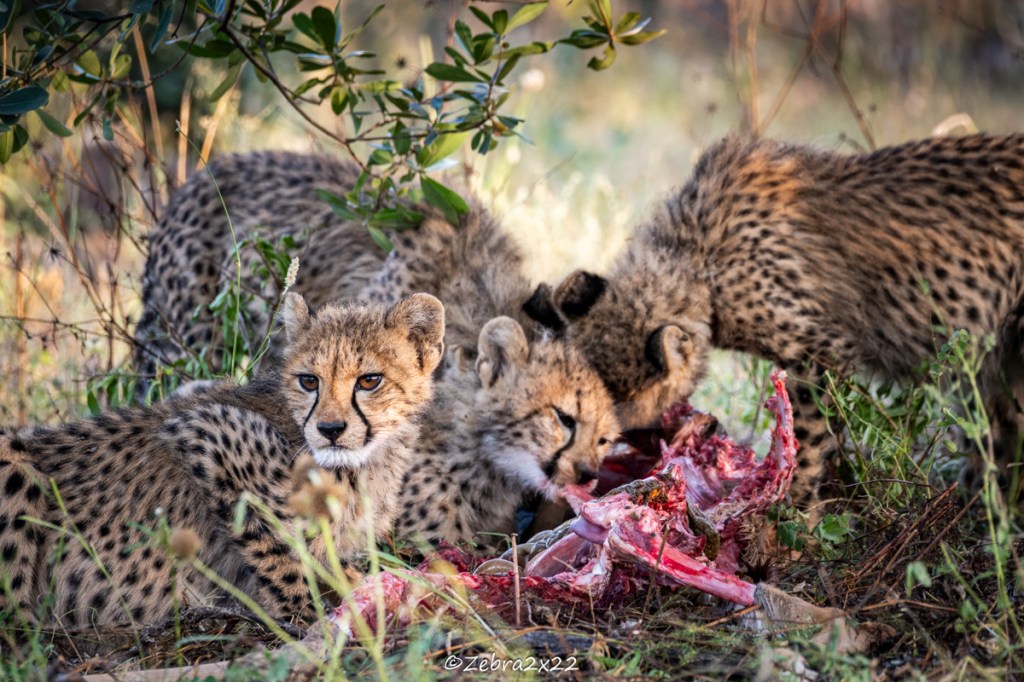
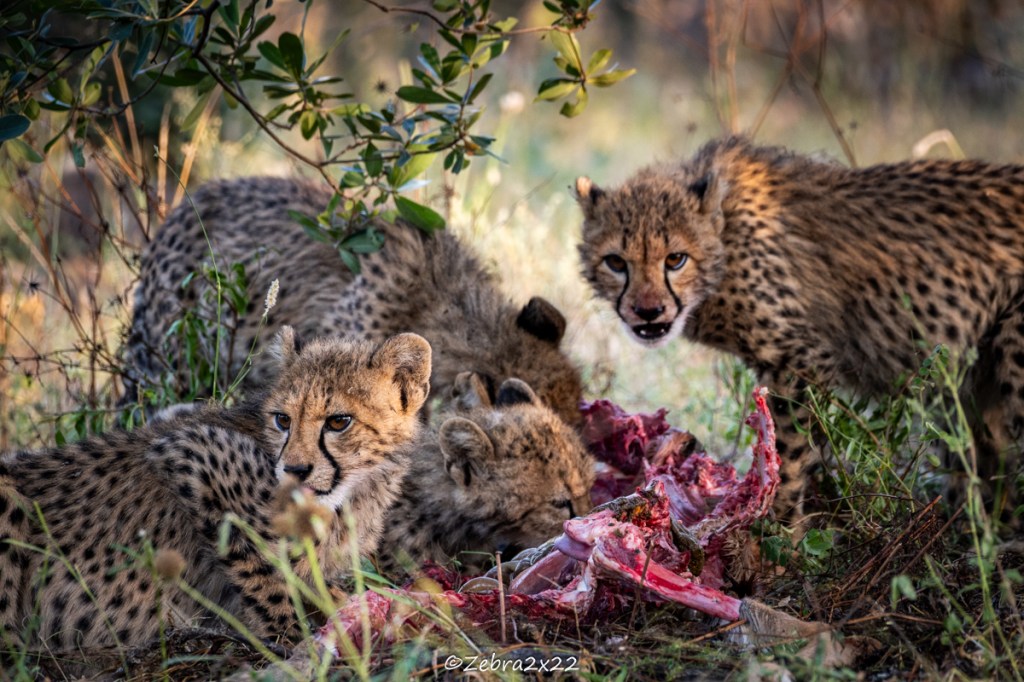
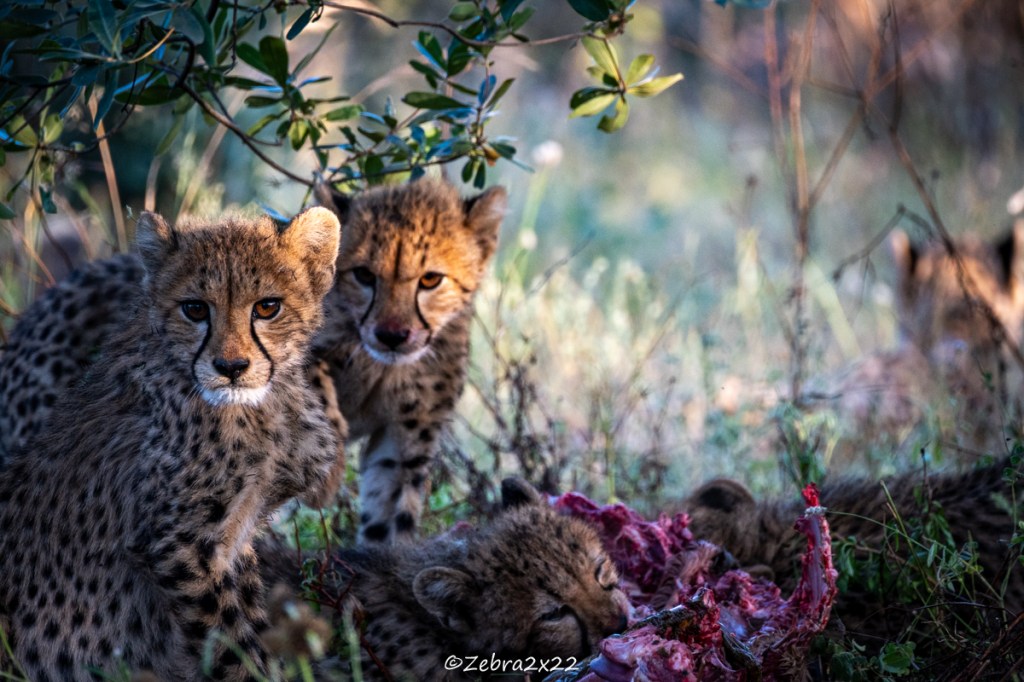
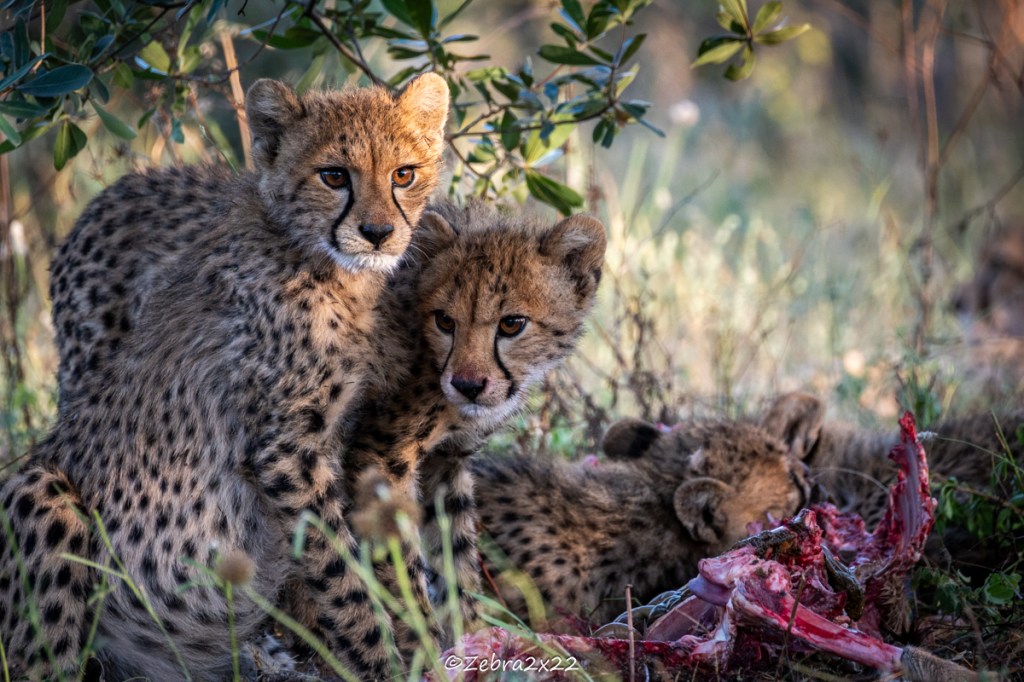
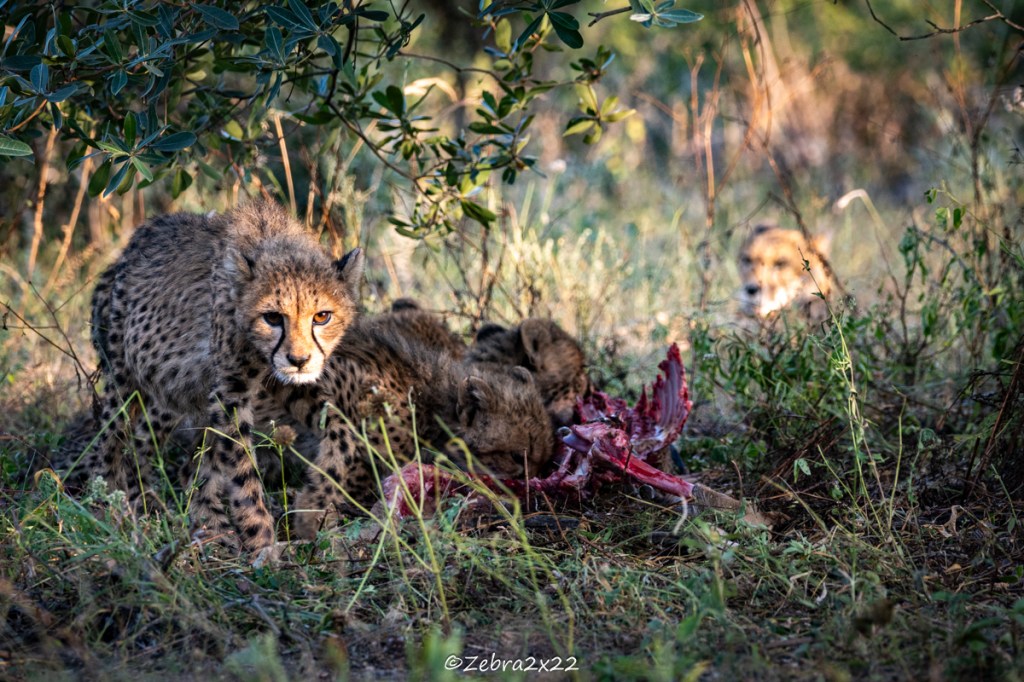
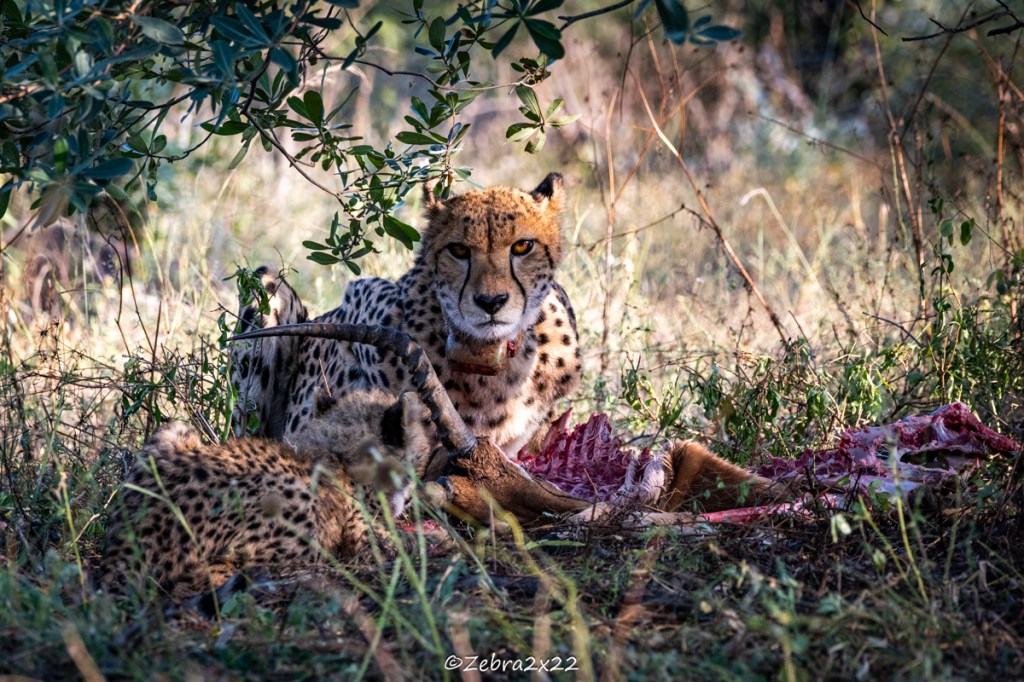
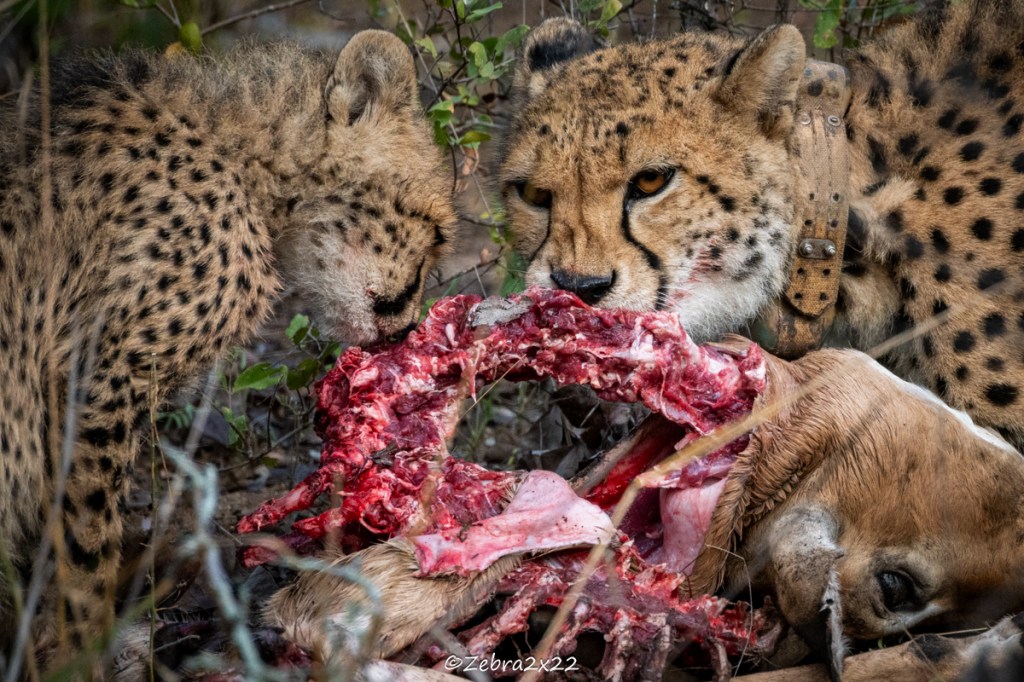
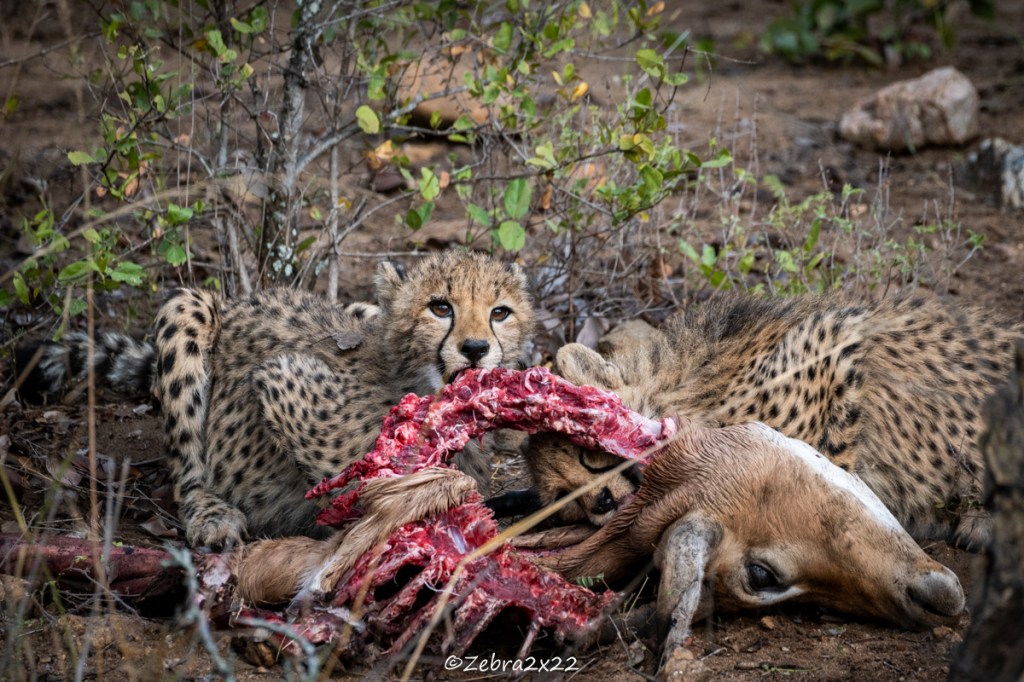
I was fortunate enough to witness several moments when Athena caught an impala and suffocated it with her powerful bite to the throat. As a vegetarian, I expected to find it disturbing — but I didn’t. It was done with grace and purpose. It felt natural, part of the cycle of life — a necessity, not cruelty.
She would always let the cubs eat first while she kept watch, scanning her surroundings with unwavering focus.


Do Humans Help or Hinder?
I often wondered whether my presence hindered them while they were hunting — I’m certainly not as stealthy as they are. I made plenty of noise, even when I tried my hardest to stay quiet. It takes a lot of practice, and I wasn’t there yet.
Eventually, I came to the opposite conclusion: I might have actually helped them. When we were close to impalas, the prey often focused on me, giving Athena an advantage. When we were farther away, several scenarios unfolded — sometimes Athena would leave the cubs with me. During those moments, they remained completely still and silent, waiting for her signal — a call, a sound — to run toward her.
I could sense what felt like tension, or maybe anticipation. Perhaps I misread it — maybe they were simply eager to eat and reunite. Either way, they were incredibly observant and disciplined during those moments.
Reflections and Conclusions
While I REALLY enjoyed my moments with the cheetahs and felt very grateful to live this, fell part of the tribe, I always wondered if this was a good thing or not, how our monitoring interfered with their development.
On one hand, we increased their survival chances when we encountered the leopard and the lions which run away due to our mere presence.
We also helped the cub that got the eye infection after the tick bite. As we could approach them and dart the cub easily.
Luckily, the hunting/feeding cycle was back on track after Athena started hunting on her own once we stopped supplemented her. I could see she associated the motorcycles with food delivery unfortunately. And she will accept food provided by humans without hesitation.
Having them habituated is benefiting the reserve as they can bring guests and create unforgettable memories on foot for them. What a moment to be on foot close to the cheetahs! It was so precious to me to remember those first times through the guests’ eyes and never forget about the chance I had to observe them every day.
It was also my duty to create the correct space for the cheetahs as the guides always want to be closer and do not always respect them, having the car too close, off-roading when it was not necessary…
I could also observe that they were not scared with the communities next door. When the people from the village came closer to the fences and observe them; or when they tolerated our guests. They could see she was not a threat and who knows what opportunity it can create.
Probably not a good thing. I always have in mind the poachers which is one of the real danger cheetahs are facing.
Hard to know, but for sure we were not just having positive impacts on their lives. The entire family is healthy, the cubs reached 6 months old when I was in the reserve and are still alive in October 2025, having reached more than 10 months old and start to be closer to their adult size, on the path of learning their hunting skills.
Survival is hard, the environment is harsh and unforgiving. Not a walk in the park and a long road is ahead of them.
Comforting thoughts if you ask me. Knowing that somewhere on earth Athena and her family are surviving and thriving.

 Zebra2x22
Leave a comment