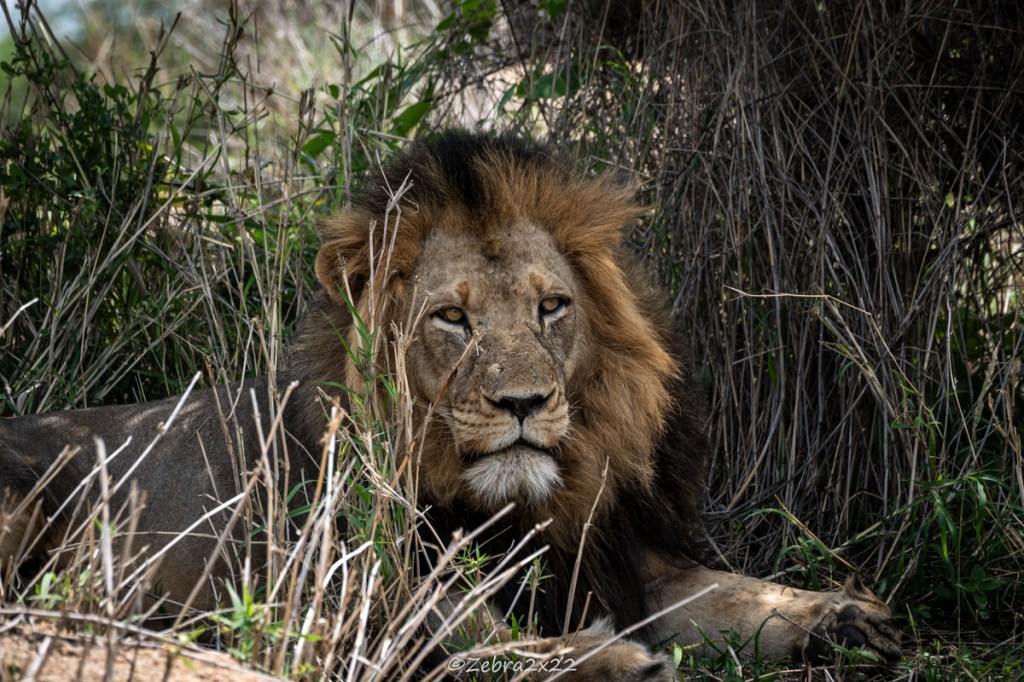
Five weeks have already passed since I began my internship.
I perform it in a Big 5 and endangered species wildlife monitoring and conservation program. This volunteering program, founded in 2005, aims at wildlife conservation. Rangers and founders are passionate about their work, they protect wildlife by offering a free service to the hosting reserve which is 16,000 hectares large and contains the Big 5 animals.
The big 5
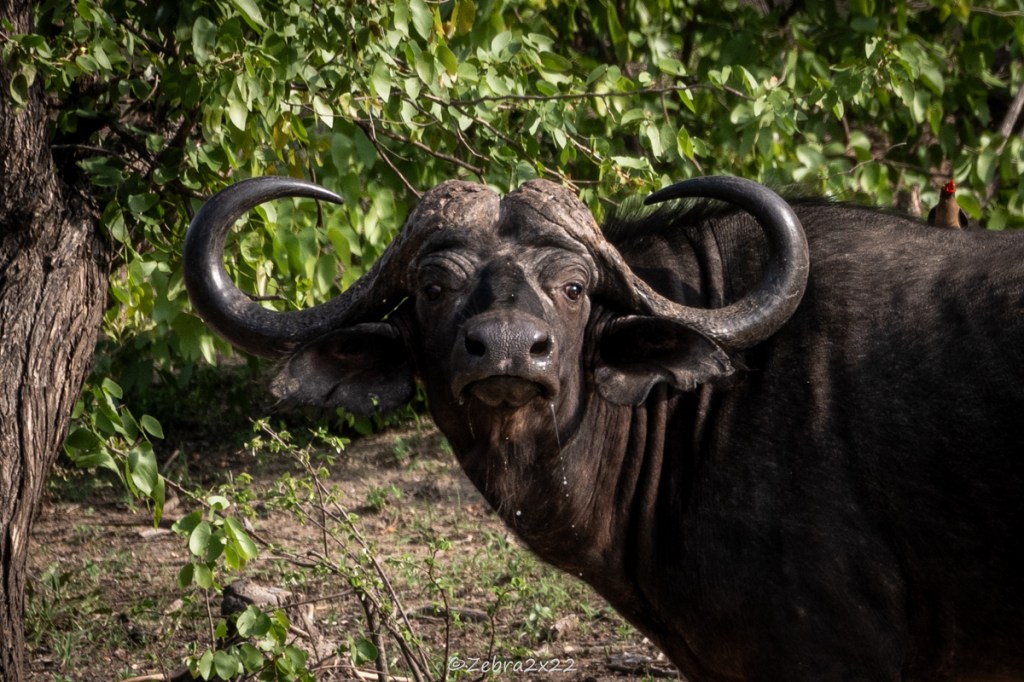
This might sound silly, but before starting this life-changing wildlife conservation journey, I admit I didn’t know what the Big 5 were exactly. They are actually the most dangerous animals to hunt on foot : buffalos, lions, leopards, elephants, and rhinoceroses. Those animals, if they feel threatened, due to their nature, size, and temper, have the ability to seriously harm or even kill human beings.
In general, seeing the Big 5 is the aim of most tourists, checking this item off their bucket list. It probably secretly was mine until I discovered there is much more to it: a wide range of mammals, reptiles, frogs, vegetation, birds, great landscapes, to say the least. So, if ever you come to Africa for a safari, make sure you are curious about everything, as it is one of the most beautiful places I have ever been to. The guides may try to rush you out for the Big 5, they know much more and can share a lot if you ask questions, you will stop frequently and understand more about the ecosystem and may have the chance to listen and spot amazing birds.
The reserve in which the program operates is very different from Dinokeng that contains multiple camps and lodges for 20,000 hectares. I feel really privileged to work in this area : one 5 -star lodge and 16,000 hectares with very diverse sceneries.
We agreed on a multi-dimensional internship composed of field and office work, equally balanced, with the possibility to work on various subjects.
In the field
- Monitoring the endangered and collared species, which includes seeing them every day regardless of the weather. If they cannot be seen from the game viewer, they will be approached on foot.
- Participating in anti-poaching work, which consists of removing snares from the reserve.
- Participating in darting aninimals if needed (snares, curing wounds).
- Gathering data and processing camera trap photos to keep only the relevant ones with monitored species and poaching activities.
At the office
- Working on digital marketing and different topics that need attention.
- Helping whenever it is needed.
- Cooking and cleaning duties.
Overall, it was a slow start. I have been an observer in the field for the first two weeks, getting acquainted with the reserve, the map, the wildlife, and the different activities they are performing, staying at the office to work on digital marketing and other duties.
Using telemetry
I started to be able to drive and use the telemetry after those initial weeks.
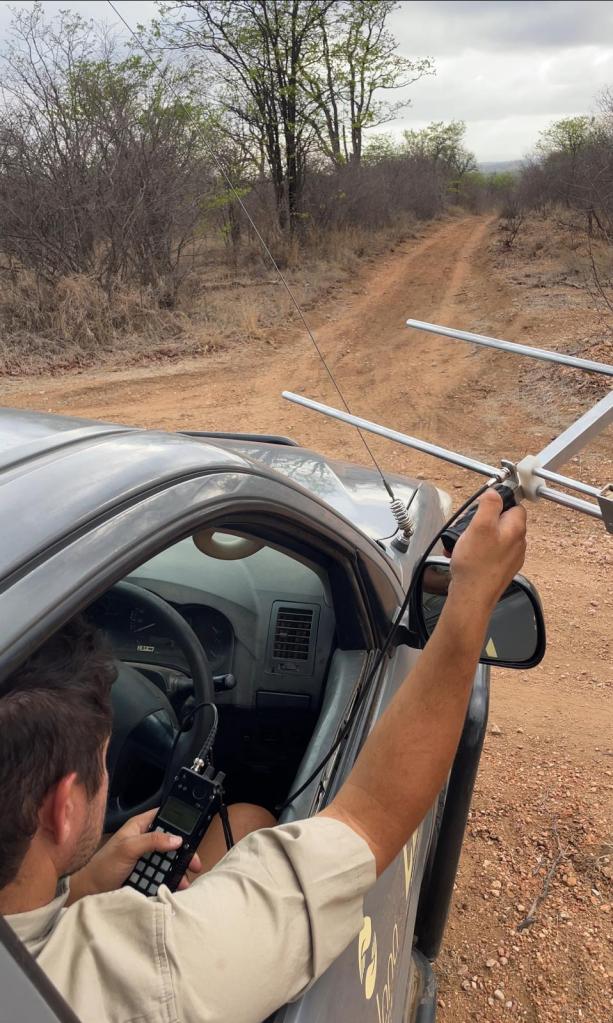
Telemetry is a device that enables you to locate the collared animals. It listens to a predefined frequency and informs you about their direction by means of beeps and figures. The louder the beep or the greater the figure, the closer you are to the collar.
It can be used both at high or close ranges. Getting used to it is not complex; however, this requires practice to identify the locations where to use it, avoid following wrong signals or back signals, getting a proper understanding of the distances and apply the best practices in general. To become faster at using it: I got a lot of pressure from the experienced rangers to be faster in my measurements and conclusions.
Finding the highest points in the reserve is a good tactic to start with. This helps to narrow down the location or non-location of the animals with the help of satellite information, additional measures, and the necessary map of the reserve.
It is then important to find the best spots to walk to the animals. Depending on your accuracy, the bushwalk will be more or less long. Sometimes, the bushwalk may end up being longer than expected, as the animals are not always static and may move away from you.
It is quite an exercise to be in front, use the telemetry, lead the group, and be aware of all your surroundings at the same time. This definitely requires a lot of practice, and this is my preference in terms of activities so far—a combination of driving, field activities, and wildlife monitoring.

Office work
For the rest, I have been spending my time in the camp helping on several topics: revamping the volunteer brochure, finding and testing a newsletter system that would fit their needs, preparing information for a fundraising document, evaluating and changing the SEO (search engine optimization) items of their website to increase presence on the net, researching reviews available on the internet, helping with their Google Business account, and searching for interesting travel agencies to be referenced with. And also cleaning and cooking duties.
I am learning every day, even in the office, despite it not being my preference in terms of activities. I just wish, and have expressed the need, to be more active in the field activities as there is so much to learn. I am required to pass the handgun competency for business purposes. I hope this will unlock more practical tasks on my end.
The highlights of my journey so far
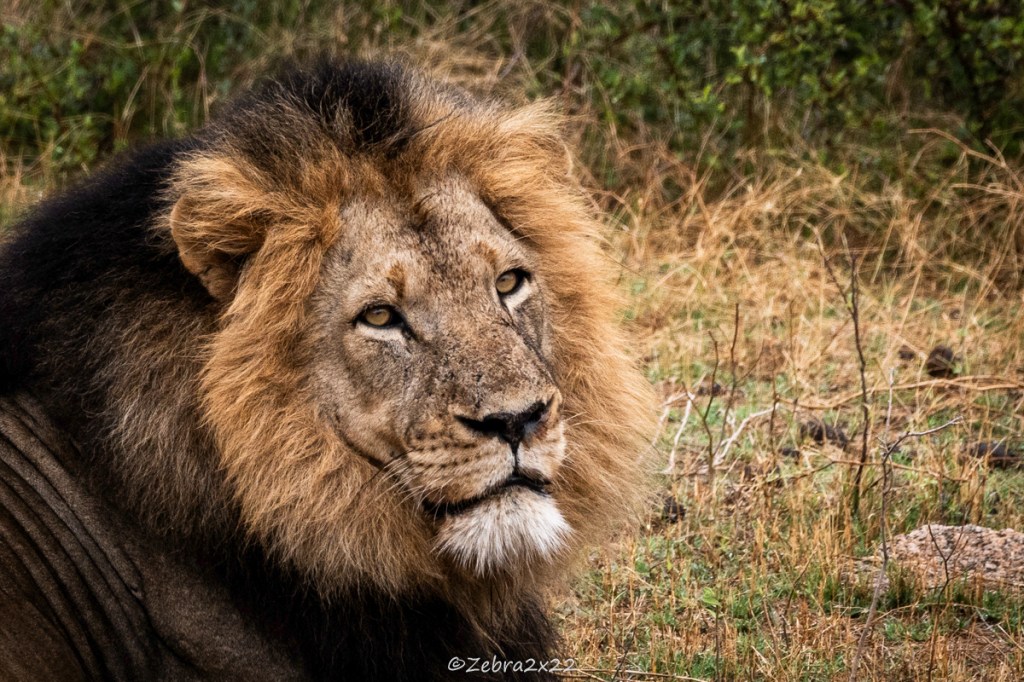
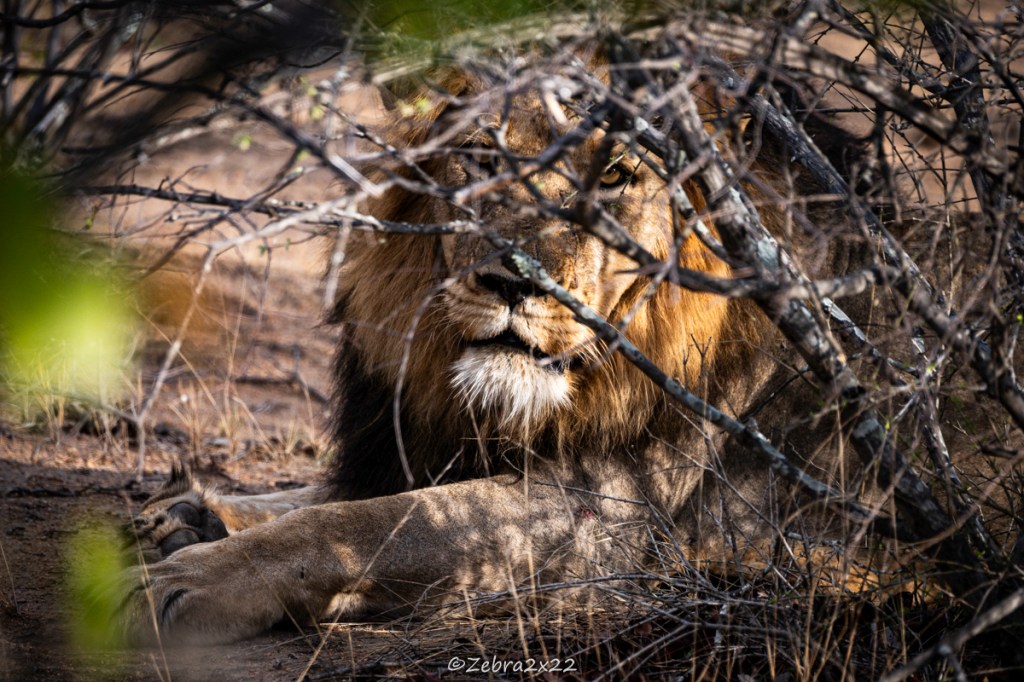
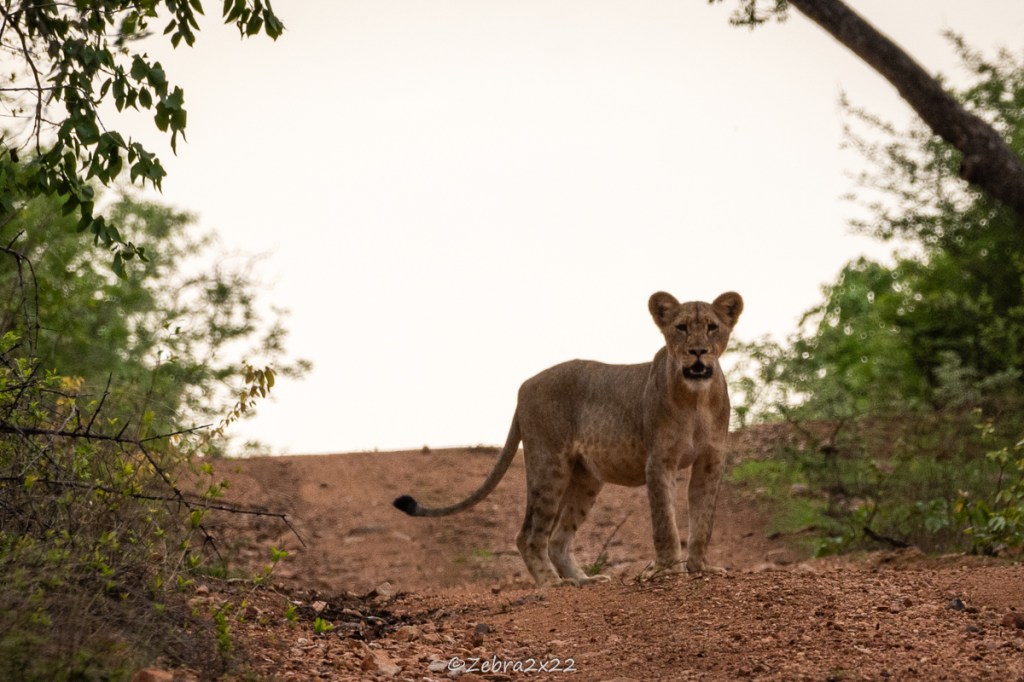
- Leading the group with the telemetry to find the lion.
- Experiencing my first lion charge.
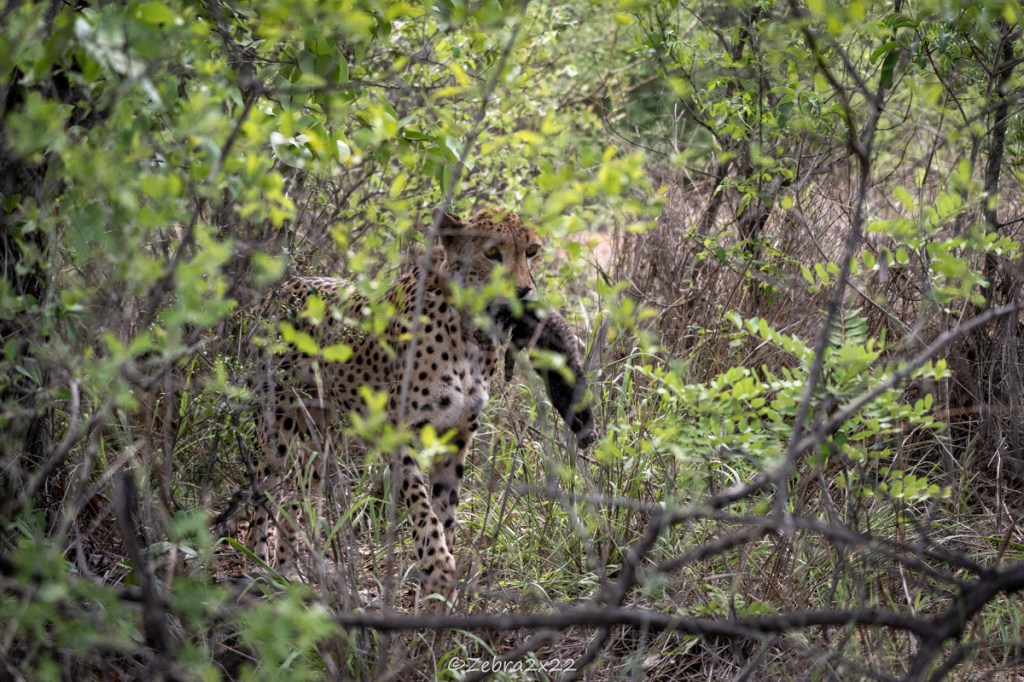
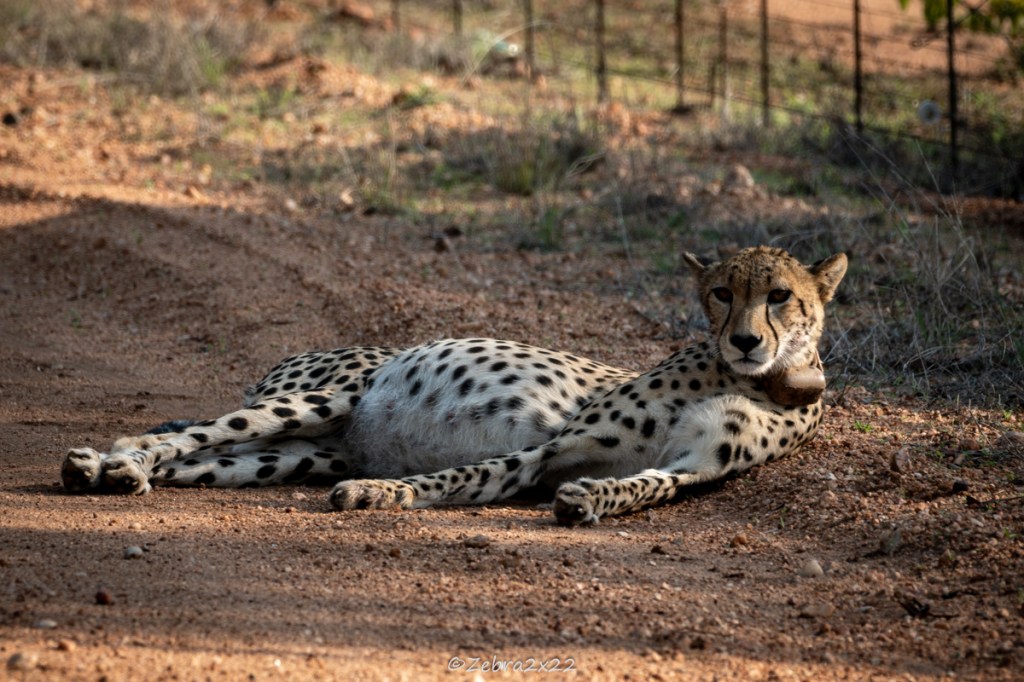
- Approaching very chill cheetahs from very close thanks to the habituation process that took place in the reserve.
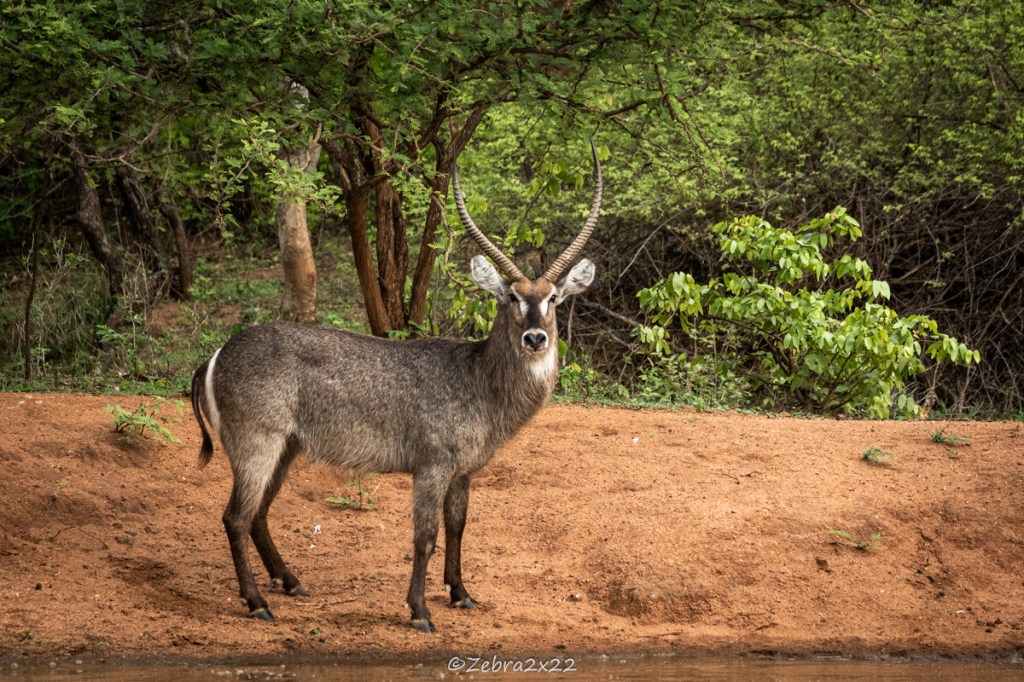
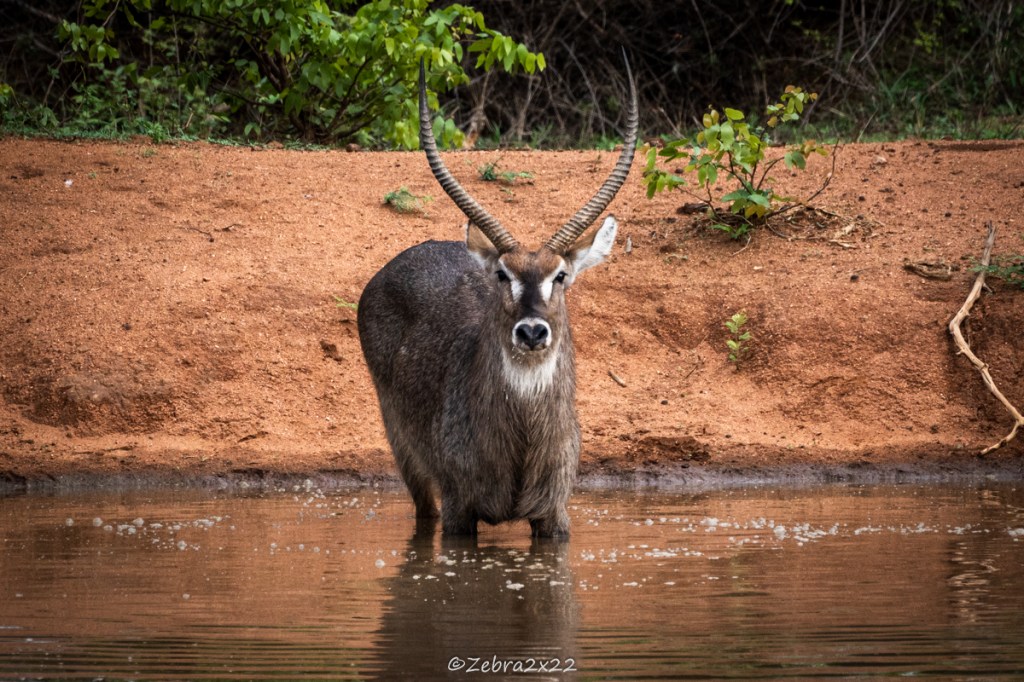
- Witnessing a waterbuck fight while waiting for a buffalo herd next to a waterhole.
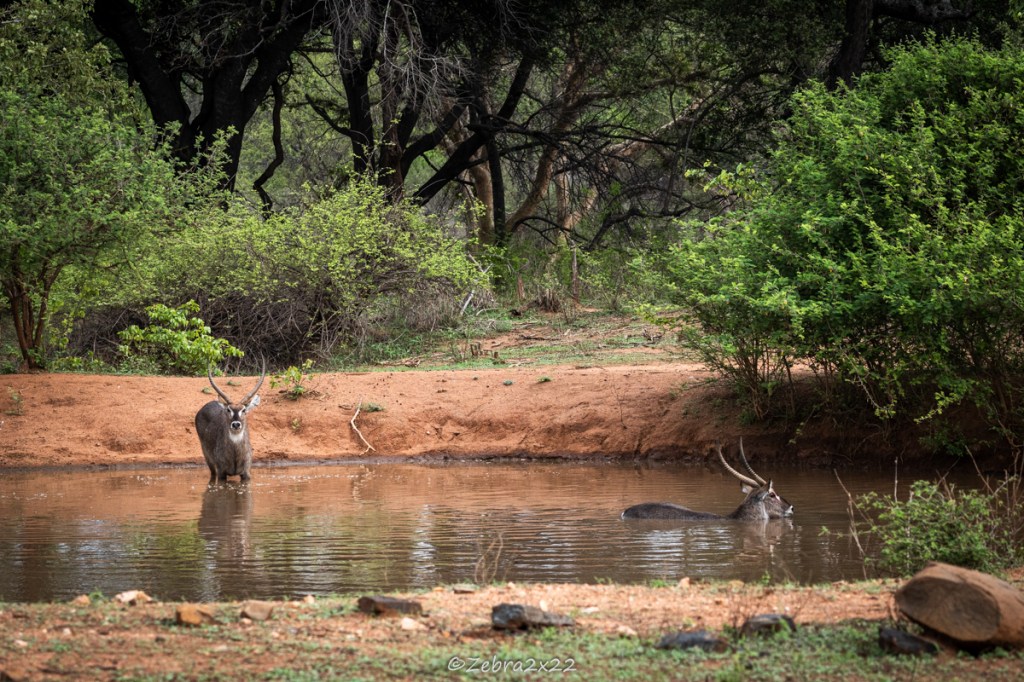
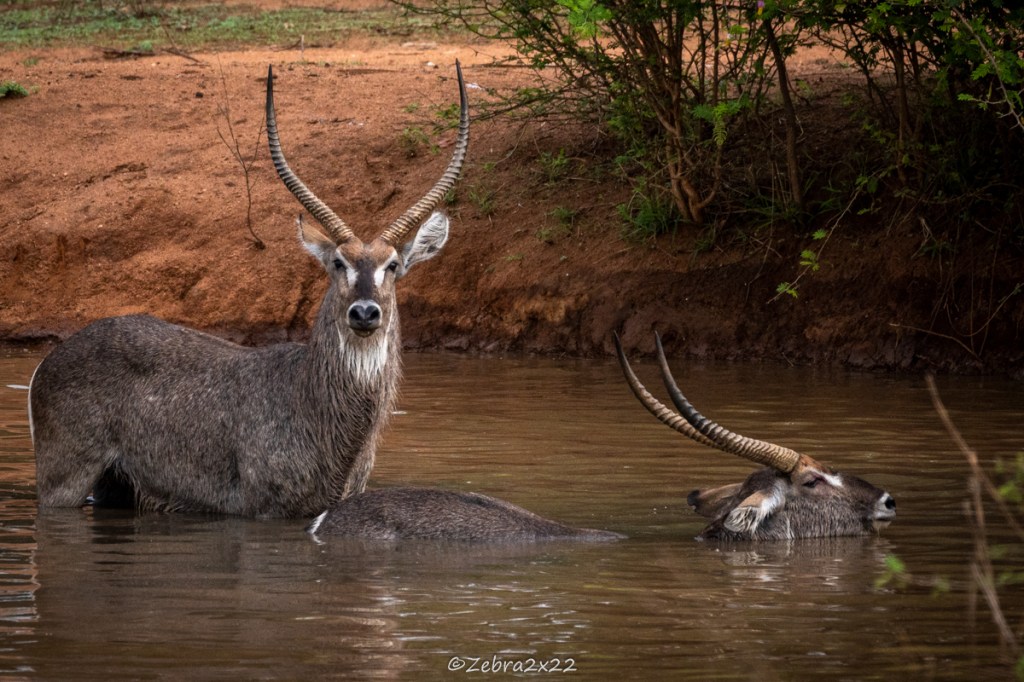
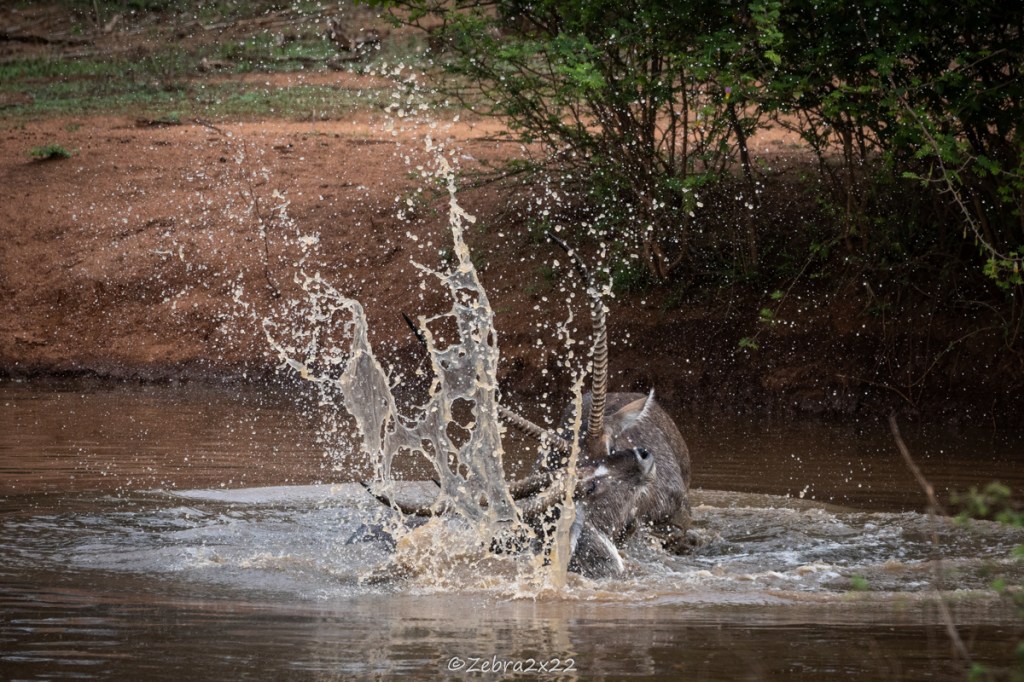
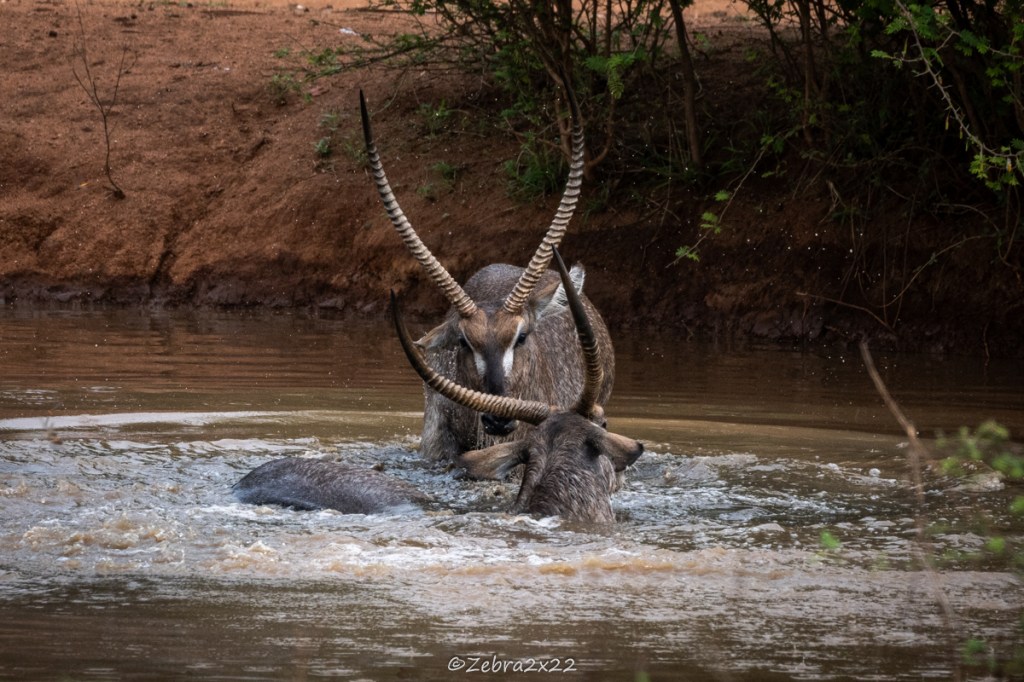
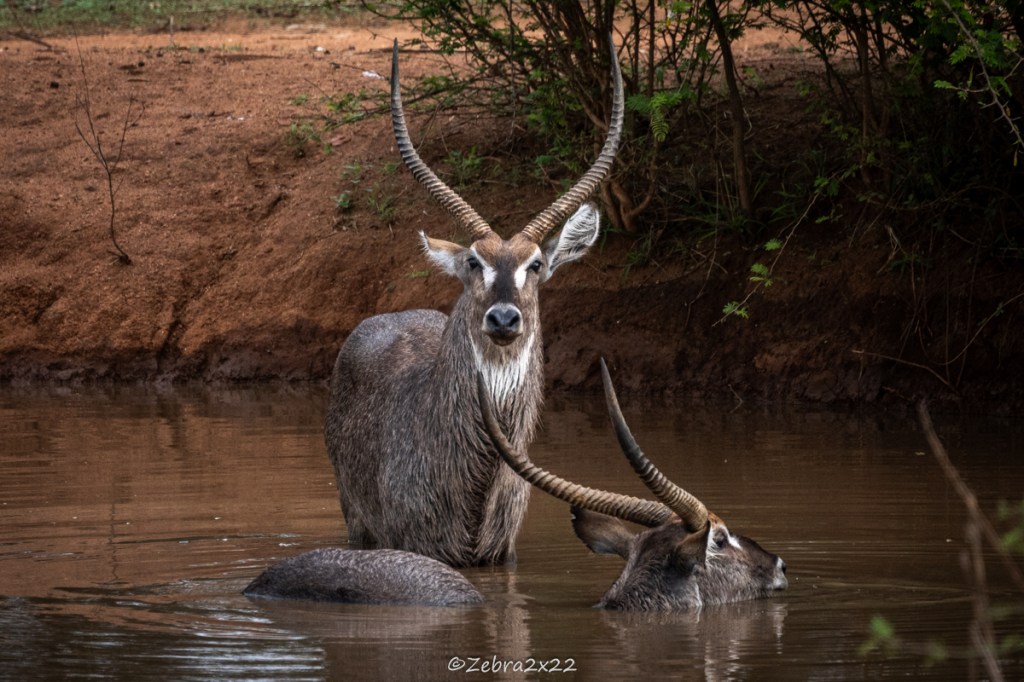
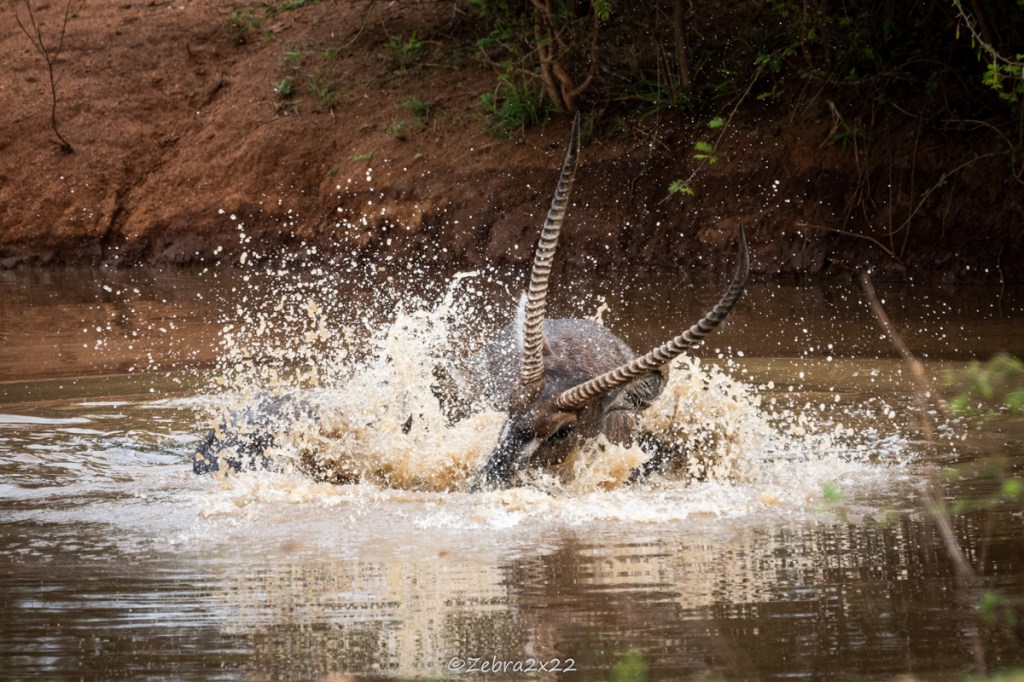
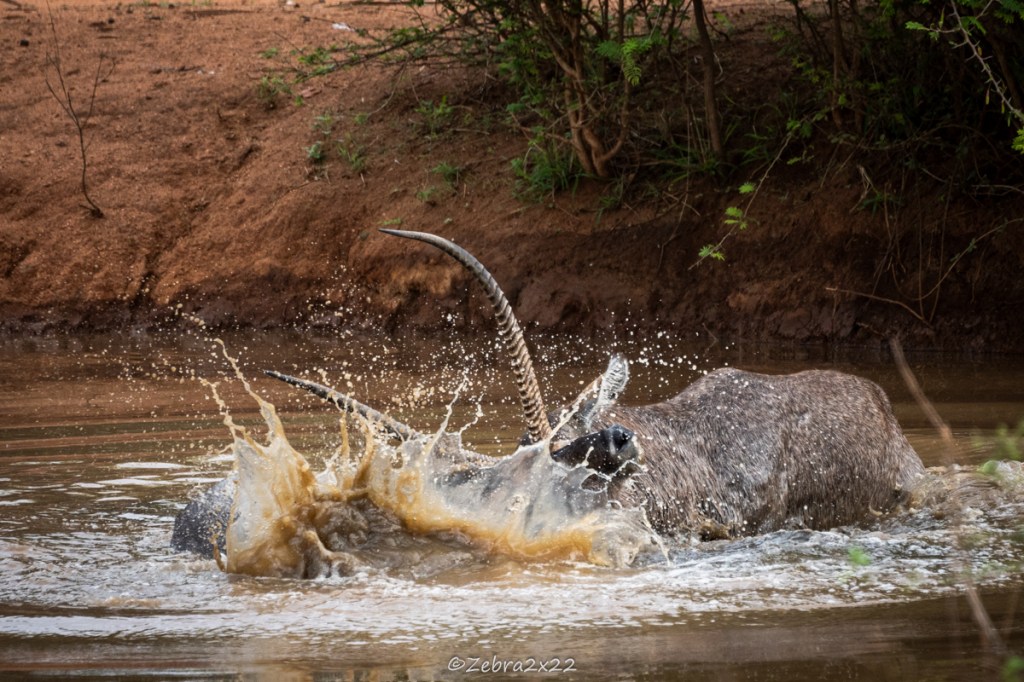
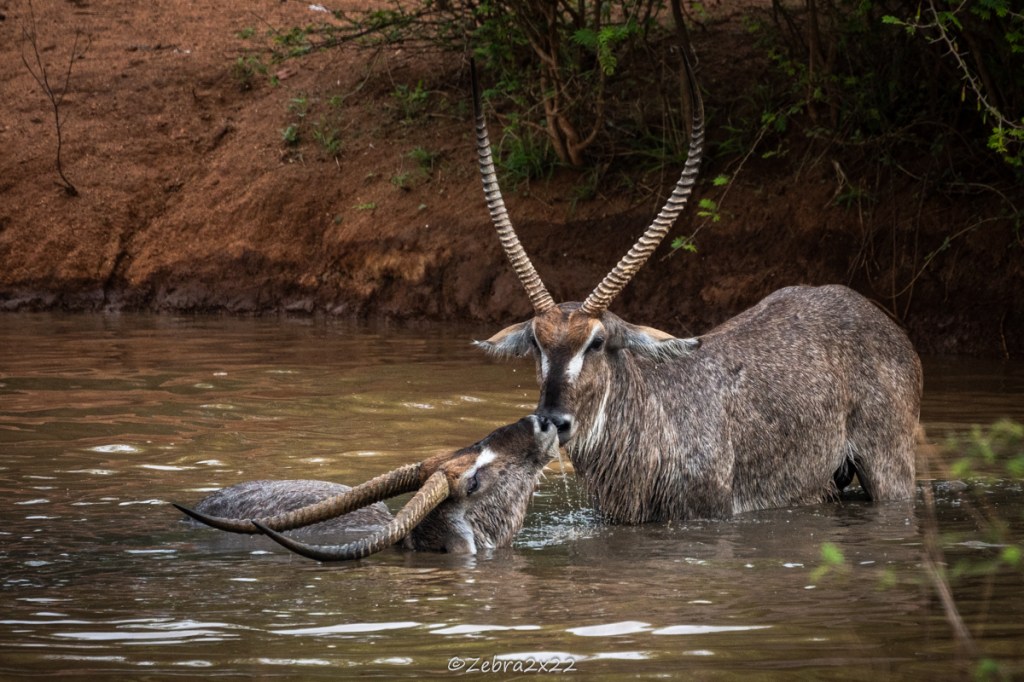
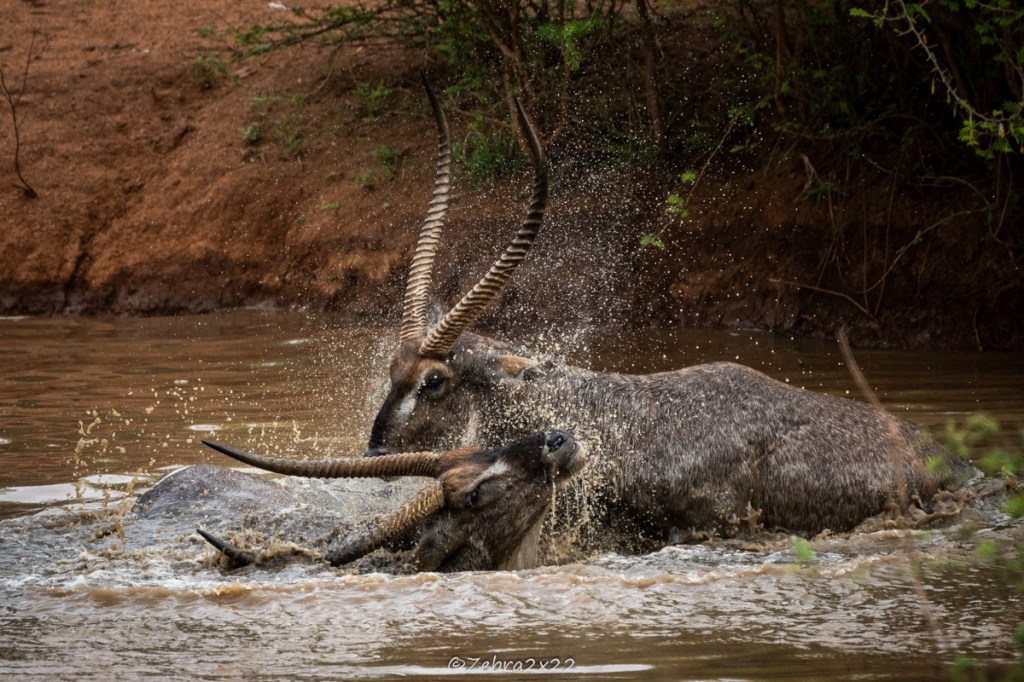
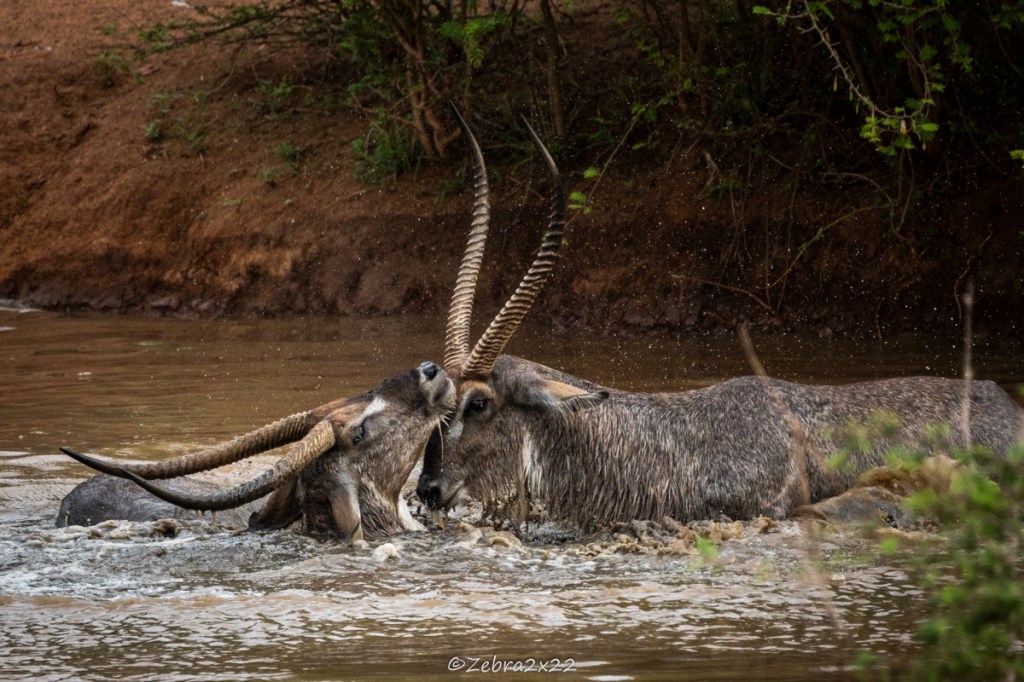

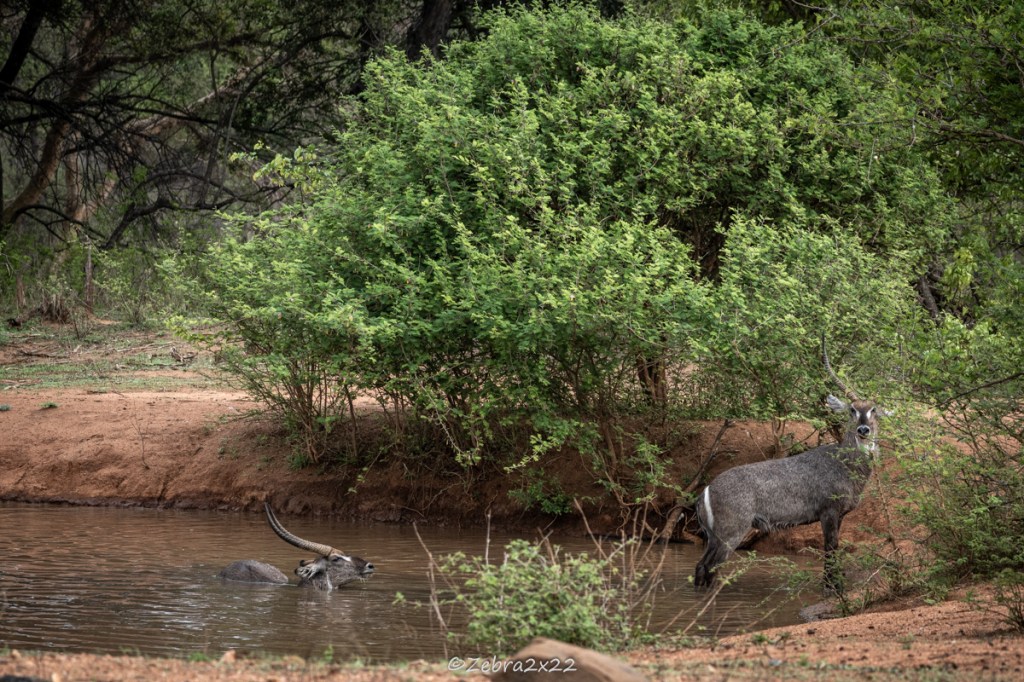
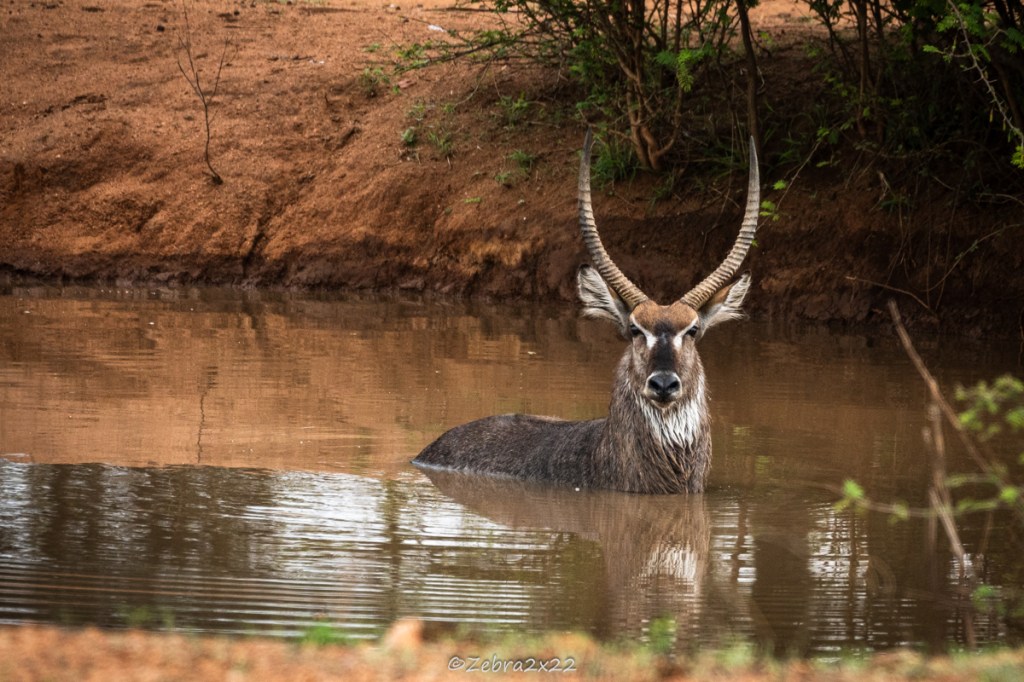
- Getting close to the lions while they were feeding, which is something you should not do (in theory, which is a bit different on the field as you have to see the animals every day and understand their behaviour).
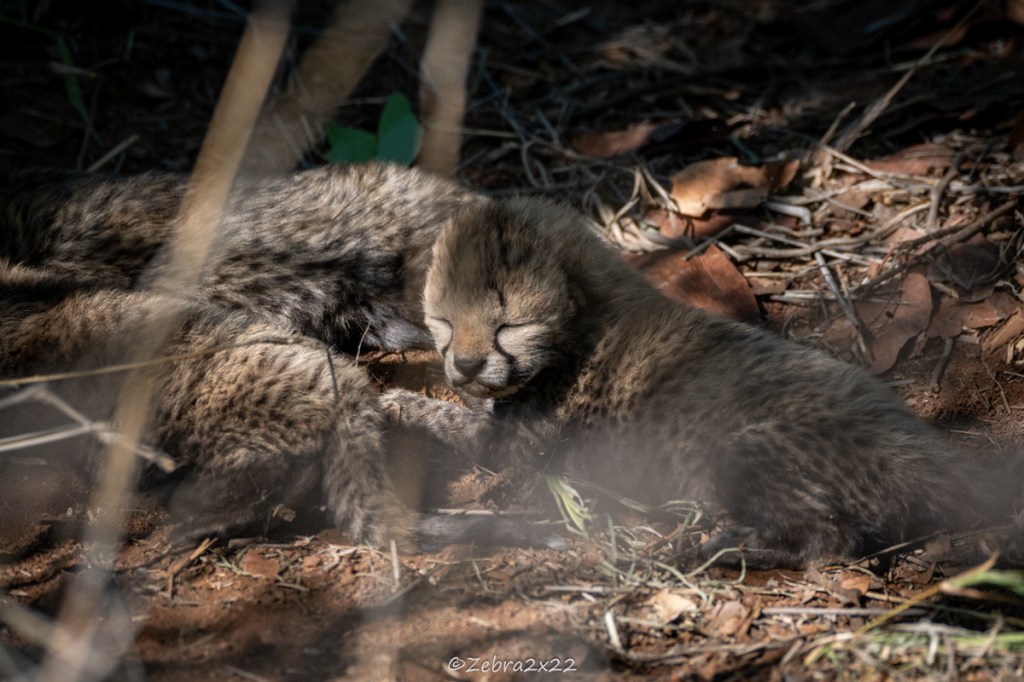
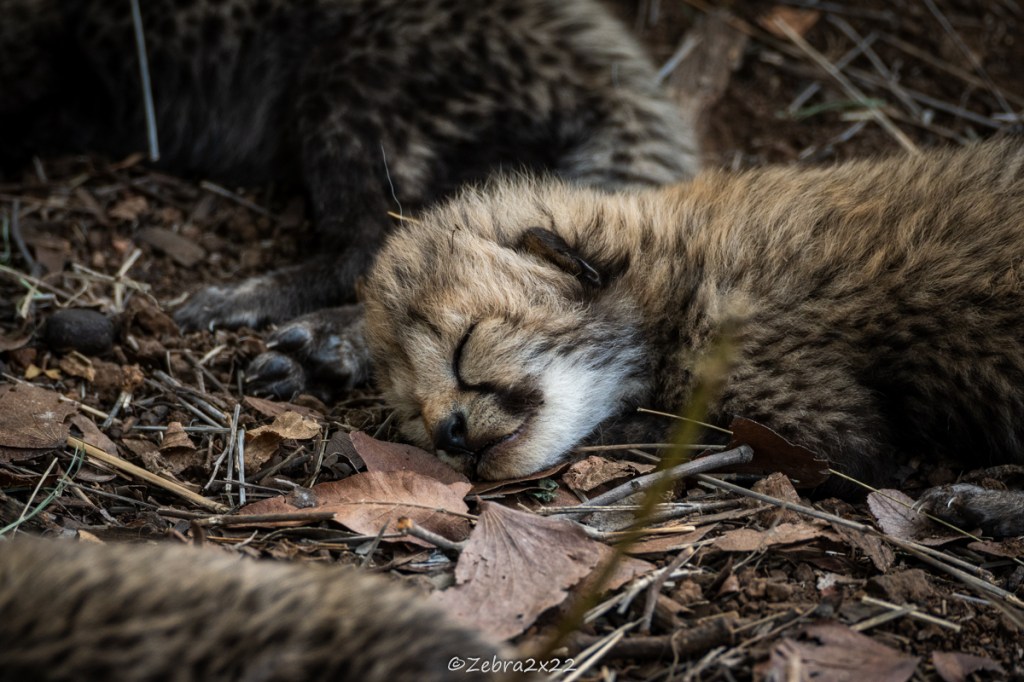
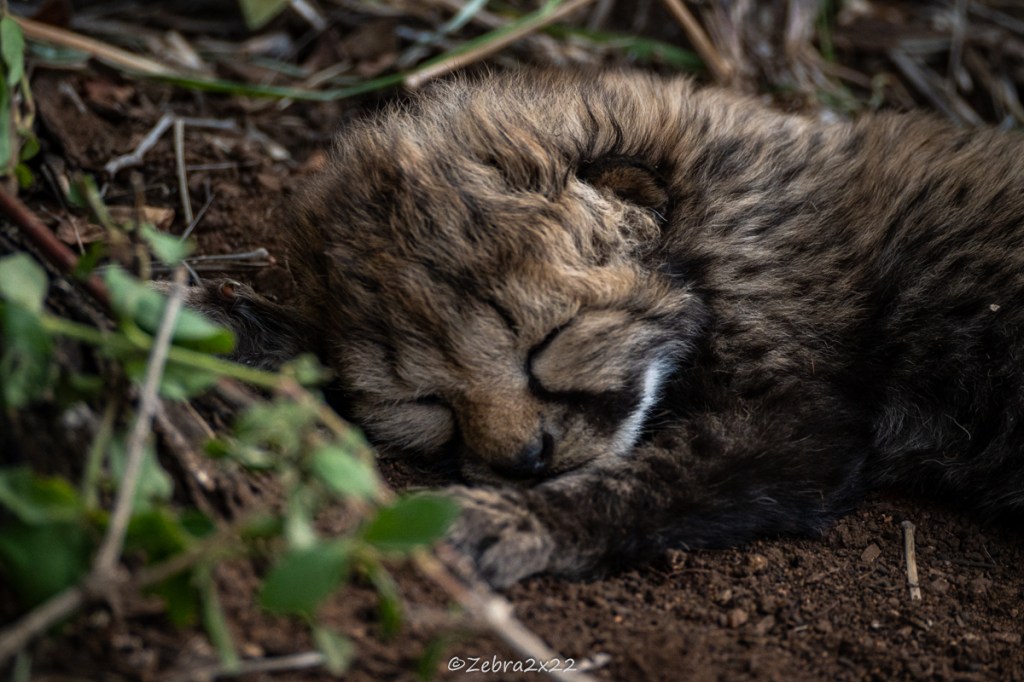
- Monitoring new born cheetah cubs to keep them safe, which includes shifts day and night to ensure a 24/7 presence.
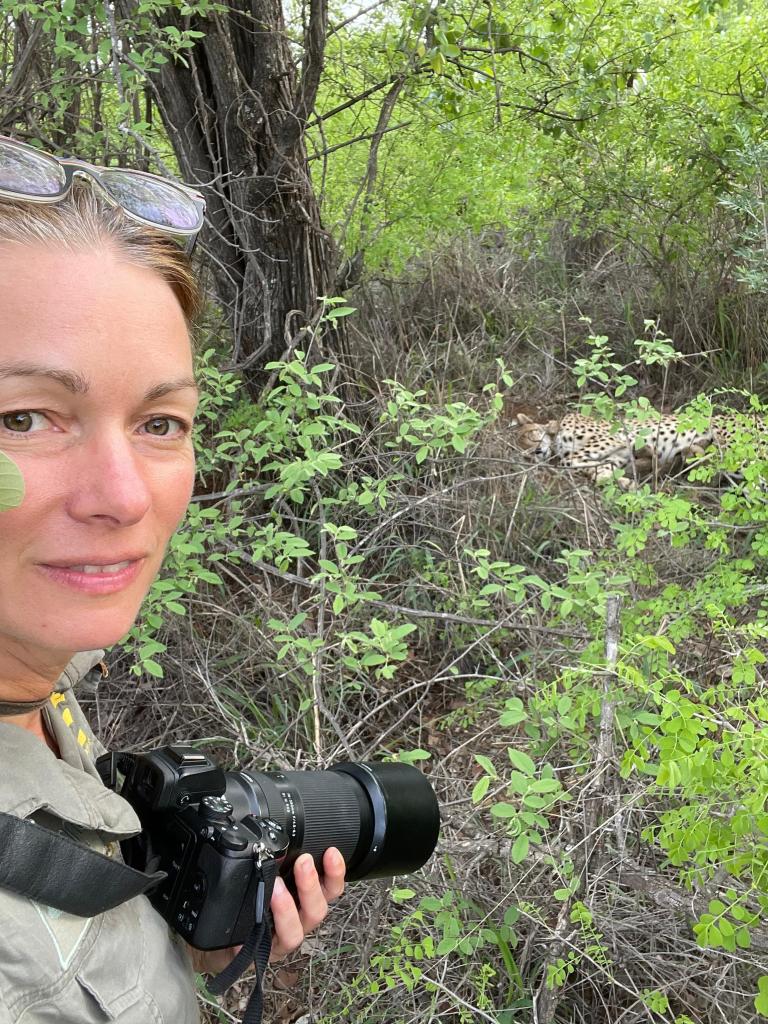
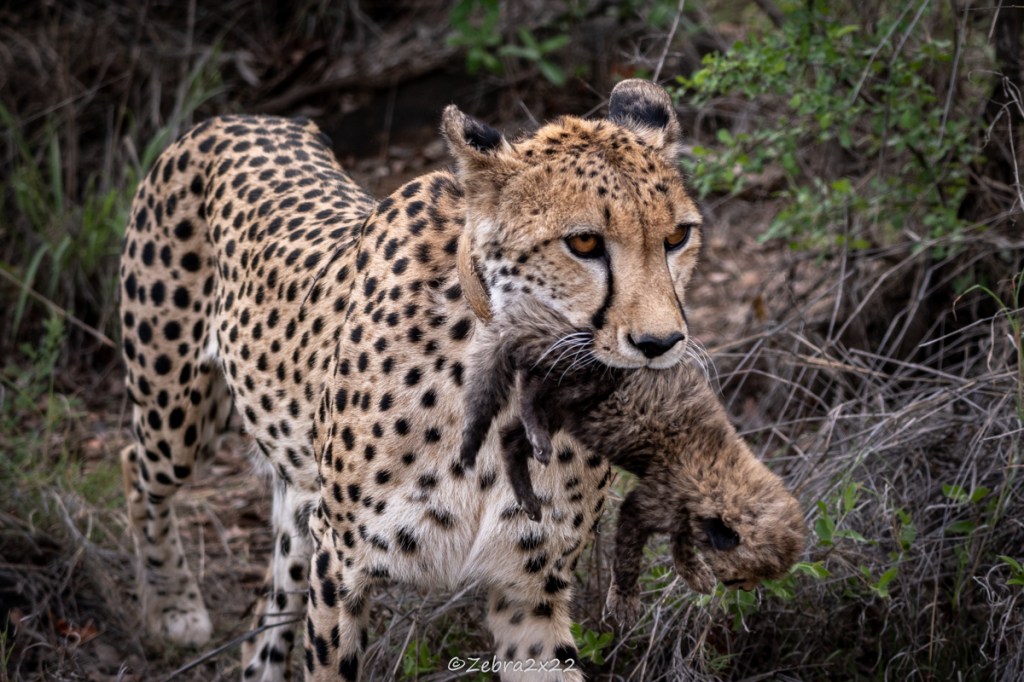
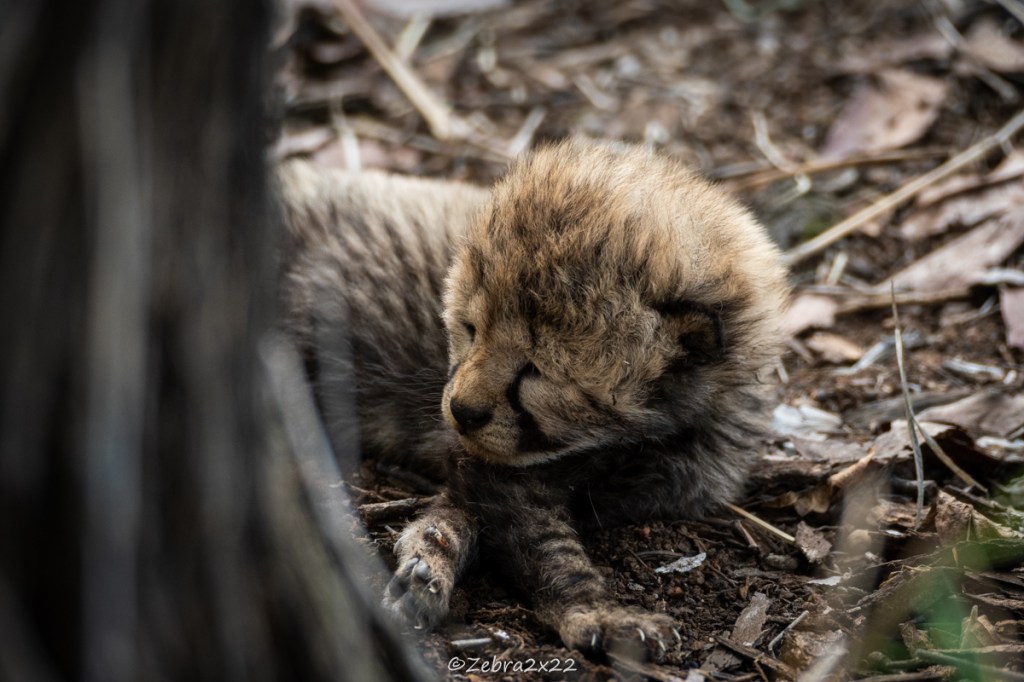
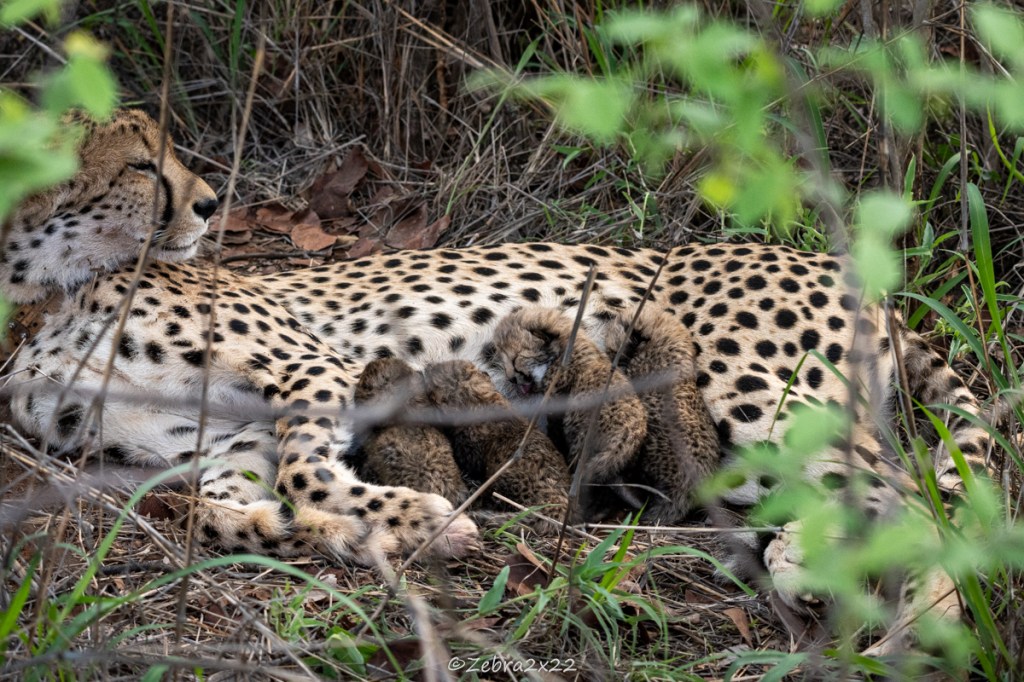


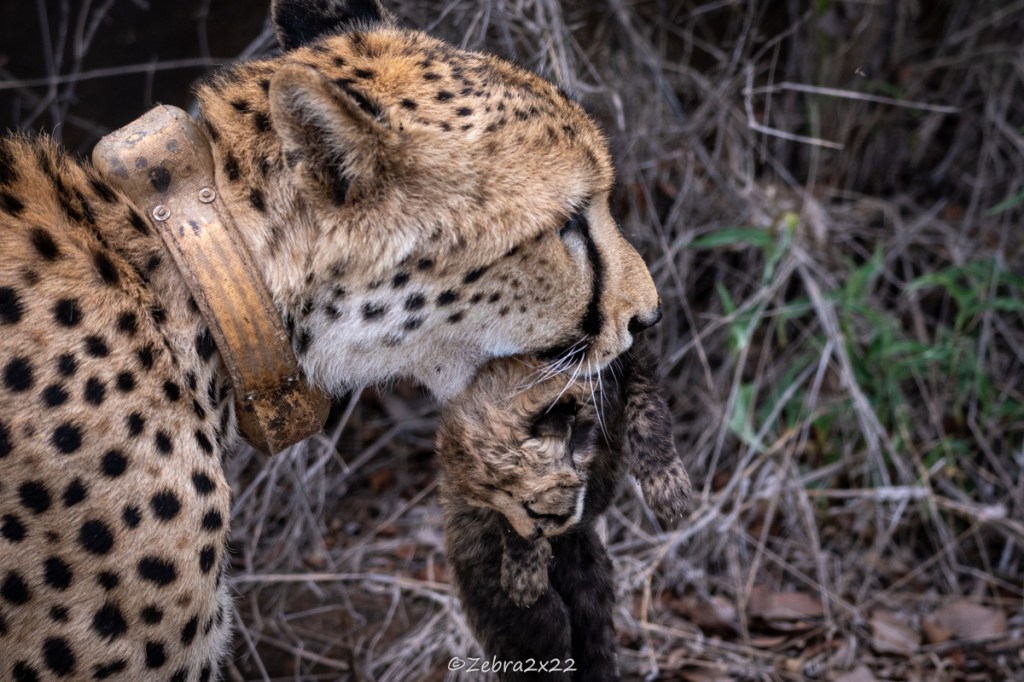

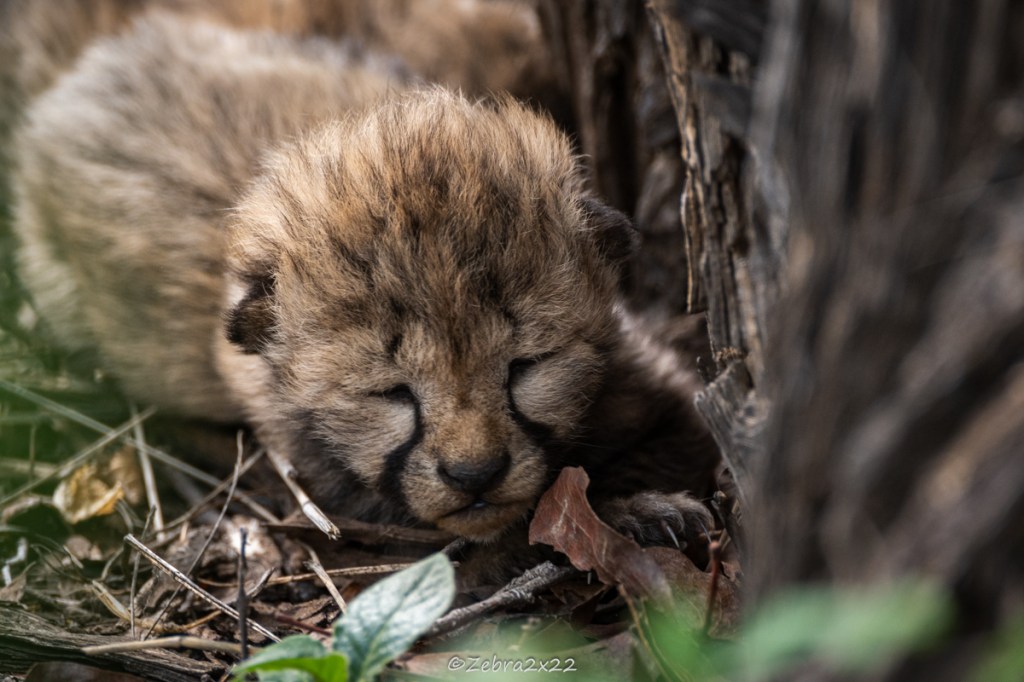
- Learning what’s behind conservation: Feeding wildlife with lucerne during drought, moving carcasses at the bait site to learn more about the existing wildlife, the reality of monitoring endangered species…
- Hearing the growl of a lion when you get closer, and the valuable lesson around wildlife habituation, which requires not giving up at the first growls and standing your ground until they become relaxed again.
- Meeting incredible volunteers.
The unforgettable memories
- The pouring rain and the encounter with endangered species while our noise was covered by the rain.
- My first night with the cheetah that had just delivered cubs.
- Being followed by a cheetah on a motorbike while we were feeding her.
- The sunrises and rainbows.
- Driving a motorbike again.
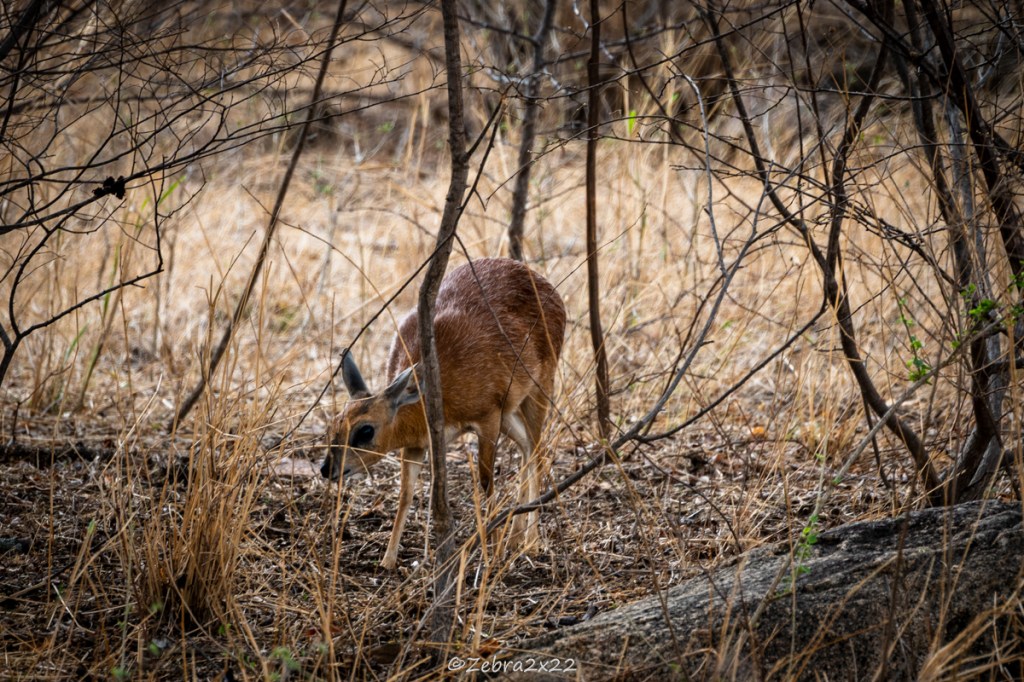
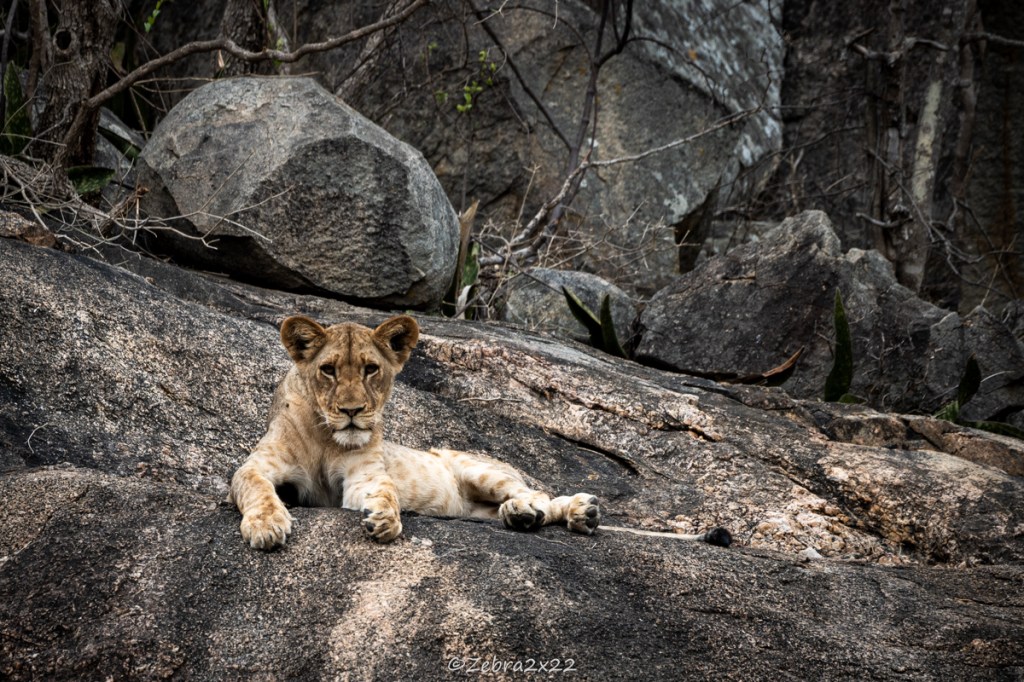
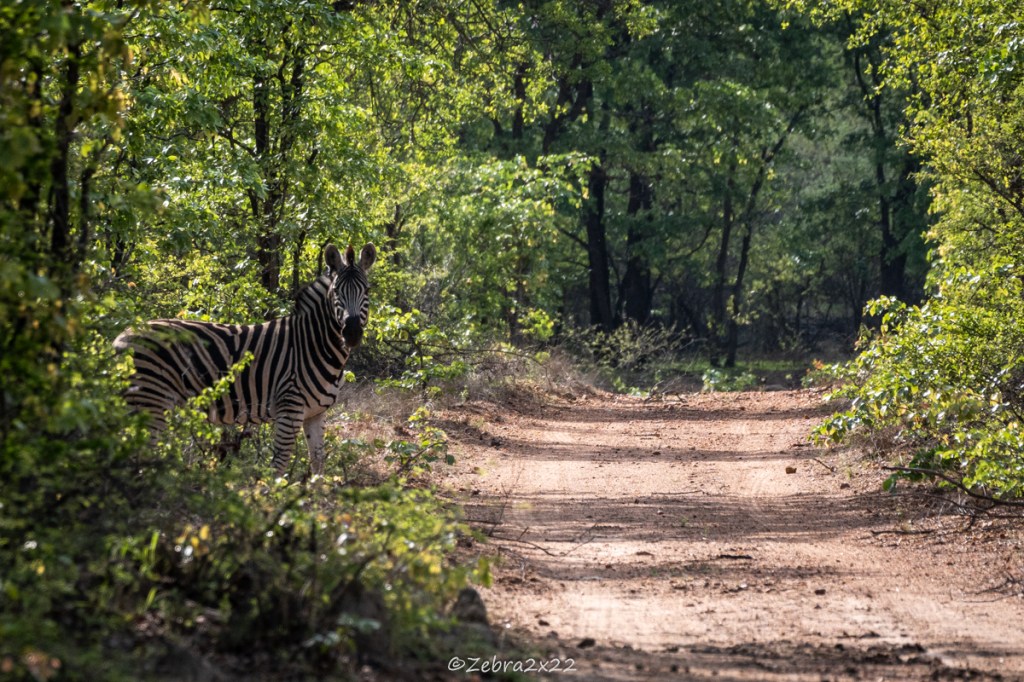
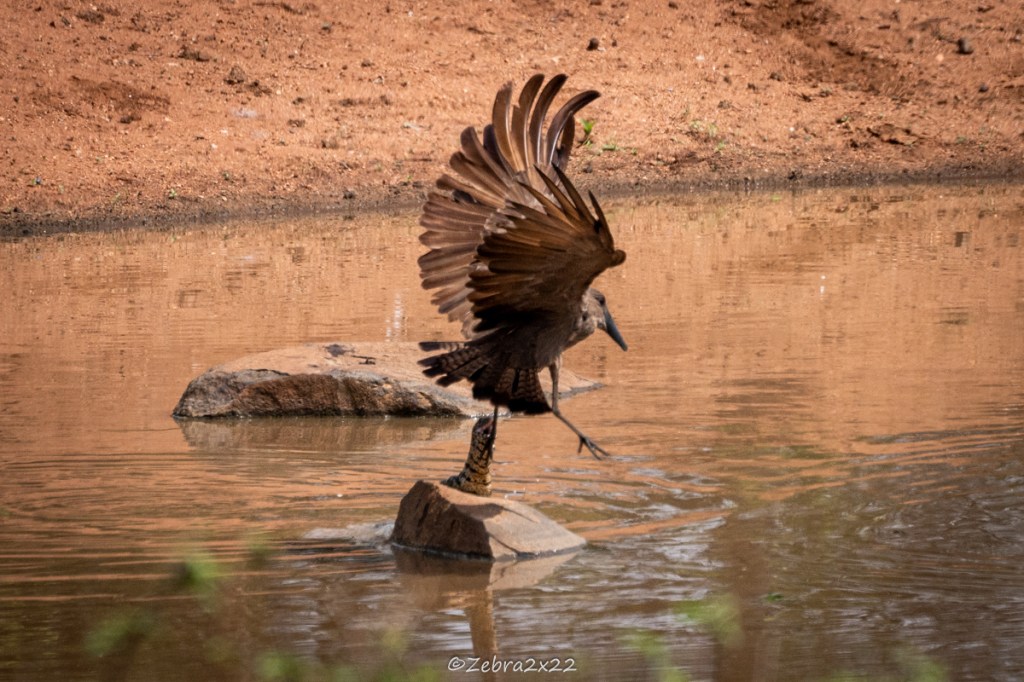
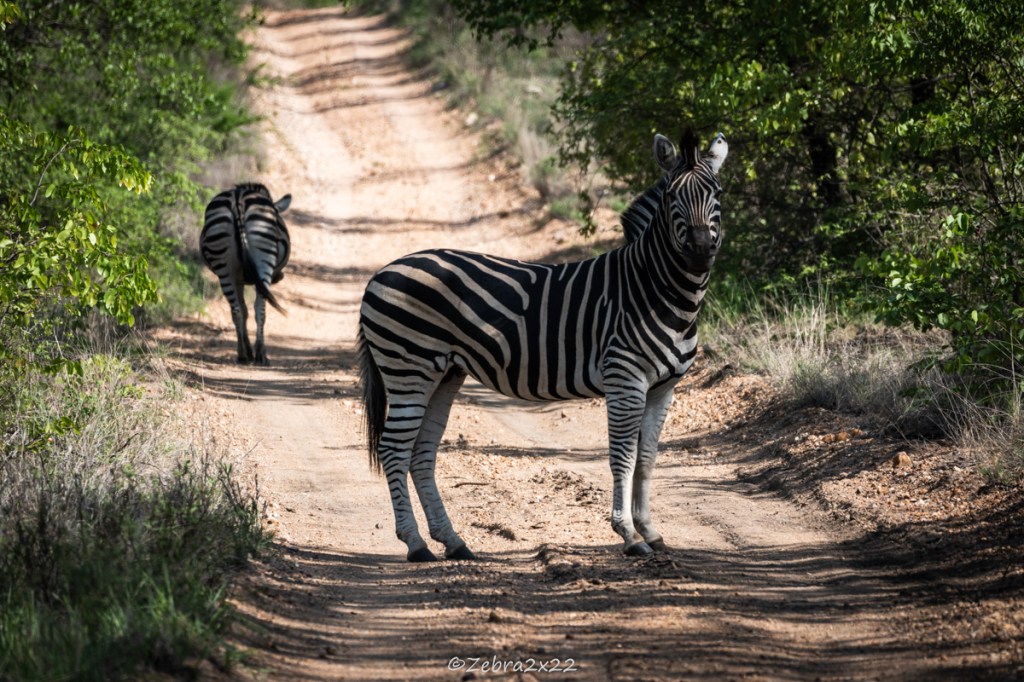
And some of the photos, I want to share with you of my first few weeks









Leave a Reply