Since I arrived in the volunteering program, I’ve been assigned to cheetah duty every day—twice a day, from 6–9 and 15–18.
I was so happy to be reunited with them, to see how much the cubs have grown, how feisty they are, and that they’ve made it through the 2.5 months I was away.
It’s such a joy to be around them, to have earned the trust of their mom. By now, I’m part of the furniture—she knows where I am, she recognizes my voice, she hears me arriving and leaving. She passes close by me, sits, or lies down without a problem. When I arrive, she glances at me and simply goes back to her activities.
It’s also a pleasure to introduce them to guests and volunteers, to share this gift, to see the eyes of wonder, awe, and discovery. I’ve grown used to spending time with her and the cubs. And yet, I need to remind myself that what I’m living is exceptional—very few people get to be this close to a cheetah and her cubs. I must keep a fresh eye, never stop being amazed. I’m starting to understand them better, even learning to tell the cubs apart (not an easy task, since they look so alike).
Everything they do is amazing—playing, purring, calling, walking, running, sleeping, drinking, eating, hunting, rolling on their backs, climbing trees (their favourite activity 🤷♀️)…
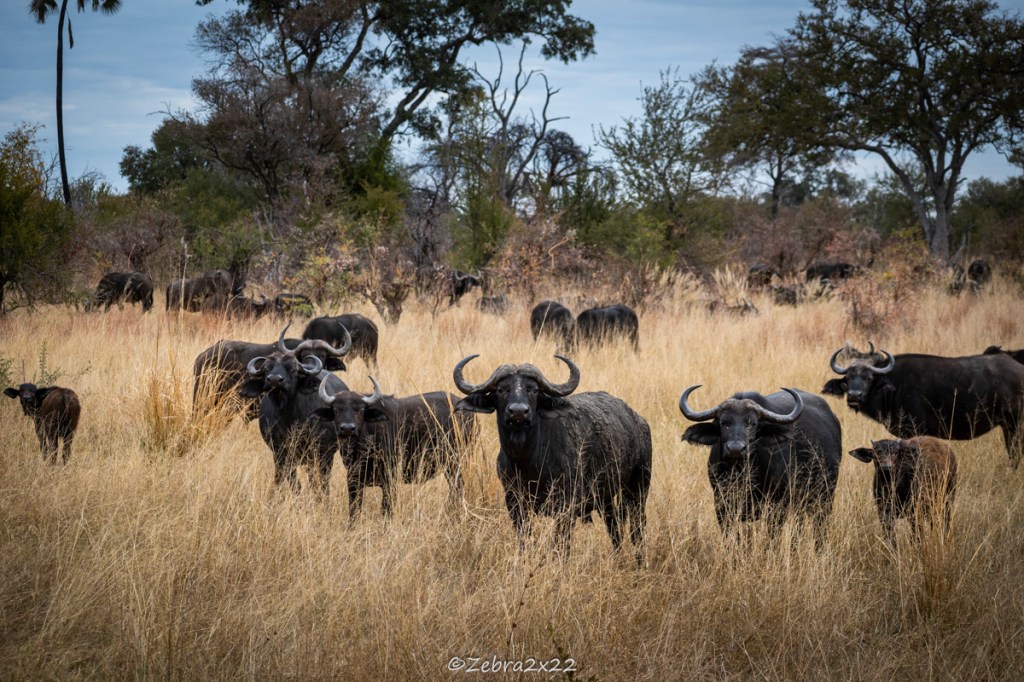
My only real concern was the buffalo herd, reported near the area where I walk with the cheetahs. I was on alert, checking signals, scanning for noises and shapes—not exactly keen to meet them on my own in the bush.
Today, I was relieved: the cheetahs and buffalo were far apart. I thought I’d enjoy a quiet afternoon—cheetahs sleeping, me sitting next to them, peacefully observing. But the mother had other plans—she decided to move further into the bush.
I followed, keeping visual on the last cubs. Then I stumbled upon something alarming: an active wire snare. Looking around, I found three more. I began deactivating and dismantling them.
By then, I had lost sight of the cheetahs, but I radioed base and finished quickly before relocating them with telemetry.
While searching, I noticed a large shape between two trees. At first, I feared it was a dead animal. As I got closer, I saw it was a buffalo. From a distance, it seemed lifeless, but when I was just 10 meters away, it suddenly lifted its head—the oxpeckers flew off with loud alarm calls.
My heart pounded. I froze, then backed off carefully. The radio crackled and the buffalo lifted its head again, clearly aware of me but not moving. It seemed exhausted, head down again. Alive, but in trouble. If we acted quickly, we could maybe save its life. I informed the team and went back to searching for the cheetahs.
Eventually, I found them safe in an open drainage line—thankfully, none had been caught in a snare. The team soon reached me, and together we located the buffalo. The vet arrived within an hour. The buffalo was darted, freed from the snare (which, thankfully, hadn’t caused a deep wound but trapped her in a bad position). After a reversal shot, she was on her feet again, ready to rejoin her herd (confirmed the next day!).
Meanwhile, APU and volunteers swept the area for more snares—they found two additional ones and a dead vulture.
In the end, a chain of events saved this buffalo’s life: the cheetah deciding to walk this way, my training, the quick reaction of the rangers, vet, and APU team. This reserve constantly faces such threats, despite being community-owned.
At the end of the day, I felt fulfilled. My journey made sense, my choices made sense—for this one moment. Sometimes we arrive too late. But sometimes, we’re just on time to save a life. And that’s a great achievement.
The bigger mission, though, is prevention—not just patching the problem, but finding a way to stop it from happening in the first place.


 Zebra2x22
Leave a reply to annebbt Cancel reply